We update this post regularly as the market evolves — last updated for 2026.
The artificial turf industry moves faster than most people expect. In the yards we install across Phoenix, the Valley, and into Utah, we’ve watched blade technology, backing systems, and infill materials change meaningfully over the past few years. This isn’t just marketing noise — some of these advances actually affect how a lawn performs in extreme heat, how long it lasts, and how easy it is to keep clean.
This post covers what’s genuinely new and worth paying attention to, whether you’re planning a backyard project, a commercial space, or a putting green. We’ve kept it evergreen so it stays useful — not just a snapshot of one calendar year.
Key takeaways:
- Blade geometry and pigment technology have made modern turf both more realistic and cooler to the touch than products from five years ago.
- Backing and drainage systems have improved significantly, which matters on AZ’s caliche soil and UT’s freeze-thaw ground.
- Sustainable and organic infills are now legitimate options, not just niche add-ons.
- Design applications are expanding — rooftops, event spaces, and mixed hardscape-turf layouts are all driving new demand.
Blade Technology: More Realistic, More Heat-Resistant
The blade — the individual synthetic grass fiber — is where most of the recent R&D has landed, and it shows.
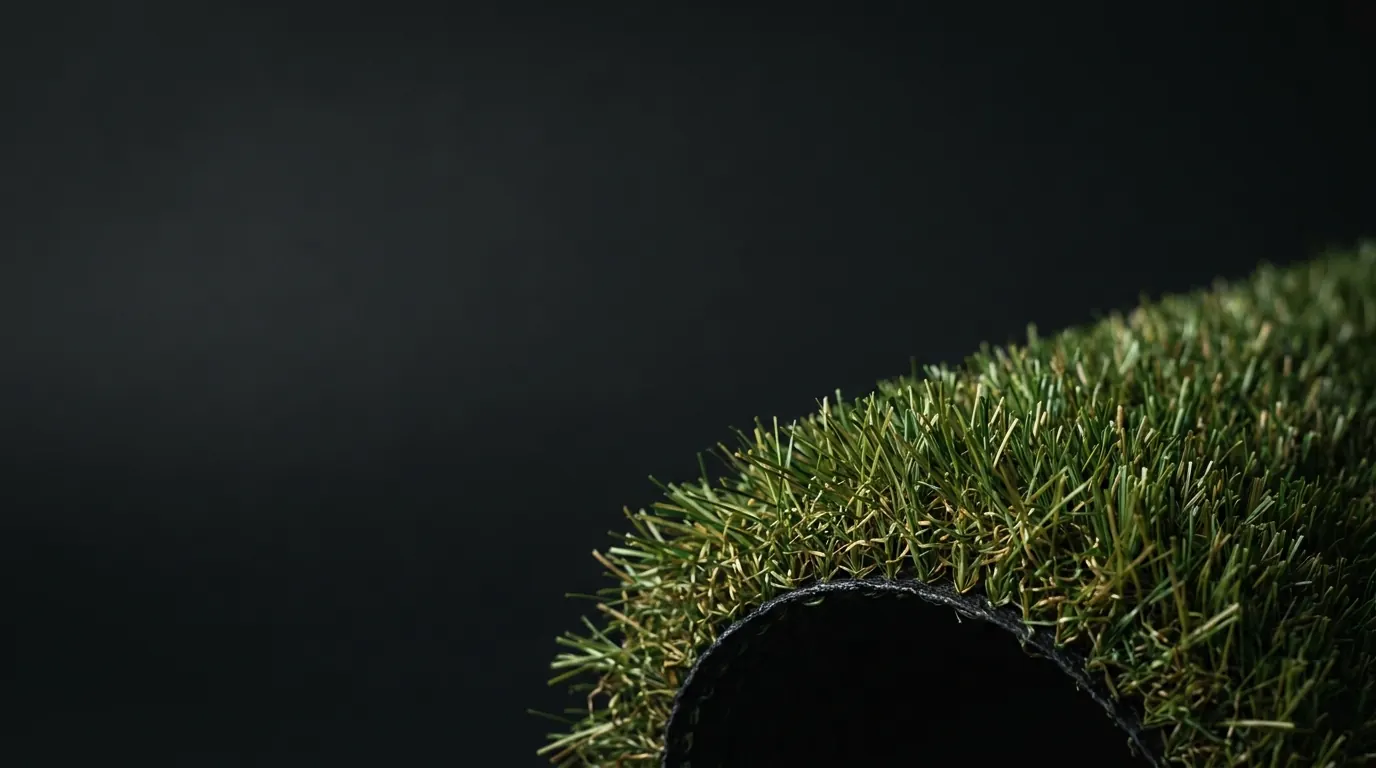
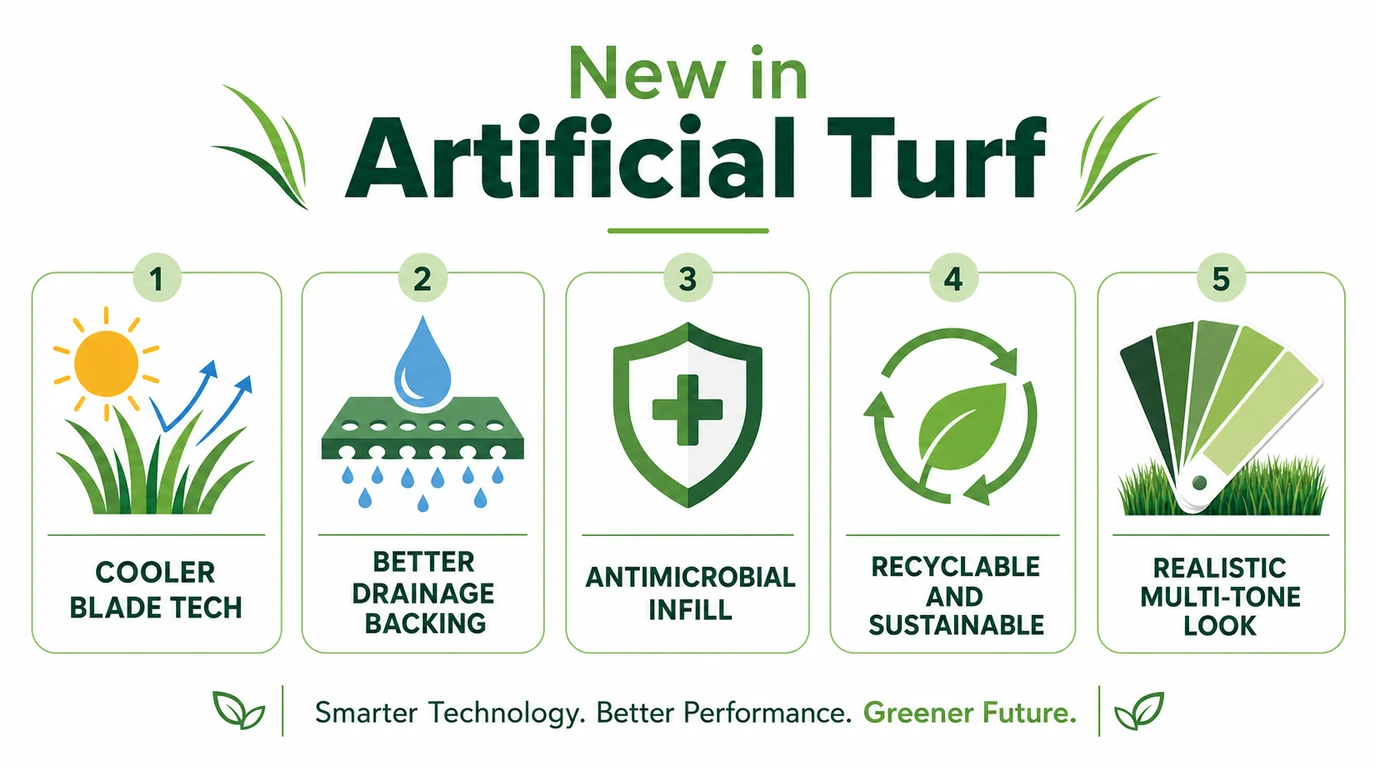
Realistic multi-tone coloring has become the standard at the better end of the market. Older turf was obviously one or two shades of green. Modern products blend three or four tones — different greens, tans, and browns — to mimic the variation of a living lawn. The difference is visible from twenty feet away.
Blade profile and geometry matter more than most buyers realize. Flat blades lie flat under traffic and reflect heat directly up. W-shaped, C-shaped, and S-shaped profiles spring back better and scatter light at different angles, which both looks more natural and helps manage surface temperature. We carry products like Lush 80 and Lush Primo that use these advanced blade profiles — the difference is noticeable side-by-side on our sample boards.
Heat-reflective pigments are now embedded in the fiber itself on some products. These don’t make turf cold — nothing does in full Phoenix sun — but they reduce peak surface temperature compared to earlier-generation blades. Combined with the right turf infill (lighter-colored, heat-dissipating options rather than black crumb rubber), the overall system runs meaningfully cooler.
Backing and Drainage: The Part Nobody Sees
Backing doesn’t get talked about as much as blades, but it’s arguably more important for long-term performance.
Polyurethane (PU) backings have largely displaced older latex-only systems at the quality end of the market. PU backings hold their dimensional stability better over time, resist moisture degradation, and support faster drainage rates. In Arizona, where we often excavate through caliche and need every drainage component working correctly, a well-performing backing matters.
Integrated drainage systems — products that build drainage channels into the backing itself rather than relying entirely on a drilled sub-base — have also matured. For rooftop installs or situations where you can’t excavate deep, these make a real difference.
Dual-layer backing construction (a primary stitch-hold layer plus a polyurethane coating) has become more common and improves tufting retention — meaning individual blades don’t pull out under dog traffic or heavy use as easily as they once did.
Infill: More Options, More Performance
For years the infill conversation was simple: silica sand for residential, crumb rubber for sports. That’s changed.
Antimicrobial-coated silica sand is now the default recommendation for pet areas and high-use yards. It’s what we spec for most of our pet turf installs. The coating inhibits odor-causing bacteria without changing the feel or drainage behavior of the infill.
Organic infills — cork granules, coconut shell, and thermally processed alternatives — have moved from specialty products to something we regularly discuss with customers who want a lower-synthetic-content system. They’re particularly appealing for households with young children who spend a lot of time on the turf. Performance characteristics vary by product, so we walk through the trade-offs with each customer.
The crumb-rubber question hasn’t gone away. Many sports and commercial applications still use it effectively, but residential buyers have largely moved toward coated sand and organic alternatives. We don’t push any single product — the right infill depends on the use case, the pile height, and the customer’s priorities.
Explore our current infill options — we stock multiple types and can send samples if you’re comparing.
Sustainability and Recyclability
The artificial turf industry has had a complicated relationship with sustainability claims for years — and we try to be honest about where things actually stand.
Recycled content in fiber is more common now, with some manufacturers incorporating post-industrial or post-consumer polyethylene into the fiber blend. This varies significantly by product; it’s worth asking for documentation if it matters to you.
End-of-life recyclability is improving but not universal. Some manufacturers have developed take-back programs, and mono-material turf systems — where the fiber and backing are made from the same polymer family — are easier to recycle than mixed-material products. This is a real differentiator worth asking about when you’re speccing a long-term install.
Water savings remain the primary sustainability argument for turf in our region. A natural lawn in the Phoenix metro can consume significant irrigation water through an Arizona summer. Switching to artificial turf essentially eliminates that demand. For the commercial artificial turf projects we install, water savings over a 15–20 year lifespan are a legitimate part of the ROI case.
Design Trends: How Customers Are Using Turf Now
Beyond the material advances, the ways people are designing with turf have evolved.
Putting greens remain the fastest-growing residential application we see — particularly in the Scottsdale, Gilbert, and South Mountain neighborhoods of the Phoenix metro. A well-designed backyard putting surface adds usable space and resale appeal without the ongoing water or maintenance cost of natural grass.
Rooftop and urban commercial installs have expanded significantly. Turf handles rooftop conditions well — UV-stable, drains quickly in rain, soft underfoot — and it transforms otherwise hard surfaces into usable amenity space. We work with commercial clients on these regularly.
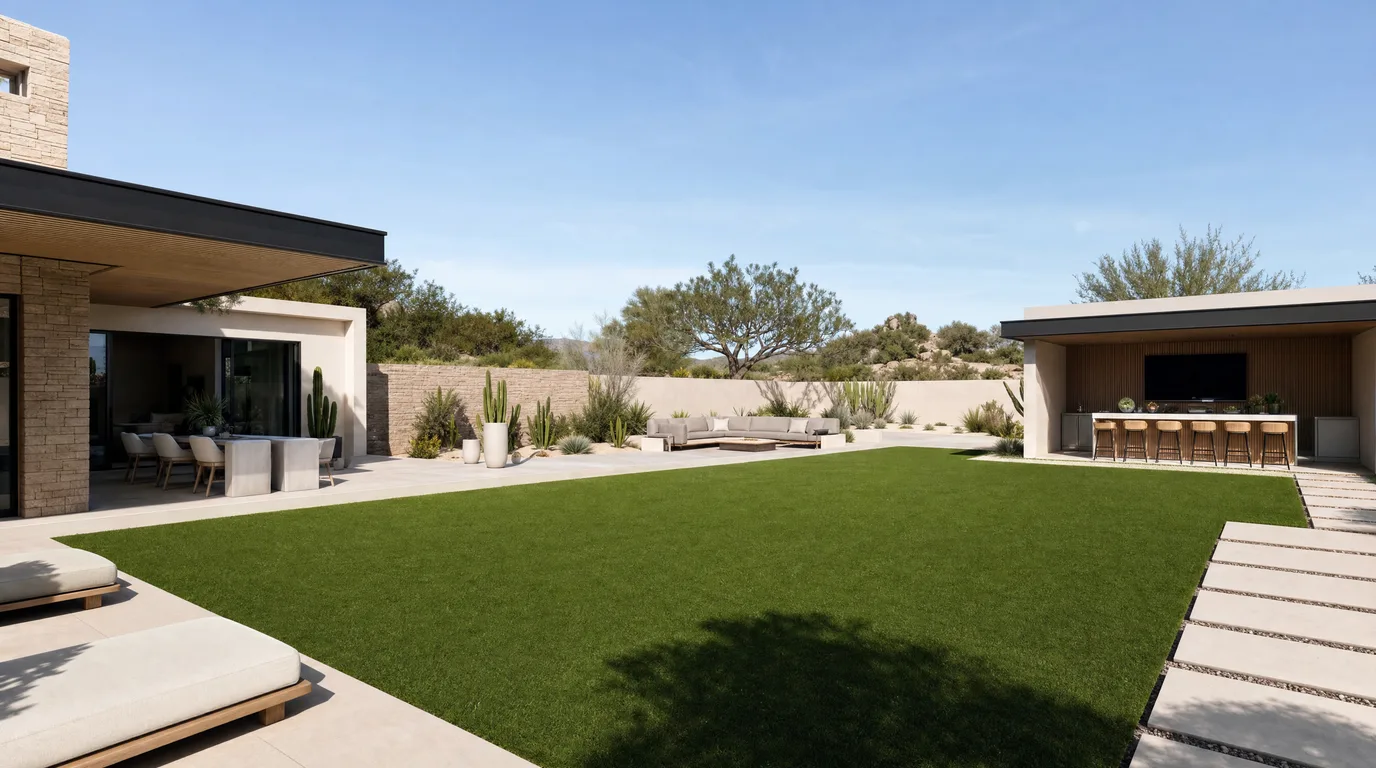
Mixed hardscape-and-turf layouts — turf panels between pavers, flagstone, or decomposed granite — are increasingly common in AZ and UT residential projects. The look is modern and breaks up the monotony of a solid turf install while reducing material cost.
Pet-dedicated zones within a larger yard design have become standard. Rather than running pet turf across the whole yard, customers often section off a pet run or dog area with a perforated-backing, antimicrobial-infill system and use a different product for the main lawn area.
If you’re planning a new project and want to work through the layout and material choices, our turf project planner is a good starting point.
American-Made vs. Imported Turf
This comes up often, and the honest answer is: origin matters less than specs and quality control.
There are excellent products made domestically and excellent products imported from Europe and Asia. There are also poor-quality products from all three. What we look at — and what you should ask any supplier — is face weight, pile height, backing construction, drainage rate, and what documentation they have to back up their specs.
That said, domestic manufacturers are generally easier to audit and hold accountable for quality consistency. When you’re buying from a local supplier rather than a direct overseas import channel, you also have someone local to call if there’s an issue.
We stock products we’ve personally installed in Arizona and Utah conditions — that’s the filter. Extreme summer UV in the Valley, freeze-thaw cycles in Provo and Salt Lake City — both environments are hard on materials, and we’ve learned which products hold up.
When you’re ready to explore materials or talk through what’s right for your project, our team supplies turf, base, and infill across the Arizona service area from our Mesa yard, with free samples and hands-on guidance. Talk to a turf expert and we’ll help you plan the right setup.
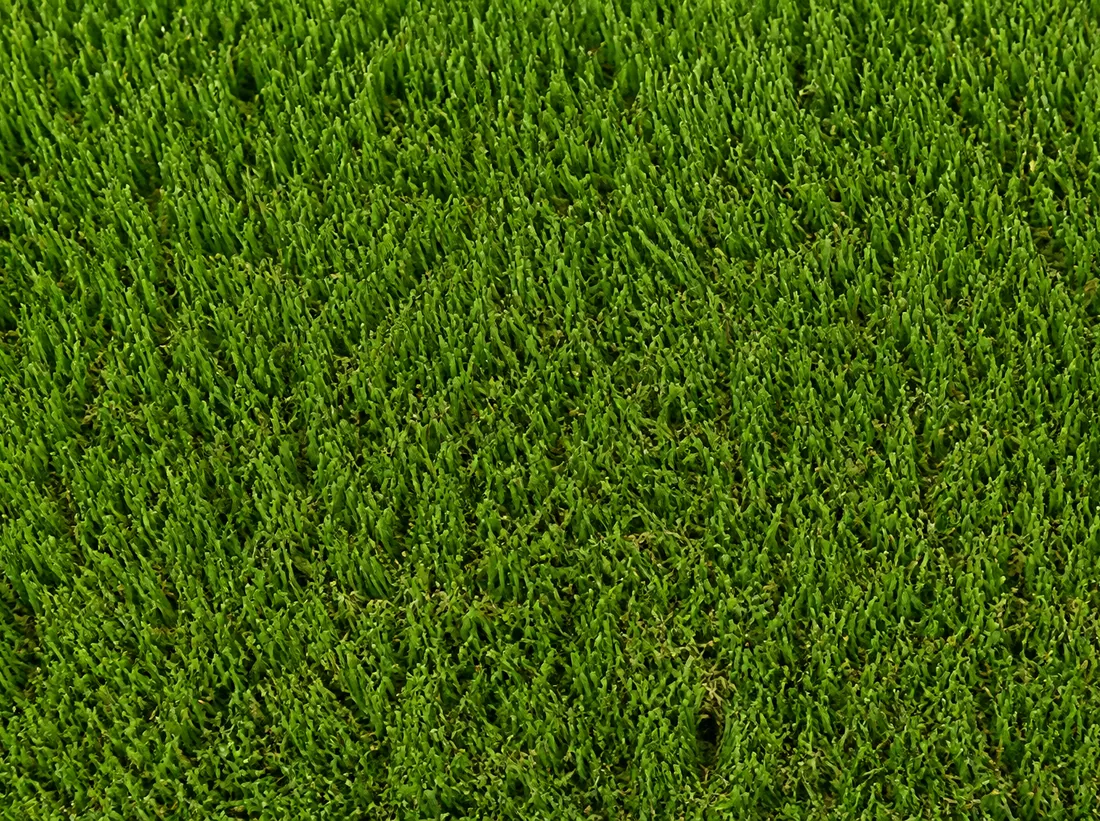
Lush 80 Artificial Turf
A premium, realistic turf with a fuller feel — a balanced fit for lawns, pets, and active yards.
View Lush 80 →Plan Your Turf Project
Use our project planner to map out your space, choose materials, and get a clearer picture of what your install involves.