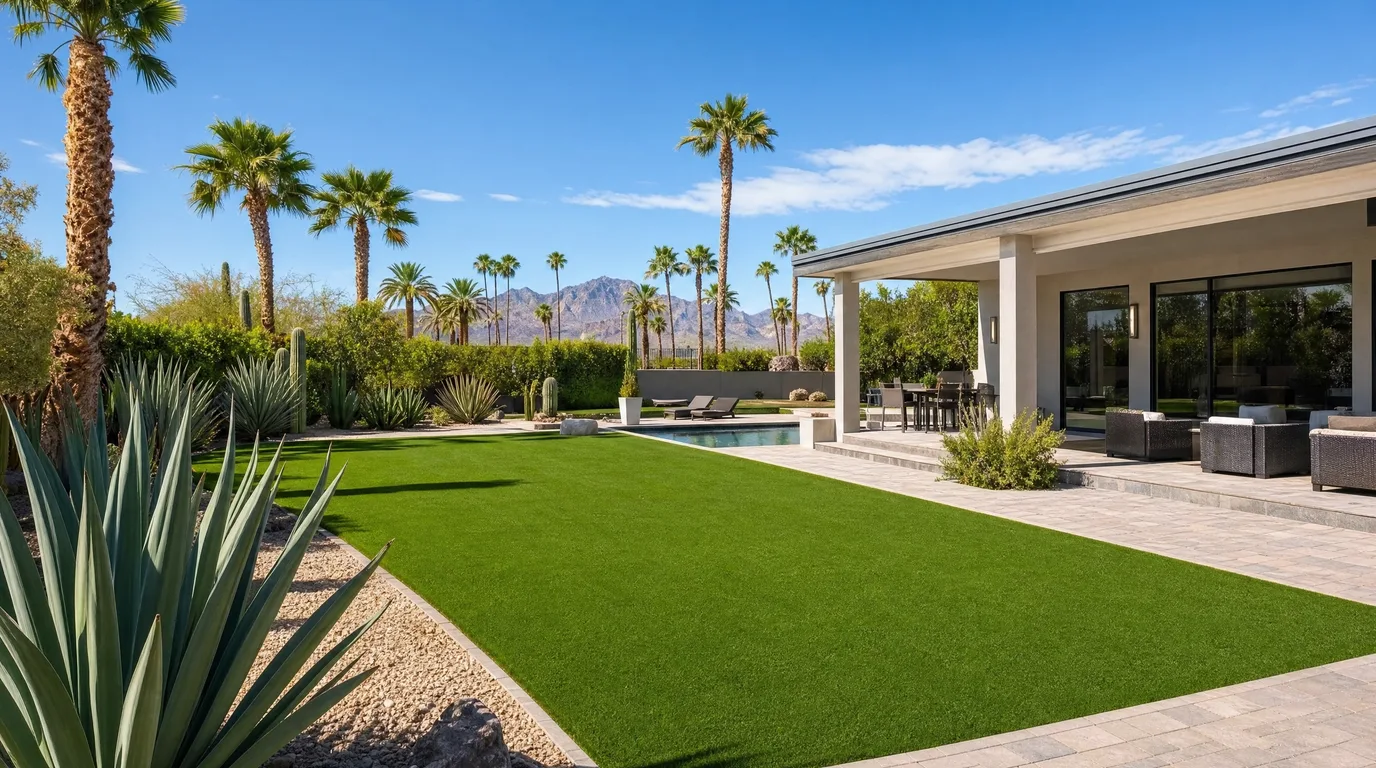
Every Arizona summer I get the same question at the yard counter: “Doesn’t fake grass get blazing hot?” Fair question in a place where the sidewalk can fry an egg by July. So let me get the honest part out of the way before you’ve finished your coffee — no artificial turf for Arizona heat stays cold in full sun. Nothing does. Concrete doesn’t, pavers don’t, and your dog already knew this.
The useful question isn’t does it get warm. It’s which roll do I buy, and what do I do, so heat stops being the thing I complain about. That’s this guide. Not the physics of why turf warms up — I covered why artificial turf gets hot and how to cool it separately — just how I’d pick heat-resistant artificial turf for an Arizona yard if I were starting from scratch today.
TL;DR — Quick Answer
No turf stays cold in full Arizona sun, but the right setup warms up slowly and cools fast. Choose a shaped, multi-tone W-Blade roll like Lush 80, pair it with a light-colored infill instead of black rubber, throw shade over your busiest corner, and keep a hose handy for a quick rinse. The blade and color matter — but the infill and a little shade do more day to day than the name on the box.
Best all-rounder
Lush 80 (W-Blade)
Biggest lever
Light infill, not black rubber
Fastest fix midday
A quick hose rinse
Most common mistake
Cheap dark rubber infill
Not Sure Which Roll Suits Your Yard?
Get straight product advice and a free quote on turf and infill for your spot — full sun, shade, pet run, or pool deck. No pressure.
Table of Contents
Key Takeaways
- No turf is genuinely cool in full Phoenix sun — but the right blade, color, and infill keep it comfortable for most of the day, and a rinse handles the rest.
- The infill under your turf affects heat as much as the turf itself. Skip black crumb rubber and use a light-colored infill.
- A shaped, multi-tone W-Blade roll — Lush 70, Lucky 77, or Lush 80 — warms up slower and stands up to traffic better than cheap flat turf.
- Match the roll to the spot: full-sun lawn, shaded side yard, pet run, and pool deck each have a different best answer.
- A few seconds with the hose drops the surface temperature faster than any marketing claim about turf that 'stays cool.'
What “Heat Resistant” Actually Means (The Honest Version)
Let me set expectations the way I’d want someone to set them for me. No artificial turf for hot climates stays cold in full Arizona sun. When a product gets sold as the “coolest turf” or “the turf that stays cool,” what they actually mean is it heats up less than the old flat, dark-green stuff packed with black rubber. That’s a real, worthwhile difference. It’s just not magic, and I’m not going to pretend it is.
Here’s the thing nobody markets: heat in the desert is mostly a surface problem, and it’s manageable. The EPA’s research on the urban heat island effect says the same thing about every hard surface in a city — dark materials soak up sun and hold it, lighter and shaded ones don’t. Turf plays by those rules too. A good roll does three things better than the cheap stuff: it reflects more sunlight, it lets a little more air move through the blades, and it pairs with an infill that doesn’t act like a heat sponge. Get those three right and your yard is comfortable morning, evening, and most of the afternoon.
The Four Things I Actually Look At
Forget the spec-sheet jargon for a second. When I’m helping someone pick turf for the heat at the counter, here’s all I really care about — in plain English.
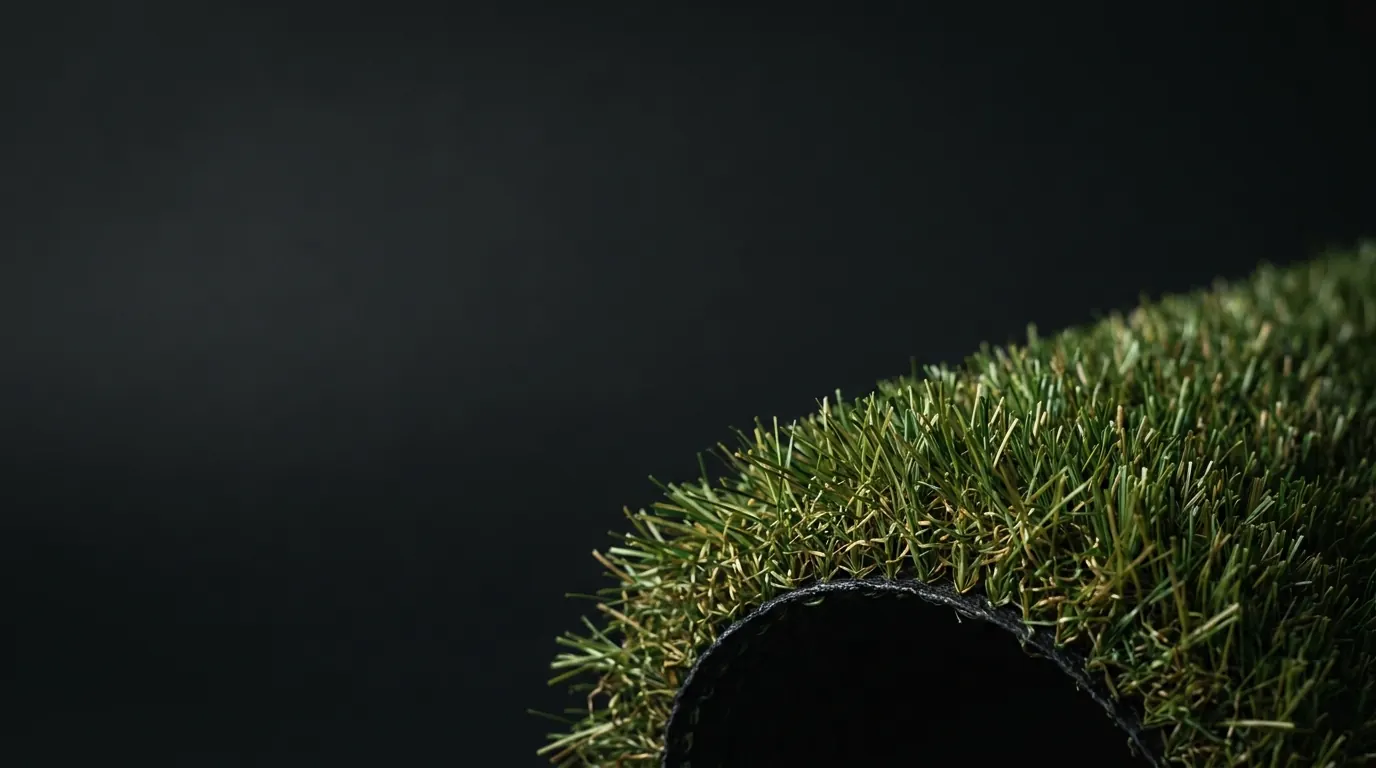
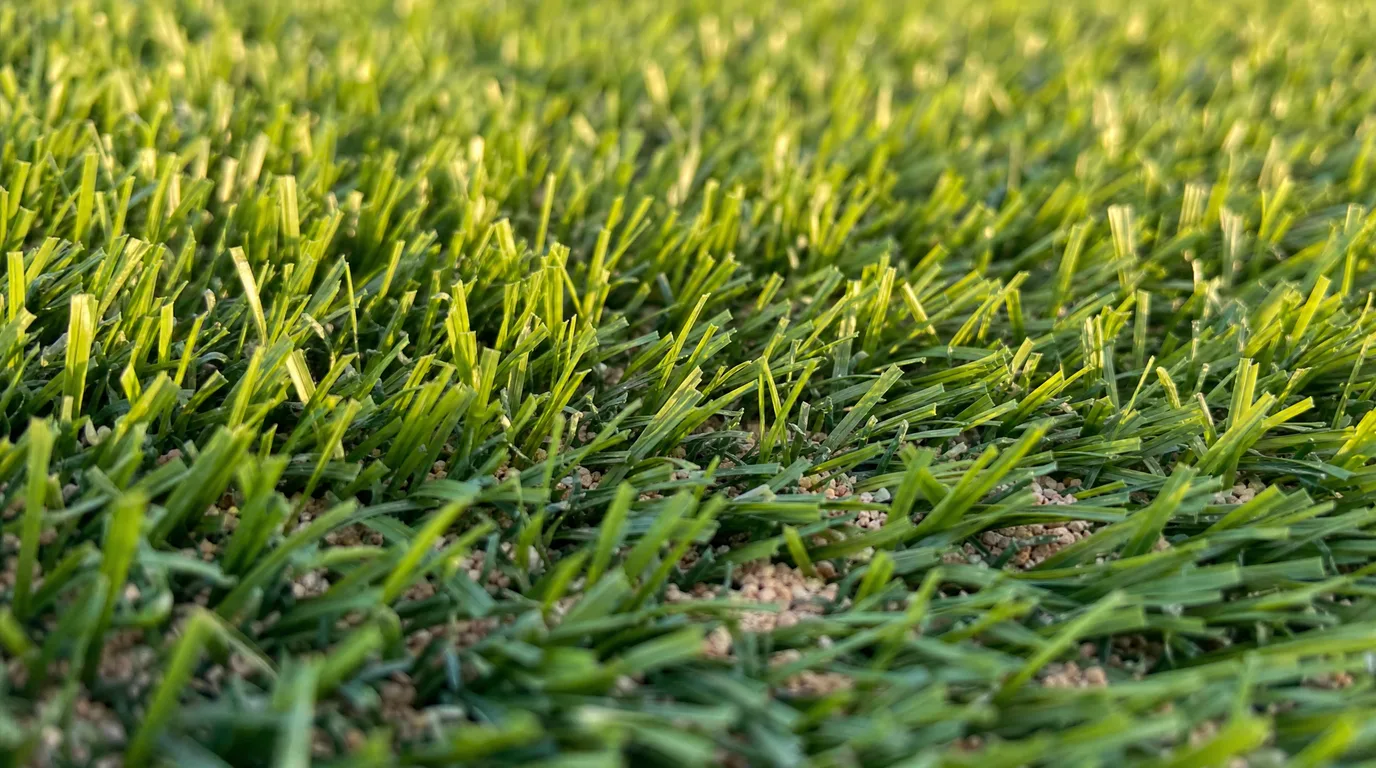
1. Blade shape and color. The blades on better turf aren’t flat. They’re shaped — you’ll see them called a W-Blade — which scatters sunlight instead of soaking it in flat, and stands up to foot traffic better while it’s at it. Our Lush 70, Lucky 77, and Lush 80 all use the W-Blade. A lighter, multi-tone green also reflects more sun than a single flat dark green. You want a natural-looking blade that mixes a few shades, not a flat emerald carpet that looks like it came off a mini-golf course in 1994.
2. The infill. This is the part most people overlook, and it’s the one I’d argue matters most for heat. Infill is the sand-like material brushed down between the blades. Old installs used black crumb rubber, which behaves like a little heat battery — exactly the dark surface the heat-island folks warn about. A light tan infill runs noticeably cooler. If you remember one thing from this whole post: choose a light infill, never black rubber.
3. Drainage and backing. Arizona monsoons dump water fast, and pet owners rinse constantly. You want a backing that drains quickly so water sheets through instead of pooling. Ours uses a quadruple-drainage-hole backing — fast drainage also means that cooling rinse actually works the way it should, instead of leaving a warm puddle.
4. Where it’s going. A roll that’s perfect for a shaded courtyard isn’t what I’d drop in a wide-open, west-facing backyard that bakes all afternoon. Full sun is where blade and infill choices earn their keep. Shade does a lot of quiet work here — the University of Arizona’s Cooperative Extension landscaping guides are worth a read if you’re planning a tree or a ramada over the spot you’ll actually use.
Matching Our Rolls to an Arizona Yard
We carry a few rolls, and people always want to know which one is “the heat one.” Honest answer: more than one works. It comes down to the spot and your budget. Here’s how I think about it — and yes, picking turf is a little like choosing a mattress, where you don’t care about any of this until suddenly it’s the only thing you care about.
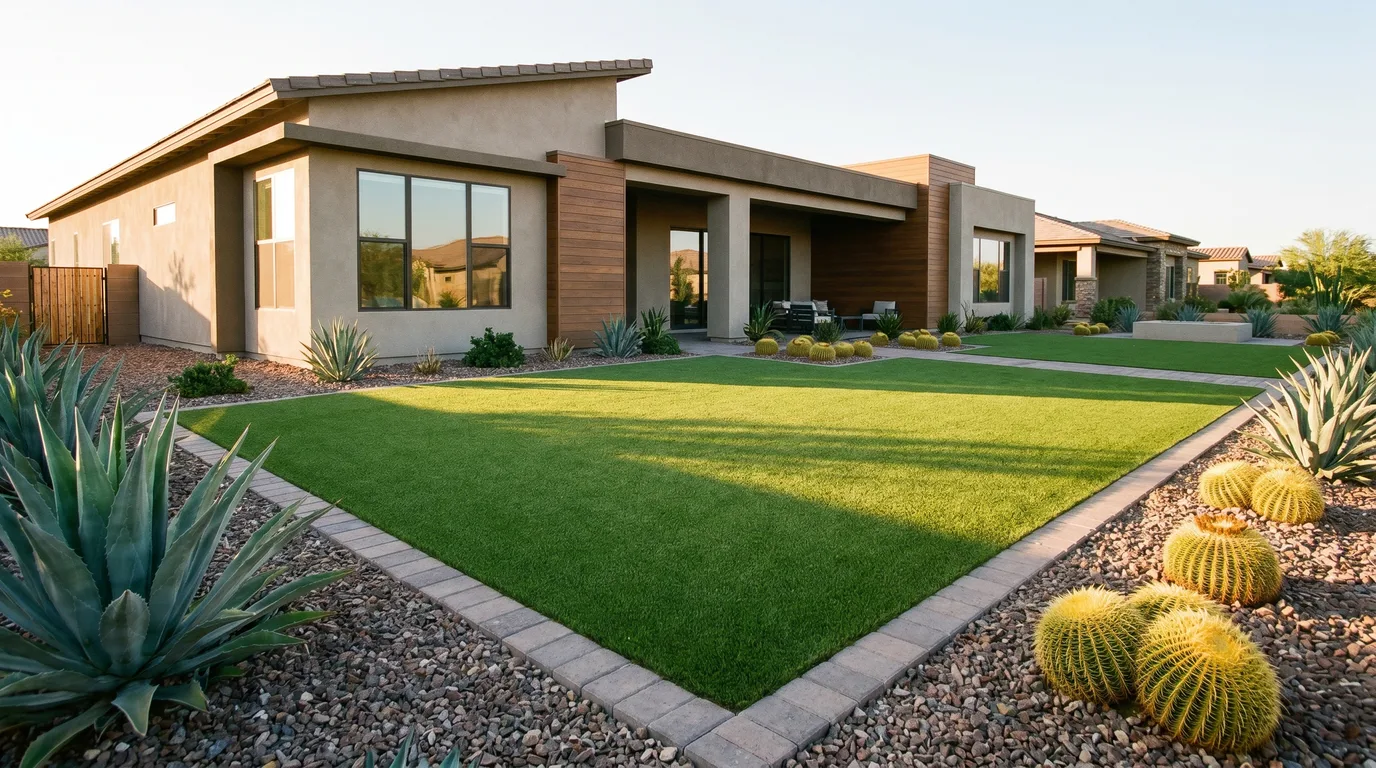
Full-sun family lawn → Lush 80. My default for most Valley backyards. The 1.58-inch pile, multi-tone W-Blade handles direct sun well and still feels soft for kids and dogs. For the majority of homeowners, this is the sweet spot, and at $1.56 a square foot it isn’t the roll that breaks the project.
You want the most realistic, premium look → Lush Primo. Our thickest and plushest at a 1.77-inch pile, and the one with the best curb appeal. It uses a softer C-Blade, so it’s a looks-first pick rather than the one I’d hand a daily dog-and-kid demolition crew — but it looks fantastic on a front yard the HOA drives past.
Big lot or budget-minded → Lucky 77. A 1.5-inch W-Blade with the darkest green we stock, durable, and good value at $1.39 a square foot. It covers a lot of ground without breaking the budget — handy on those 5,000-plus square foot desert lots.
Shaded or lighter-use areas → Lush 70. If the spot doesn’t take full afternoon sun, you don’t need to spend up. Our entry-level W-Blade at $1.19 a square foot is a solid pick for side yards and covered spaces.
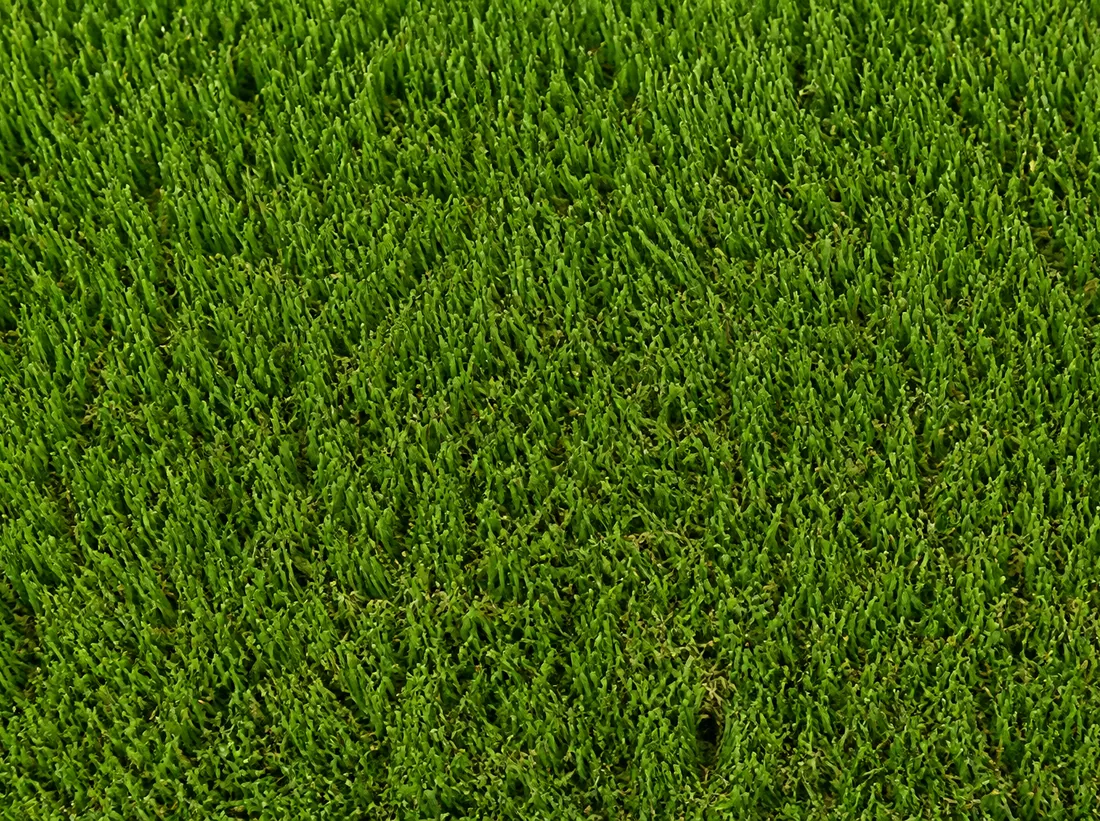
Lush 80 Artificial Turf
A premium, realistic turf with a fuller feel. A balanced fit for lawns, pets, and active yards.
View Lush 80 →The Infill Is the Cheapest Upgrade You Can Make
I keep coming back to infill because it’s where I see people leave the most comfort on the table. You can buy a great roll and then undo half the benefit by filling it with the wrong material. (Yes, I know how that sounds. No, I won’t stop saying it.)
For Arizona, I want a light-colored infill instead of dark rubber. It reflects sun rather than storing it, and for pet areas we carry a coated option that handles odor at the same time. You can see our turf infill options here. If you ever inherit a yard with black rubber baked into it, swapping the infill is one of the most worthwhile upgrades you can make without tearing anything out — we’ll help you offload the heavy bags, both literally and emotionally.
If you don’t want to overthink the whole thing, here’s the shortcut I’d give a neighbour: pick Lush 80 for a full-sun lawn, pair it with a light infill, add shade over your highest-use corner, and keep a hose handy. Do those four things and heat basically stops being a topic. Skip them — especially the infill — and it becomes the thing you grumble about every August.
Scope Your Project in About a Minute
Estimate how much turf and infill your yard needs, then get a free quote from our Mesa yard. Want price ranges first? See our artificial turf cost guide.
Heat Factors at a Glance
Here’s the whole thing on one page — what drives the heat, what it does, and what you do about it.
| Heat factor | What it does | What to do |
|---|---|---|
| Blade shape | A shaped W-Blade scatters sun and resists traffic; flat blades soak it in | Choose a W-Blade roll — Lush 70, Lucky 77, or Lush 80 |
| Blade color | Flat dark green holds more heat; multi-tone reflects a little more | Pick a natural multi-tone green, not a single emerald shade |
| Infill | Black crumb rubber stores heat like a battery; light infill reflects it | Use a light-colored infill — never dark rubber |
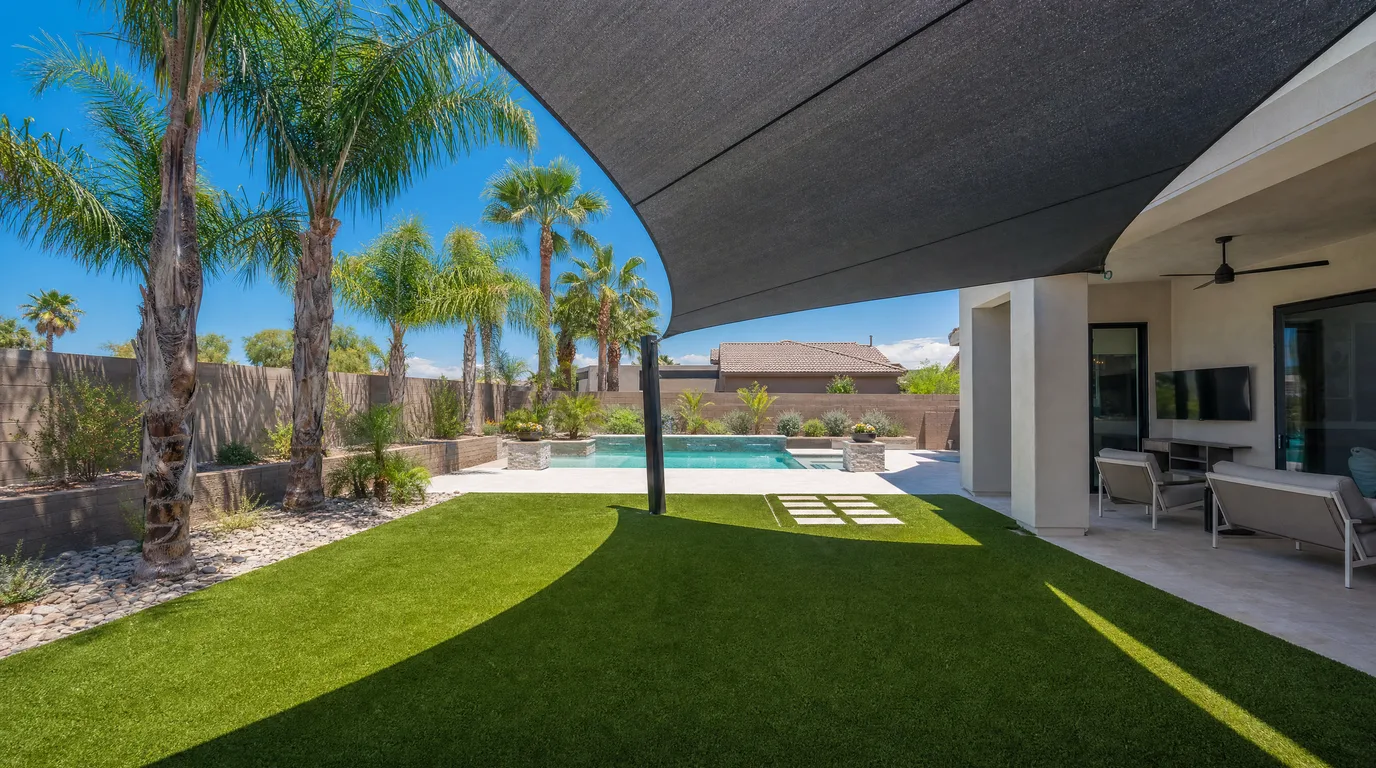
| Shade | Direct afternoon sun is the whole problem; shade removes most of it | Add a sail, ramada, or tree over your busiest corner |
| Rinse | Surface heat is shallow and sheds fast with water | Keep a hose handy and rinse for a few seconds before midday use |
Blade and color set the baseline. Infill, shade, and a quick rinse are the levers you actually pull on a hot afternoon.
Heat Myths That Cost You Money
The fastest way to spend money and still be uncomfortable is to buy on the wrong claim. Here are the ones I hear most at the counter.
'This Turf Stays Cool'
No roll stays cold in full Arizona sun. If a salesperson promises 'heat-proof' or 'stays cool,' they're overselling — ask what it's paired with and where it's going instead.
Saving on Black Rubber Infill
Crumb rubber is cheap and it stores heat like a battery. It's the single worst call for an Arizona yard. Spend the small difference on a light infill.
Buying on Pile Thickness Alone
A thicker pile is about durability and feel, not temperature — and more fiber can hold a touch more sun on top. Blade shape, color, and infill matter more for heat.
Skipping Shade Entirely
The blade can only do so much against a west-facing wall of afternoon sun. A sail or ramada over the dog run or play area does more than any spec on the box.
Want a Setup That Handles Full Arizona Sun?
We'll help you match the right roll, the right infill, and a little shade to your yard — for homeowners and contractors across Arizona and Utah.
- 4.9 from 300+ reviews
- 12-year manufacturer warranty
- Free quote & free sample
- Arizona & Utah
What Customers Say
5.0 from 480+ verified Google reviews
I was nervous about purchasing buuuuut, I messaged and talked to an amazing and very knowledgeable person, who not only answered my questions but also sent video of the difference of grass they offer. No pushing, no gimics, no games. They delivery went ever so smooth and I'm in Tucson!! Couldn't be more happy with my purchase. Thank you Turf Yard and everyone involved!!!
The Turf Yard guys were great to deal with. Special thanks to Haley and Clark for being friendly and punctual. Haley was able to answer all of my questions. We purchased a Lush 70 for our super budget front yard landscaping project. We were happy with the quality of the turf and the price. The transformation from dirt to turf makes a big difference. Look forward to working with them again on our next project.
Expert Tips
— Bennett Brown, Co-Founder
Choose the Infill Before the Brand
A light-colored infill does more for day-to-day comfort than the name on the roll. If budget is tight, never let it be tight on the infill.
Put Shade on Your Busiest Corner
A sail or ramada over the dog run or play area beats any spec sheet. Heat in the desert is a sun problem first — take the sun off the spot you actually use.
Keep a Hose by the Door
Surface heat is shallow and sheds fast. A few seconds of rinse before midday use drops the temperature quicker than anything you can buy in a bottle.
Check It With the Back of Your Hand
Same rule as pavers and concrete — if it's too warm for your hand for ten seconds, it's too warm for a paw. The National Weather Service heat-safety pages say the same about hot surfaces and pets.
Match the Roll to the Sun
Save the budget roll for shaded side yards and put the W-Blade where the afternoon sun lands. You don't need to spend up on a spot that never bakes.
Skip the Black Rubber, Always
If you inherit a yard with crumb rubber, swapping the infill is the cheapest comfort upgrade there is — no tear-out, no new turf, just a cooler surface.
— Bennett Brown, Co-Founder
Related Services
Pets and Pool Decks in the Heat
Two quick notes, because they come up at the counter constantly. For dogs, the same rules apply, just turned up: a light infill, a quick rinse before peak afternoon, and a check with the back of your hand the way you would with concrete. The National Weather Service heat-safety guidance is blunt about hot surfaces and pets, and turf is no exception — our pet turf setup is built around the drainage and odor control that matter as much as heat for a dog run. For pool decks, turf is one of my favorite Arizona uses — it’s soft, it doesn’t bake like pavers, and wet feet keep it cool naturally. Just plan the drainage so splash-out sheets away clean.
I’ve spent enough Arizona summers around turf to know the heat worry is real and very solvable. Choose a shaped, multi-tone W-Blade, put a light infill under it, throw some shade on your busiest corner, and keep a hose nearby. That’s the whole game. We supply turf, base, and infill across the Arizona service area from our Mesa yard and across Utah from Provo, with free samples so you can feel the difference in the sun before you commit — call Mesa at (480) 910-2440 or Provo at (385) 335-9042. Swing by before your water bill needs its own zip code. The dry jokes are complimentary, and no, you can’t return them.