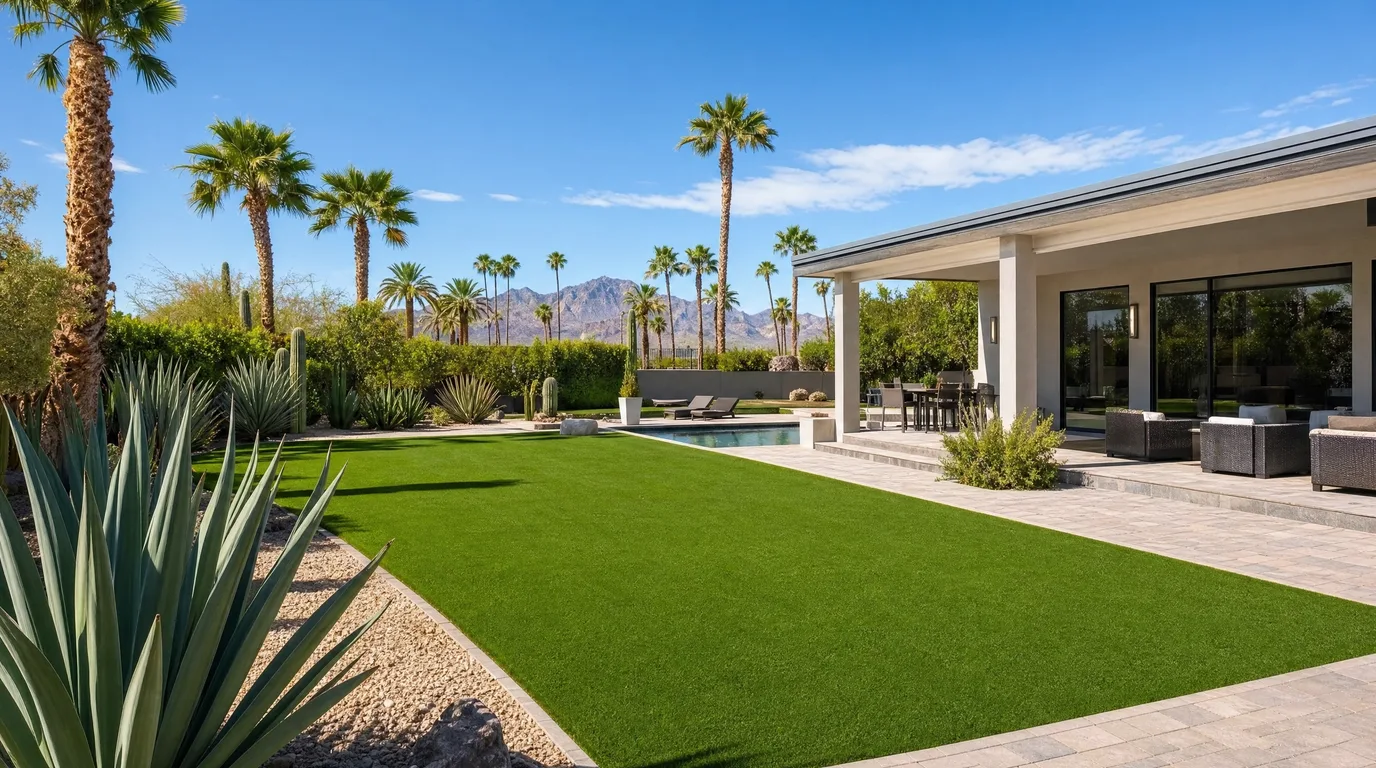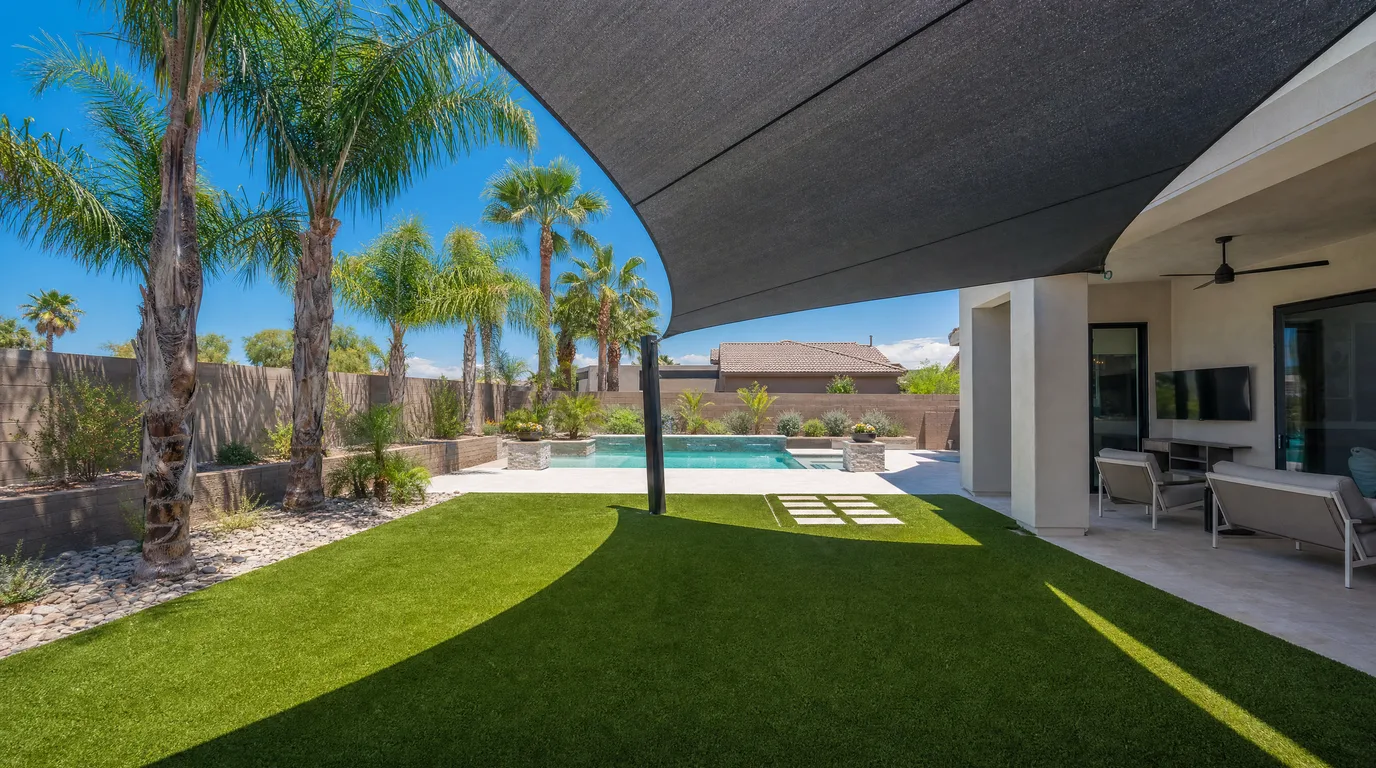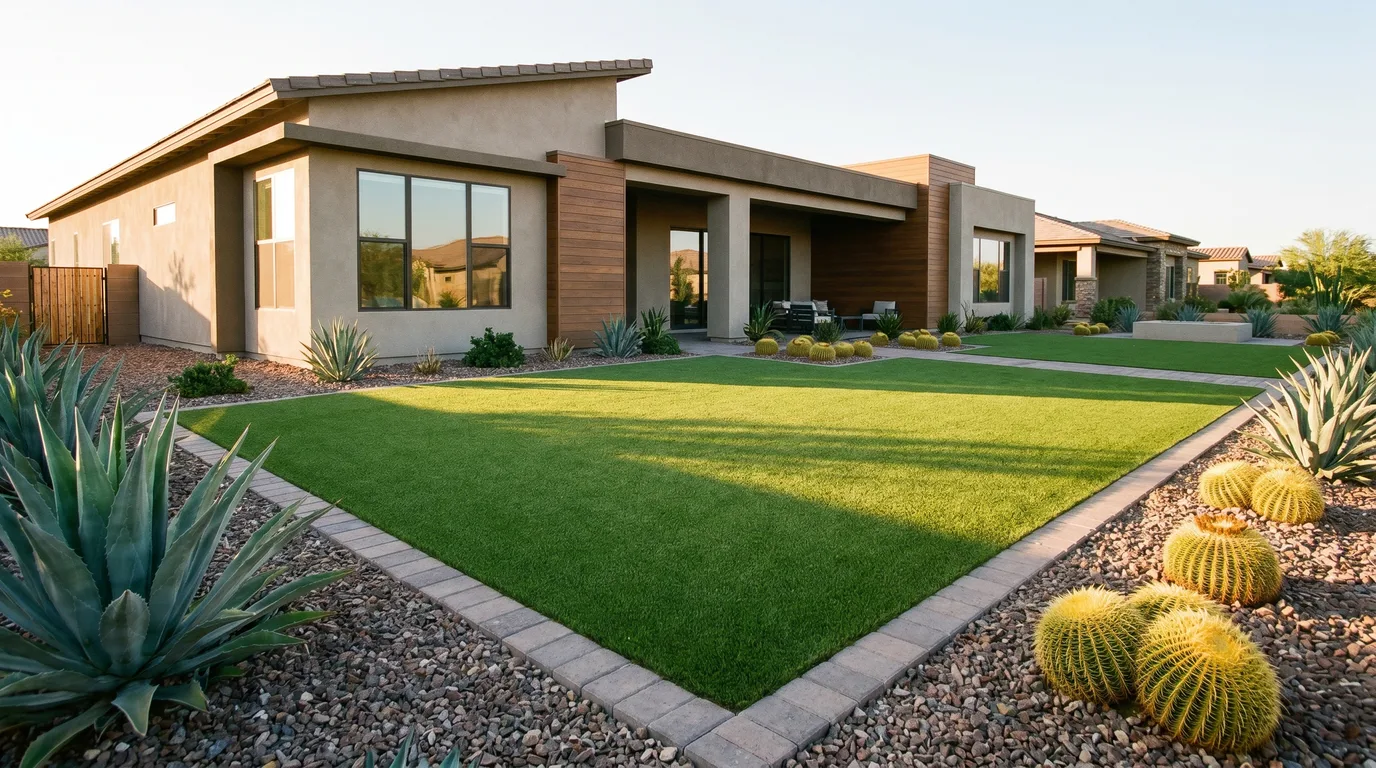
Short version: artificial turf usually lasts 15 to 20 years, and the roll we sell carries a 12-year manufacturer warranty. So how long does artificial turf last in practice? Long enough that the lawn will probably outlast the patio furniture sitting on it. The honest part most installers skip: the difference between turf that quits at 10 years and turf that’s still fine at 20 is almost never the turf. It’s the base underneath it. The roll gets the blame; the gravel did the crime.
I’ve walked a few hundred Arizona and Utah yards, and the early failures all rhyme. A great-looking turf laid over a base nobody compacted. Or a perfectly good install where the owner never touched the infill again. Get those two right and the climate stops being the villain. Here’s the whole picture.
TL;DR — Quick Answer
Quality artificial turf lasts about 15-20 years, and ours carries a 12-year manufacturer warranty. The biggest lever isn't the roll - it's the base under it and the infill you keep topped off. UV, traffic, and a heavy daily dog chip away too, but a properly built base and a yearly infill top-off are what get you to the long end of the range.
Typical lifespan
15-20 years
Warranty
12-year manufacturer
What matters most
The base under the turf
Most common mistake
Skipping the yearly infill top-off
Want Turf That Actually Makes It to 20 Years?
We'll help you pick the right product and get the base done right from day one - the part that decides the lifespan. Free quote, no pressure.
Table of Contents
Key Takeaways
- Quality artificial turf usually lasts 15-20 years, and our products carry a 12-year manufacturer warranty.
- The gap between 10 years and 20 is almost always the base and the infill - not the roll itself.
- Arizona's UV and long summers stress the fibers harder, so UV-stabilized blades and a polyurethane backing aren't optional here.
- A denser W-Blade product like Lush 80 holds up better in high-traffic yards than a soft, plush C-Blade.
- Brush the busy lanes and top off the infill once a year - the two cheapest habits that add real years.
How Long Turf Really Lasts (And the Warranty)
Quality artificial turf lasts about 15 to 20 years under normal residential use. Some installs go longer. Hard-use yards in a harsh climate can show wear sooner. That range is the industry benchmark, and it holds up.
Here’s our number, because a benchmark isn’t a promise: every turf we sell carries a 12-year manufacturer warranty. That covers the roll itself against defects. It doesn’t cover the gravel you didn’t compact, which - spoiler for the next section - is the part that usually fails first.
When installers talk about “lifespan,” they mean the point where the fiber system starts to show real wear: thinning, matting, fading that you’d notice from the patio. The backing and infill often outlast the blades, or the other way around. No single number fits every yard. A dense product in a quiet ornamental yard can cruise past 20 years. A light turf under two big dogs and daily traffic might look tired at 10. Context beats any one figure. The Synthetic Turf Council frames it the same way - synthetic turf is a long-term, low-maintenance landscape surface, not a disposable one.
What Actually Decides How Long Turf Lasts
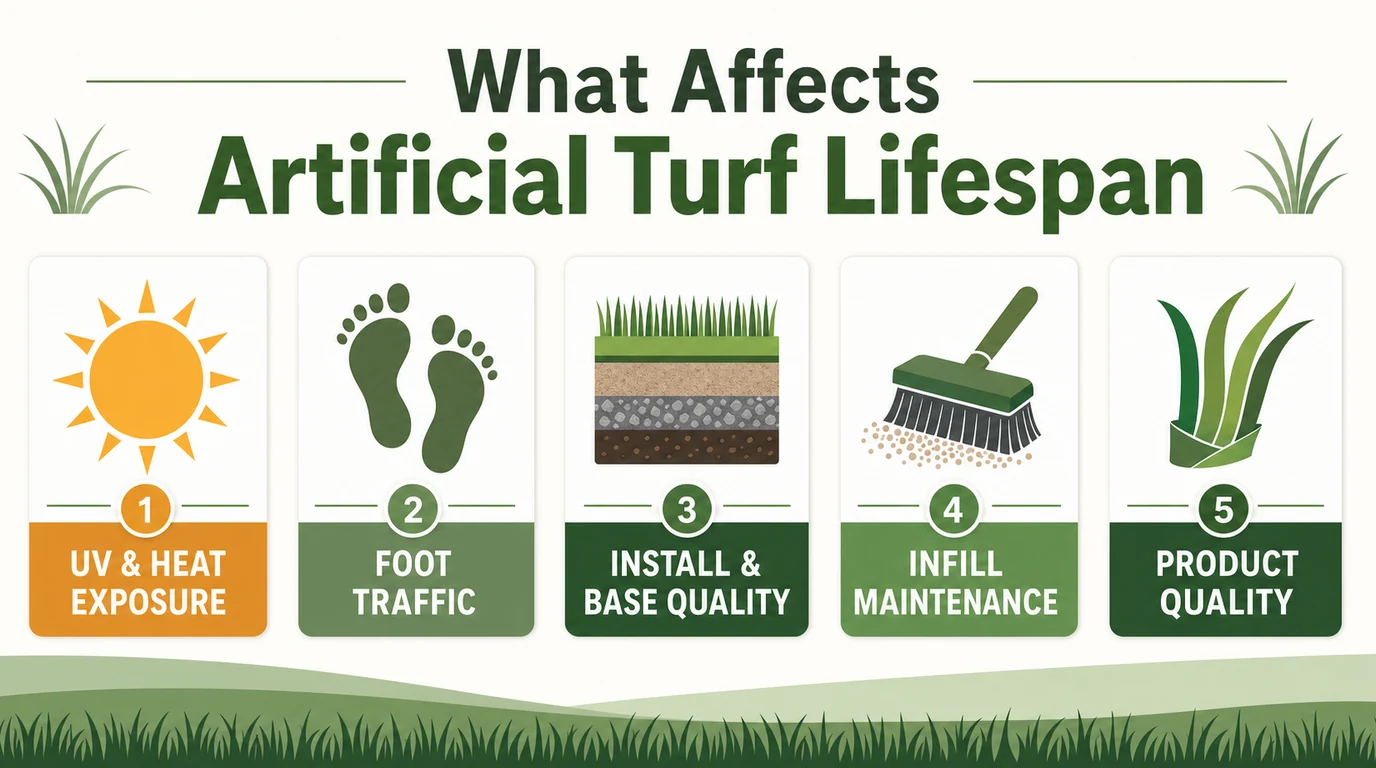
Five things move the needle. I’ve put them in the order I’d argue for at the counter, not the order the brochures use.
1. The base (this is the whole game)
This is the most underestimated factor by a mile, so it goes first. A turf system is only as good as what’s under it. A properly compacted aggregate base - usually decomposed granite here in Arizona - gives you a stable, free-draining foundation. That keeps the turf level and keeps foot traffic off the seams, edges, and backing.
Skip the compaction and you get settling. Settling gives you low spots, stressed seams, and puddles where water should drain. Water trapped under turf chews through the backing and breeds odor. In the Valley we also fight caliche - that rock-hard calcium carbonate layer under a lot of our soil - which has to be broken through or worked around to drain properly. Get the base right and you’ve added years before you’ve even unrolled the turf. Get it wrong and the best roll on the truck still quits early. The Synthetic Turf Council’s technical guidelines publish separate standards for base systems and infill, which tells you how much both matter. The full breakdown lives in our artificial turf installation guide.
2. Infill upkeep
Infill does more than people think. It holds the blades upright, cushions impact, and in pet yards helps with drainage and odor. When it compacts or drifts out over the years - fastest in the high-traffic lanes - the blades lose their support and lie flat under every step. Flat blades mat. Matted blades look worn long before they actually are.
The fix is a yearly check and a top-off where it’s run thin. That’s it. Skimping on infill is the single most common regret I see, and it’s the cheapest one to avoid. Our turf infill guide covers the options, from standard silica sand to a coated antimicrobial fill for dog runs.
3. UV exposure and heat
This is the big one for Arizona, and the reason climate even enters the conversation. UV radiation is the main driver of fiber breakdown in any synthetic turf - the sun cracks the polymer chains over time, which shows up as fading, then brittleness, then thinning. Phoenix gets more sun hours than almost anywhere in the continental US, and our summers run full-bore from April into October. The EPA’s UV Index scale puts our peak summer days in the “very high to extreme” band. Folks in Seattle simply aren’t fighting the same fight.
What helps: UV-stabilized polyethylene blades, which are standard on quality turf. We cover the heat side of this in how artificial turf handles Arizona heat - worth a read so you set realistic expectations.
4. Traffic and how you use the yard
More traffic, more mechanical stress. Every footstep compresses and bends the blade sideways. A quiet decorative side yard can look great for years on almost no upkeep. A backyard that’s a daily play field for kids and dogs wears faster, especially in the corridors everyone walks.
What helps: a denser turf for the busy zones, plus the occasional brush to stand the pile back up. Alternating foot paths helps too, though I’ve never met a dog who reads that memo.
5. The blade and the build
Not all turf is built the same. A denser pile - more fiber per square yard - simply has more material to wear through before thinning shows. Blade shape matters as much as density. Our W-Blade products (Lush 70, Lucky 77, and Lush 80) are shaped to stand up to traffic. The soft C-Blade on Lush Primo feels plusher and wins on curb appeal, but it isn’t the pick for a yard that takes a daily beating.
Backing is the quiet hero. Every roll we carry uses a double polypropylene backing with a polyurethane coating and a quadruple-drainage-hole design. That resists delamination, holds turf nails, drains fast, and shrugs off temperature cycling - which matters in both Arizona’s heat and Utah’s freeze-thaw winters.
How Long Turf Lasts in Arizona Specifically
Arizona is genuinely tough on turf. The combination stacks up:
- Extreme UV index - some of the highest readings in North America
- Long, hot summers with barely any cloud cover
- Big temperature swings between summer afternoons and winter nights
- Almost no rain to rinse the dust out naturally
All of that can age fibers faster than a mild climate would. It doesn’t mean Arizona turf won’t last - it means product selection and base prep matter more here than almost anywhere. UV-stabilized blades, a polyurethane backing, and a compacted base are non-negotiable in the Valley.
We see Phoenix-metro installs holding strong into their second decade. We also see early failures, and they almost always trace back to a light product or a base nobody compacted - not the climate by itself. Utah flips the script: freeze-thaw cycles in Provo and Salt Lake stress the base and backing in ways the desert doesn’t. Different villain, same hero. In both states, the foundation is what decides whether the turf goes the distance.
| Factor | Shortens lifespan | Extends lifespan |
|---|---|---|
| Base | Skipped compaction - settling, pooling, stressed seams | Properly compacted, free-draining aggregate base |
| Infill | Never topped off - blades mat and take the full load | Checked and topped off once a year in the busy lanes |
| Blade & build | Light pile, soft C-Blade in a high-traffic yard | Denser W-Blade with a polyurethane drainage backing |
| UV & heat | Non-stabilized fiber baking in full Arizona sun | UV-stabilized polyethylene blades built for heat |
| Traffic & care | Daily heavy use, no brushing, debris left to rot | Brushed lanes, rinsed regularly, debris cleared early |
Same yard, two outcomes. Almost every row that shortens lifespan is a choice made at install or skipped in upkeep - not the turf failing on its own.
Signs Your Turf Is Actually Wearing Out
Not sure if your turf is finished or just needs a tune-up? These are the signs that point to replacement rather than a refresh:
- Fiber thinning or bald patches that don’t bounce back after brushing and an infill top-off
- Blades that stay matted flat even after a stiff broom and fresh infill
- Cracked, separated, or buckled backing across a wide area
- Seam failure that won’t take adhesive anymore
- Persistent odor that survives a deep rinse and an antimicrobial infill swap
- Heavy fading or color drift across the whole field, beyond normal weathering
One worn lane in a high-traffic zone usually isn’t a teardown - a section repair often does it, and it’s cheaper. But if you’re counting several of these across the yard, get a professional eye on it before you spend on either repair or replacement.
How to Make Your Turf Go the Distance
Reaching the long end of the range - or past it - comes down to a few steady habits. None of them take a manual.
- Brush the busy lanes. A stiff-bristle or power broom lifts flattened fibers back upright. A few passes a year in the high-traffic zones makes a real difference. Brush against the grain of the pile.
- Rinse it now and then. A hose knocks off dust, pollen, and pet residue. In Arizona it cools the surface for the dog too. You’re giving it a shower, not a power wash.
- Top off the infill yearly. Check the levels, especially in pet areas and the lanes everyone walks. Keeping infill at depth is what holds the blades up and the turf flat.
- Clear debris early. Leaves, sap, and rotting matter left against turf will stain and degrade the fiber. Pull it before it settles in and pays rent.
- Skip harsh chemicals. Spot-clean with a mild, pH-neutral cleaner. Solvents eat fiber coatings and backing adhesive over time.
- Mind sharp and abrasive stuff. Uncapped metal furniture legs, dragged tools, and rough edges grind out localized wear.
Honest truth: a professional install with a quality base and the right infill from day one is the single biggest move you can make for longevity. Upkeep after the fact can only do so much if the foundation was wrong. You can’t brush your way out of a base that was never compacted.
The Base Decides the Lifespan. Let's Get It Right.
We supply the turf, the base, and the infill - and the straight answers on how to build a yard that's still good in 20 years. For homeowners and contractors across Arizona and Utah.
- 4.9 from 300+ reviews
- 12-year manufacturer warranty
- Free quote & free sample
- Arizona & Utah
What Customers Say
5.0 from 480+ verified Google reviews
I was nervous about purchasing buuuuut, I messaged and talked to an amazing and very knowledgeable person, who not only answered my questions but also sent video of the difference of grass they offer. No pushing, no gimics, no games. They delivery went ever so smooth and I'm in Tucson!! Couldn't be more happy with my purchase. Thank you Turf Yard and everyone involved!!!
The Turf Yard guys were great to deal with. Special thanks to Haley and Clark for being friendly and punctual. Haley was able to answer all of my questions. We purchased a Lush 70 for our super budget front yard landscaping project. We were happy with the quality of the turf and the price. The transformation from dirt to turf makes a big difference. Look forward to working with them again on our next project.
Expert Tips
— Bennett Brown, Co-Founder
Spend on the Base, Not the Brochure
Nine times out of ten, the difference between 10 years and 20 is the base. Compact it properly and the rest of the system gets to do its job.
Top Off Infill Every Year
Infill migrates and compacts toward the edges. A yearly top-off in the busy lanes holds the blades up and stops the matting that makes turf look old before it is.
Match the Blade to the Traffic
A daily-use backyard wants a denser W-Blade like Lush 80. Save the soft C-Blade Primo for the front yard where curb appeal matters more than foot traffic.
Insist on UV-Stabilized Fiber in Arizona
Our sun is relentless. UV-stabilized polyethylene blades are the difference between turf that fades early and turf that holds its color into its second decade.
Brush Against the Grain
A flat, worn-looking path is almost always a brushing problem, not a turf problem. Run a stiff broom against the pile and watch it stand back up.
Repair the Lane Before You Replace the Yard
One tired corridor usually means a section repair, not a teardown. Get a professional look before you spend on a full replacement you may not need.
— Bennett Brown, Co-Founder
Related Services
When you’re ready to build a yard that’s still good in 20 years, we supply the turf, the base, and the infill across the Arizona service area from our Mesa yard and across Utah from Provo - with free samples and hands-on guidance. Call Mesa at (480) 910-2440 or Provo at (385) 335-9042, or swing by and ask us anything. We’ll help you pick the roll, build the base, and price it honestly. Do that, and the only thing that’ll wear out first is the patio set.