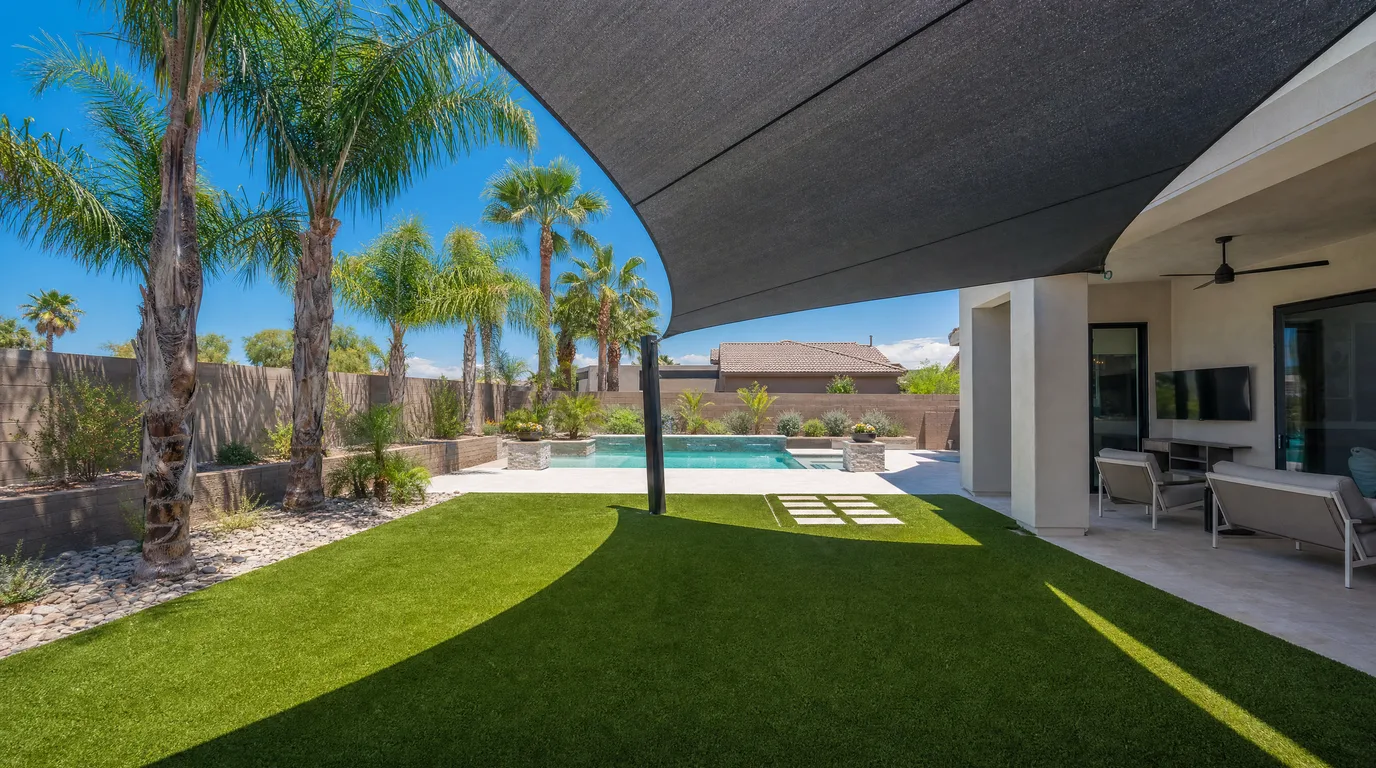
Every Arizona homeowner asks me the same thing before they buy: “But won’t it cook?” Fair question. So let’s answer the one you came for — does artificial turf get hot? Yes. In full Phoenix sun, it warms up. Any outdoor surface does in July, and synthetic turf is no exception. I’d be lying if I said otherwise, and I’ve walked across enough August lawns to know better.
The useful part isn’t whether it gets warm — it’s how much, what drives it, and what you can actually do about it. Anyone promising you a turf that “stays cool all day in full sun” is overselling. Here’s the honest version, the kind I’d give you across the counter with one coffee in.
TL;DR — Quick Answer
Yes, artificial turf gets warm in full Arizona sun — synthetic blades can't cool themselves the way living grass does. How warm depends on blade shape, fiber color, infill, and shade. A W-Blade product, a lighter infill instead of black rubber, some shade over the high-use zones, and a quick rinse keep it comfortable. No turf stays cold in July sun.
Gets warm in full sun
Yes, like any surface
Fastest cooldown
A 30-second rinse
Biggest lever
Light infill, not dark rubber
Best for paws & kids
Morning & evening hours
Want Help Speccing a Cooler Setup?
We'll walk you through blade, infill, and shade choices for your yard — straight answers, free quote, no pressure.
Table of Contents
Key Takeaways
- Turf warms up in direct sun because synthetic fibers can't cool themselves through moisture the way living grass does — it behaves more like any other outdoor surface.
- Blade shape and color, infill, shade, and what's next to the turf all decide how warm it gets — our W-Blade products use a heat-reducing shape, and lighter fibers reflect more sun.
- Infill is the bigger lever than most people expect — swapping black crumb rubber for a lighter infill removes one of the largest heat contributors.
- A 30-second rinse with a garden hose is the fastest, cheapest way to drop the surface temperature, especially in dry Phoenix heat.
- No turf stays cold in full July sun. Shade over the high-use zones plus a rinse habit is what keeps it comfortable when you actually use the yard.
Why Turf Warms Up in the Sun
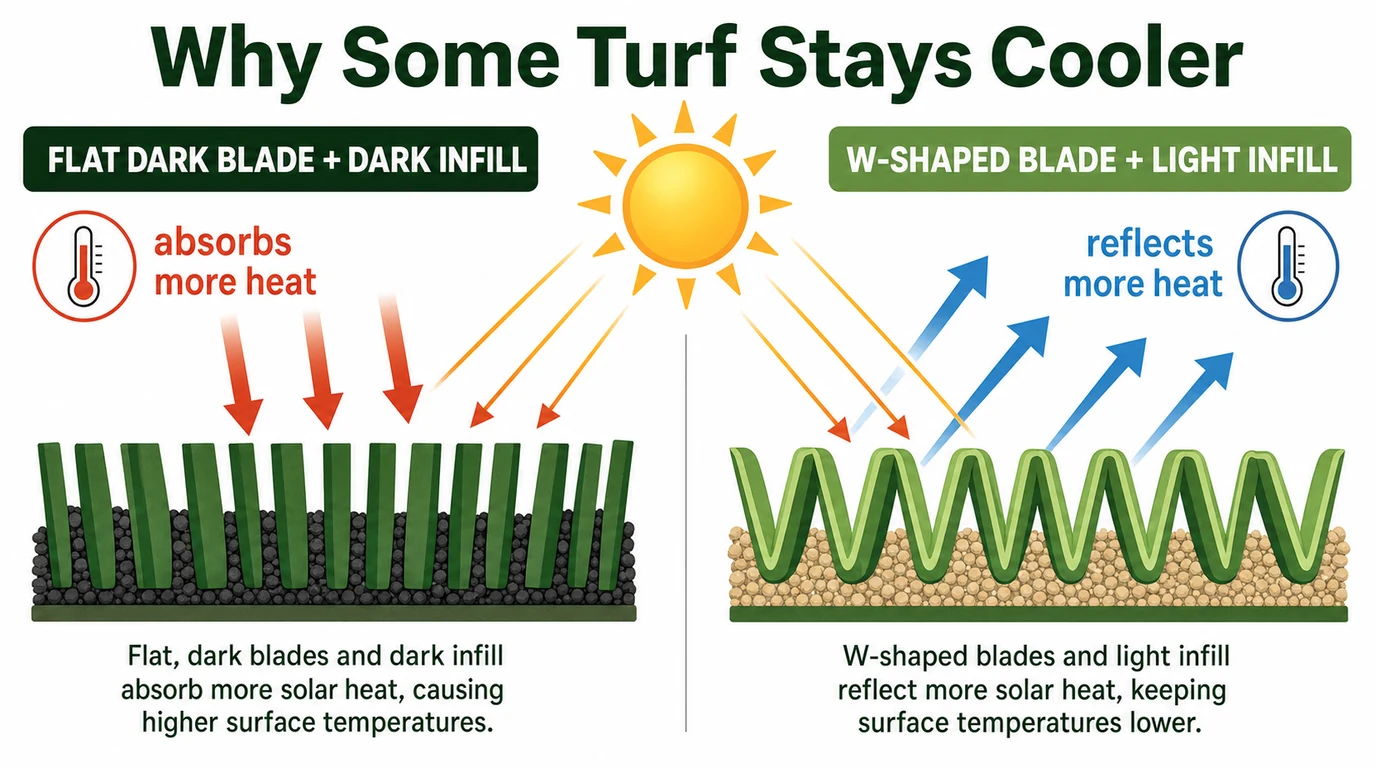
Living grass keeps itself cool with a trick turf doesn’t have. It pulls water up through its roots and releases moisture through its leaves, and that constant evaporation works like a tiny air conditioner at the blade. Synthetic turf has no roots and no moisture to give up. So on a hot day it behaves more like any other outdoor surface — it soaks up sun and holds onto it.
That’s the whole mechanism, and it’s worth sitting with for a second. Turf isn’t doing anything unusual. Concrete, pavers, asphalt, the hood of your truck — they all warm up in full sun for the same reason. The reason the heat-island effect makes whole cities run warmer is the same physics on a bigger scale: hard, dark, dry surfaces absorb sun instead of shedding it. The EPA’s overview of the heat island effect is a clear, no-spin read on why developed surfaces hold heat. Turf sits somewhere in that family — warmer than living grass, but it cools faster than concrete once the sun drops, because it doesn’t have the thermal mass to keep radiating after dark.
So the question was never “does it get hot.” It does. The real question is which knobs you can turn to keep it comfortable. There are four, and you control all of them.
What Actually Drives Surface Heat
When people search for “heat-resistant turf” or “artificial grass that doesn’t get hot,” they’re usually hoping for one magic product. There isn’t one. But there are four things that genuinely move the needle, and the gap between getting them right and getting them wrong is real.
Blade shape. The old flat, uniform blades formed a continuous dark carpet — not much airflow, not much light scattered. Newer shaped blades do better. All three of our W-Blade products — Lush 70, Lucky 77, and Lush 80 — use a heat-reducing W shape that breaks up the surface, scatters more light, and lets a little more air move through. Our Lush Primo uses a softer C-Blade instead — plusher and the best curb appeal, but it’s the curb-appeal pick, not the heavy-traffic one.
Fiber color. Lighter and multi-tone fibers reflect more sun than a flat, single dark green absorbs. Our blades are multi-tone, which is part of why a textured product scatters light better than the old one-color carpets. The same reason you don’t park a black car in an Arizona lot in July if you can find a white one two spaces over.
Infill — the bigger lever. This is the one people underrate. A lot of older installs sat over black crumb rubber, which is dense, dark, and excellent at hoarding heat. Swapping that for a lighter infill — a light silica or a quality turf infill built for hot climates — removes one of the single largest heat contributors. Honestly, infill choice often does more than blade choice. If your current turf runs hot, look under the blades before you blame the roll.
Sun and surroundings. Six to eight hours of unrelenting summer radiation will warm any surface, and what’s next to the turf matters too. A slab of dark hardscape or a block wall radiating heat back onto your lawn makes everything warmer. The turf isn’t the only thing in the yard absorbing sun.
How to Keep It Comfortable
Here’s the part that actually changes your afternoon. Four levers, in roughly the order of how much they help.
Rinse it. This is the fastest, cheapest tool you have, and it’s a little embarrassing how well it works. A 20-to-30-second pass with a garden hose drops the surface temperature noticeably, because evaporation pulls heat off the surface — the same principle as sweating. Phoenix’s dry heat makes it more effective than it’d be somewhere humid, since the water evaporates fast and takes the heat with it. Rinse before the kids or the dog go out at 2 p.m. in August. That’s the habit that quietly solves most heat complaints.
Shade the spots you use. Obvious, but it’s the most powerful structural fix in Arizona. A ramada, a shade sail, or a well-placed tree cuts the direct sun load on the turf during the worst hours. You don’t need to shade the whole lawn — just the play area, the dog run, the patch by the patio where people actually stand. Shade over the high-use zones beats relying on blade tech alone.
Choose lighter infill. If you’re speccing a new install or topping off an old one, a lighter infill instead of black crumb rubber is the upgrade that keeps paying off. It’s also one of the few heat fixes you can retrofit onto turf you already own.
Pick a W-Blade product. Start with a heat-reducing blade and multi-tone fibers and you’re ahead before the infill even goes down. Lush 80 is our most popular middle-ground pick for residential yards for exactly this reason.
The National Weather Service has the straight story on managing the heat itself — their heat safety guidance covers the hours to watch and who’s most at risk, which is worth a read if your yard sees a lot of kids or pets in summer.
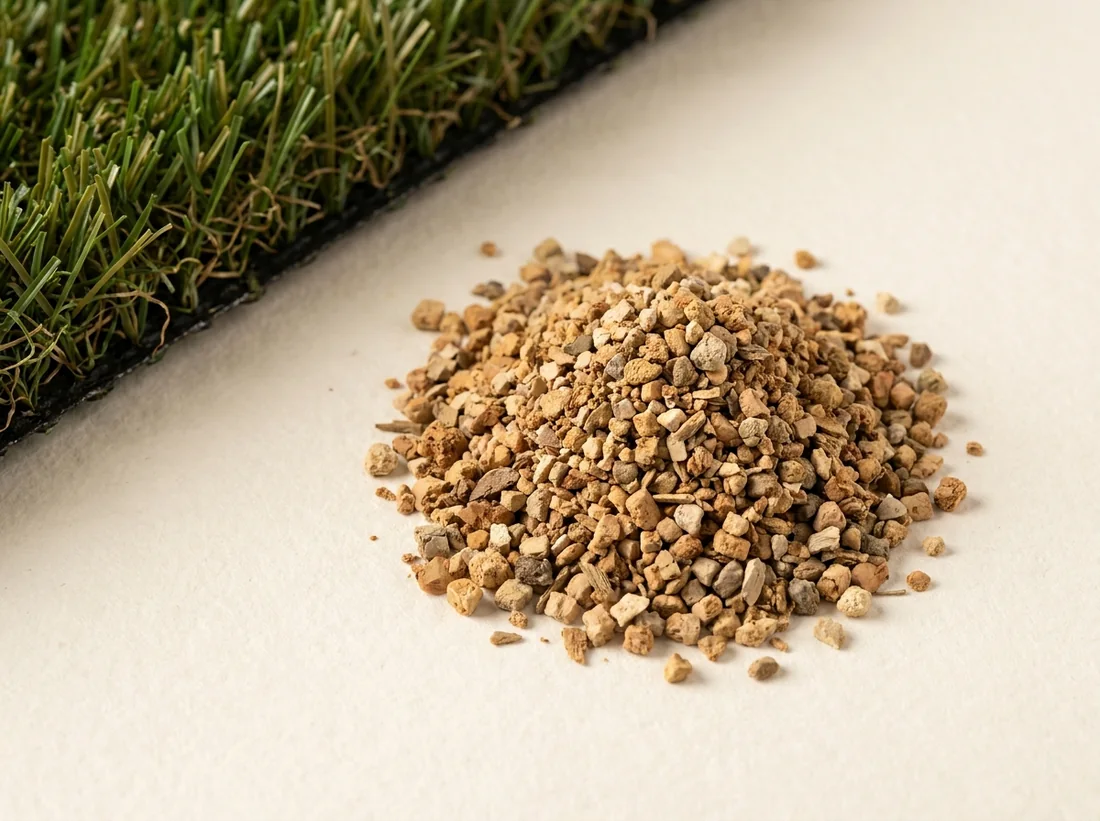
Natural Blend Pro Turf Infill Artificial Turf
Turf infill that supports blade stability, cushioning, drainage, and overall surface resilience.
View Turf Infill →The Honest Take: No Turf Stays Cold in Full Sun
Let me be straight, because you won’t always get this from a turf salesperson: no artificial grass stays cold in full Arizona summer sun. A product sold as the “coolest turf on the market” still gets warm at 2 p.m. in July. It just doesn’t get as warm as the old flat-blade, dark-rubber setups. That’s the honest delta, and I think it matters before you spend the money.
Here’s what “heat-resistant” realistically buys you:
- A surface that runs meaningfully cooler in peak heat than an old-style dark setup.
- One that cools down faster the moment you rinse it or the sun angle drops.
- More consistent comfort during the shoulder hours — morning and early evening — which is when most people actually use the yard anyway.
If you build sun timing into the plan, you’ll be happy with it. If you expect a roll that ignores the desert, no product on earth will keep that promise. The customers who love their turf are the ones who chose a good product and learned to rinse before the afternoon. That’s not a knock on turf. It’s just July in Phoenix doing what July does.
And this isn’t theory I’m reading off a spec sheet. The people who sell and install this turf live on it too — our own backyards, our kids, and our dogs, right through a Phoenix summer. We rinse before the afternoon, we shade the corner the dog actually lies in, and we run a lighter infill. That’s how a real Arizona family uses turf in July: not by pretending it stays cool, but by managing it the way you’d manage a patio or a sidewalk. It’s about the effort of remembering sunscreen — and a lot less than the lawn it replaced.
Pet Paws in an Arizona Summer
This comes up in nearly every pet-owner conversation I have, and the concern is fair — paw pads can get burned on any hot surface, turf included, same as the sidewalk or the driveway. The NWS even tracks how hot pavement runs relative to the air in their heat forecast tools, and the back-of-the-hand test you’d use on asphalt works on turf too.
A few things I tell every dog owner:
- Check it with the back of your hand first. If you can’t hold it comfortably, it’s too hot for paws. Simple as that.
- Rinse before they go out. Thirty seconds with the hose, and the afternoon problem mostly disappears.
- Go lighter on the infill. Skip black crumb rubber for pet areas — a lighter, quality infill runs cooler and is better all around.
- Use the cool hours. Early morning and evening are the comfortable windows for dogs and kids alike.
Our artificial pet turf setups pair the turf with infill picked for paw comfort and odor, the two things dog owners ask about most. And if you want the deeper paw-and-product breakdown, our guide to the best artificial turf for dogs in Phoenix goes long on it.
Cooling Levers at a Glance
Same information, sorted by what to actually do about it. Most of these you control with a hose and a sensible infill choice.
| Factor | Effect on Surface Heat | What to Do |
|---|---|---|
| Rinsing | Drops the surface temperature fast as water evaporates off the blades | A 20–30 second hose rinse before afternoon use — the cheapest lever there is |
| Infill color | Black crumb rubber hoards heat; lighter infill reflects more of it | Spec a lighter infill, not dark rubber — retrofittable on turf you already own |
| Blade shape & color | Flat, dark blades absorb; W-Blade and multi-tone fibers scatter more light | Choose a W-Blade product like Lush 80 over an old flat-blade roll |
| Shade | Cuts the direct sun load during the worst afternoon hours | Shade sail, ramada, or a tree over the play area or dog run |
| Nearby hardscape | Dark slabs and walls radiate extra heat onto the turf | Mind what's next to the lawn; lighter surfaces and shade help |
No single lever makes turf cold. Stacked together — light infill, a W-Blade, shade, and a rinse habit — they keep it comfortable through most of the day.
Heat Mistakes People Make
These are the four I see most, and every one of them is avoidable before you spend a dollar.
Believing 'Any Turf Stays Cool'
No roll stays cold in full July sun, whatever the brochure says. Plan for sun timing and a rinse — that's what actually keeps it comfortable, not a magic blade.
Skipping or Skimping on Infill
Infill isn't just for heat, but the wrong infill makes everything hotter. Black crumb rubber hoards heat; a lighter infill is one of the biggest fixes you can make.
Dark Hardscape Right Next to It
A big dark slab or block wall radiates heat back onto the lawn. The turf isn't the only thing absorbing sun — mind what you put beside it.
Forgetting the Hose
People spend extra on premium blade tech and then never rinse. A 30-second rinse outperforms skipping it with any product on the market.
Want a Setup That Stays Comfortable in the Heat?
We'll help you pick the blade, the infill, and a shade plan that fits your yard — for homeowners and contractors across Arizona and Utah.
- 4.9 from 300+ reviews
- 12-year manufacturer warranty
- Free quote & free sample
- Arizona & Utah
What Customers Say
5.0 from 480+ verified Google reviews
AWESOME EXPERIENCE. I was working with a different supplier who fell through and I’m on a bit of a time crunch on my project. I hit up The Turf Yard and they gave me a very reasonable price for the turf and were able to deliver it the same day. I was extremely impressed. I would 200% recommend and will be coming back for more business when I’m ready to finish my project in it’s entirety. Thanks y’all!
So friendly and helpful! Came in with a specific need for my unfinished backyard and they had exactly what I needed. They were quick and even helped ratchet strap the grass roll onto the roof of my car (but delivery is an option!). The artificial grass is high quality and I’ll add a photo once I have it installed! 5/5 ⭐️ highly recommend and will utilize again for future projects!
Expert Tips
— Bennett Brown, Co-Founder
Rinse Before the Afternoon
A 30-second hose pass before the kids or dog go out drops the surface temperature fast. In our dry heat it works better than it would anywhere humid — the water evaporates and takes the heat with it.
Look at Infill Before Blades
If your turf runs hot, the infill is usually the culprit. Swapping black crumb rubber for a lighter infill does more than most people expect — and you can retrofit it on turf you already own.
Shade the Spots You Use
You don't need to shade the whole lawn. A sail or ramada over the play area or dog run cuts the sun load right where it matters during the worst hours.
Start With a W-Blade
Our W-Blade products — Lush 70, Lucky 77, and Lush 80 — use a heat-reducing shape and multi-tone fibers that scatter more light than an old flat blade absorbs.
Mind the Hardscape Next Door
A dark slab or block wall radiates heat back onto the turf. The lawn isn't the only thing soaking up sun, so think about what's beside it.
Set Honest Expectations
No turf stays cold in full sun. Build sun timing into the plan and you'll love it; expect a roll that ignores July and no product will keep that promise.
— Bennett Brown, Co-Founder
Related Services
So, does artificial turf get hot? Yes — and now you know the four levers that keep it comfortable anyway. We supply the turf, the infill, and the straight answers across the Arizona service area from our Mesa yard and across Utah from Provo, with free samples and a calculator that scopes your whole project in one go. Swing by or call Mesa at (480) 910-2440 or Provo at (385) 335-9042. We’ll help you pick it, price it, and load it — and we’ll tell you to rinse it before August, because that part’s free and so is the advice.