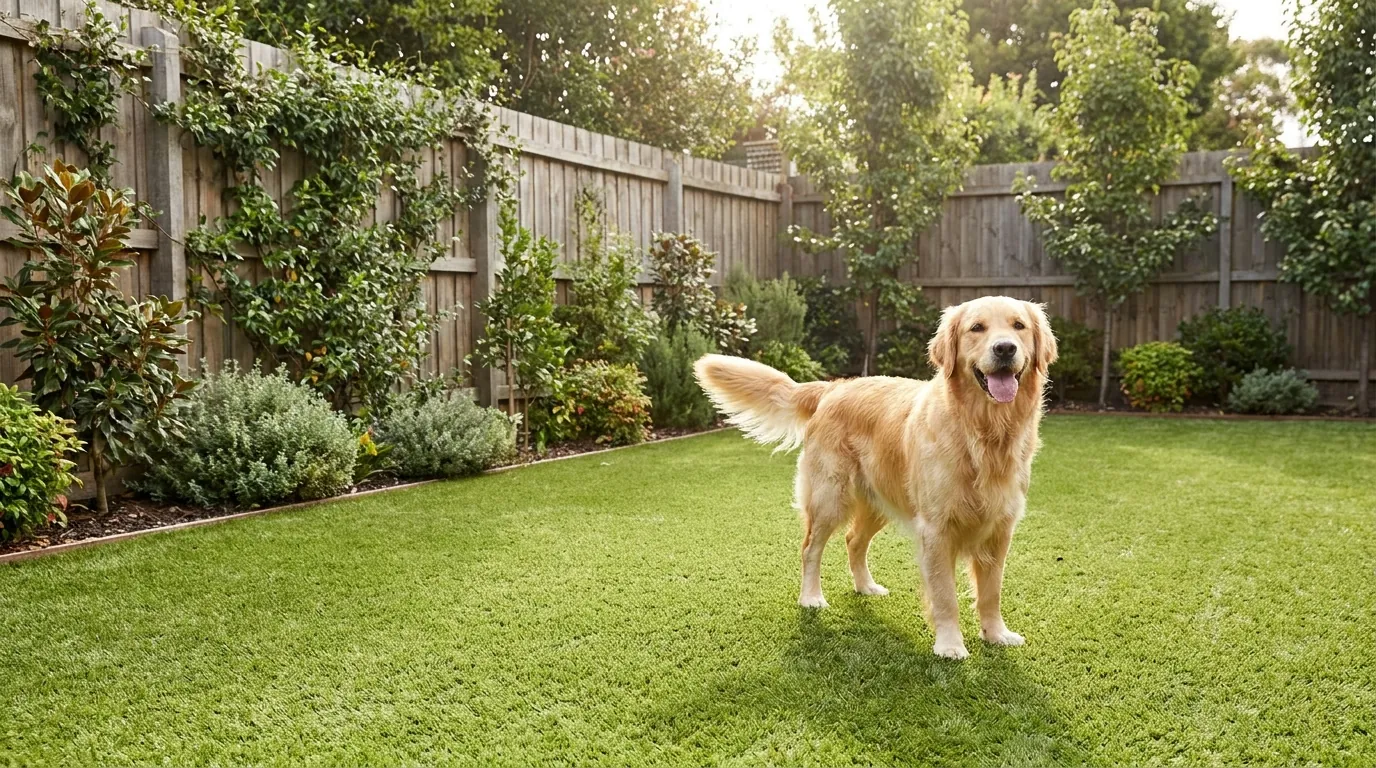
I’ve watched plenty of Phoenix dogs treat a fresh lawn like a personal demolition project, and the turf almost always wins — when it’s the right turf. So if you’re hunting for the best artificial turf for dogs in Phoenix, the honest answer isn’t a single product. It’s three things working together, tuned for a yard that bakes in summer and floods in monsoon season. Most owners don’t struggle to find dog turf in Phoenix that looks nice in the showroom. They struggle to find turf that survives the digging, the sprinting, the bathroom habits, a July afternoon, and an HOA inspection.
Get the spec wrong and you’re fighting odor, matted blades, or standing water inside a year. Get it right — free-draining backing, a durable W-Blade fiber, and a zeolite infill — and your dog gets a clean place to flop while you get your weekends back. This guide walks the whole framework for the desert: drainage for monsoon, infill and odor in the heat, paw safety, digging, and the HOA-friendly look. Pickup is from our Mesa yard, twenty minutes from most of the Valley.
TL;DR — Quick Answer
The best artificial turf for dogs in Phoenix isn't one product — it's three things working together: a free-draining backing so urine and monsoon water pass straight through, a durable W-Blade fiber that shrugs off digging and sprinting, and a zeolite infill like PetFill Pro that handles odor at the source even in the heat. Add a quick rinse before hot-day play and a compacted base, and a Phoenix dog yard stays clean for years. Skip the rinse or use plain sand, and it'll announce itself by summer.
Best for
Phoenix dog runs & pet yards
Feature that matters most
Free-draining backing
Odor fix in the heat
Zeolite infill (PetFill Pro)
Most common mistake
Plain silica sand for odor
Building a Phoenix Dog Yard?
Tell us about your dog and your yard, and we'll match the turf, infill, and base to it — for Phoenix heat and monsoon, no pressure.
Table of Contents
Key Takeaways
- A free-draining backing is the single most important feature in a Phoenix pet turf — it handles both urine and monsoon runoff. Ours uses a quadruple-drainage-hole backing so water passes straight through.
- Odor is ammonia sitting in the infill, not the blades, and heat speeds it up. A zeolite infill like PetFill Pro traps it; plain silica sand does nothing for smell.
- A durable fiber on a tough backing handles sprinting and digging — our W-Blade products stand up to traffic and reduce heat buildup versus a flat blade.
- There's no dig-proof turf, but a heavier fiber, tight edges, and a compacted base remove most of the temptation — and dry desert dirt makes loose edges worse.
- A quality multi-tone turf reads as a clean, year-round green yard, which usually keeps a Phoenix HOA happy where dust or dead grass won't.
Is Artificial Grass Good for Dogs in Phoenix? The Honest Version
Before any specs, the question I hear most from Phoenix owners is the simplest one: is this actually good for my dog out here? For most households, yes — and the desert tilts the math further toward turf than almost anywhere else. But I’d rather give you the real trade-offs than a sales pitch.
What Phoenix dog owners love: no more dust lot in summer, no mud after a monsoon storm, no dead urine-burned patches like a real lawn gets when it’s already half-fried by heat, and a surface that drains and rinses clean. Low-maintenance, not maintenance-free — there’s a difference, and any turf company that pretends otherwise has never met a dog in August.
The honest downsides: you still have to rinse it, it warms up in full sun the same as concrete does, a committed digger can damage it, and it costs more upfront than seed. Out here, though, seed barely counts as an option — real grass in a busy dog yard in Phoenix is a part-time job and a water bill that needs its own zip code. The rest of this guide is about keeping the turf downsides small.
Drainage for Monsoon Season Is the Non-Negotiable
If you take one thing from this whole post, make it this: drainage comes first, and in Phoenix it does double duty. It has to move dog urine through every day, then handle a monsoon dumping an inch of rain in twenty minutes when July decides to show off. The biggest mistake I see in Valley dog yards is treating drainage as an afterthought. If liquid can’t move through the turf fast, it pools at the backing, soaks into the infill, and becomes a permanent smell no spray will fix.
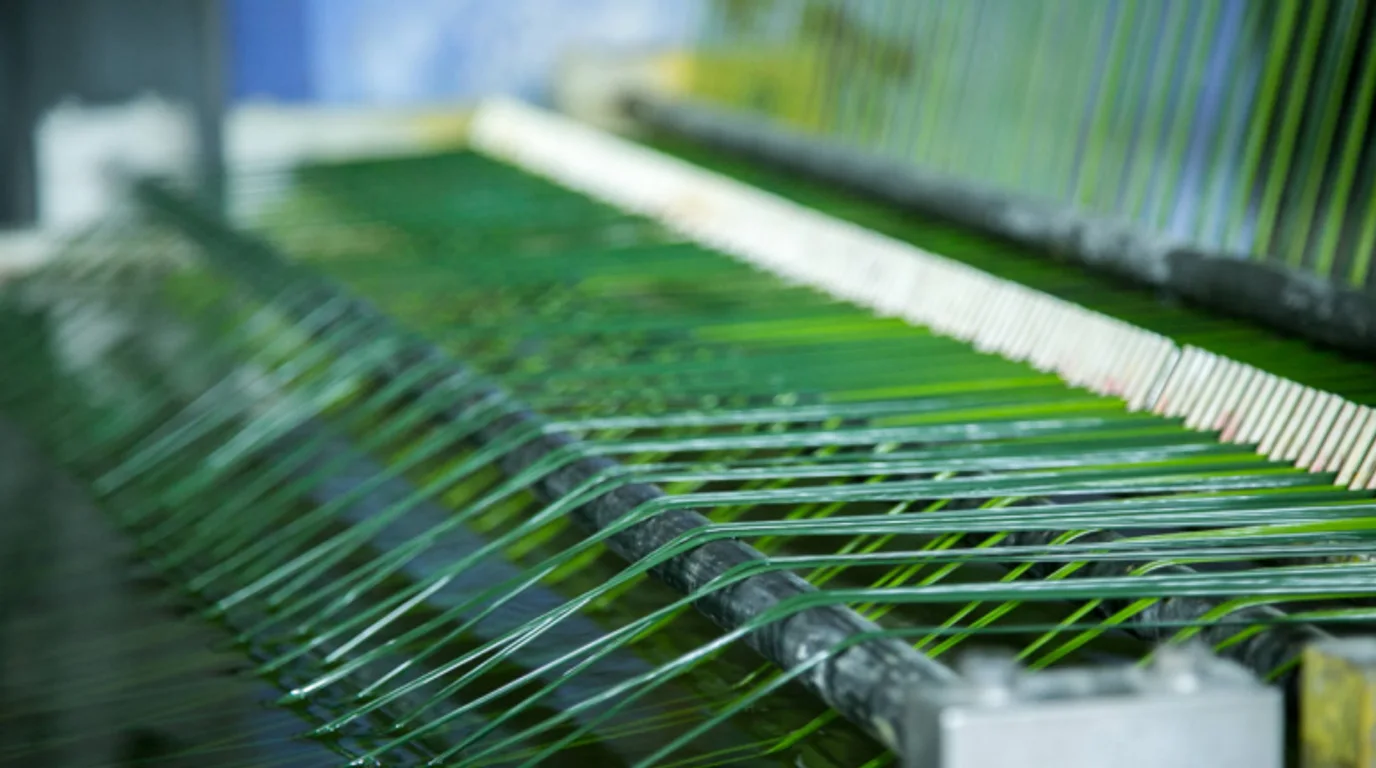
The backing does the work. A quality pet turf uses a perforated backing with holes formed through the material. Ours uses a quadruple-drainage-hole backing, so liquid passes straight through instead of sitting. Ask your supplier for the documented drainage rate rather than taking “it drains great” on faith.
The base under it matters just as much, and this is where Phoenix yards fail. Perfect turf drainage still backs up if the base is packed clay or caliche that sheds water sideways. Out here caliche often sits just below the surface, hard as a parking lot, and you have to break through it to get water moving down. The right base is 3 to 4 inches of compacted crushed rock or decomposed granite, graded with a slight slope away from the house. Skip that and the first big monsoon turns your dog yard into a shallow lake — and your dog into a very confused swimmer.
Infill and Odor in the Heat: Where Phoenix Dog Yards Go Wrong
Here’s where the smelly dog yards come from, so let’s be direct about it. The smell people blame on “cheap turf” is almost never the turf. It’s ammonia sitting in the infill, and Phoenix heat is the accelerant. A yard that would smell faintly in a mild climate can get loud by a July afternoon. Fix the infill and you fix the smell.
Infill does two jobs in a pet install: it holds the blades upright between cleanings, and — if you pick the right kind — it handles odor. Plain silica sand does the first job and nothing for the second. In a Phoenix dog yard with heavy bathroom use, you’ll meet the difference on the first 105-degree afternoon.
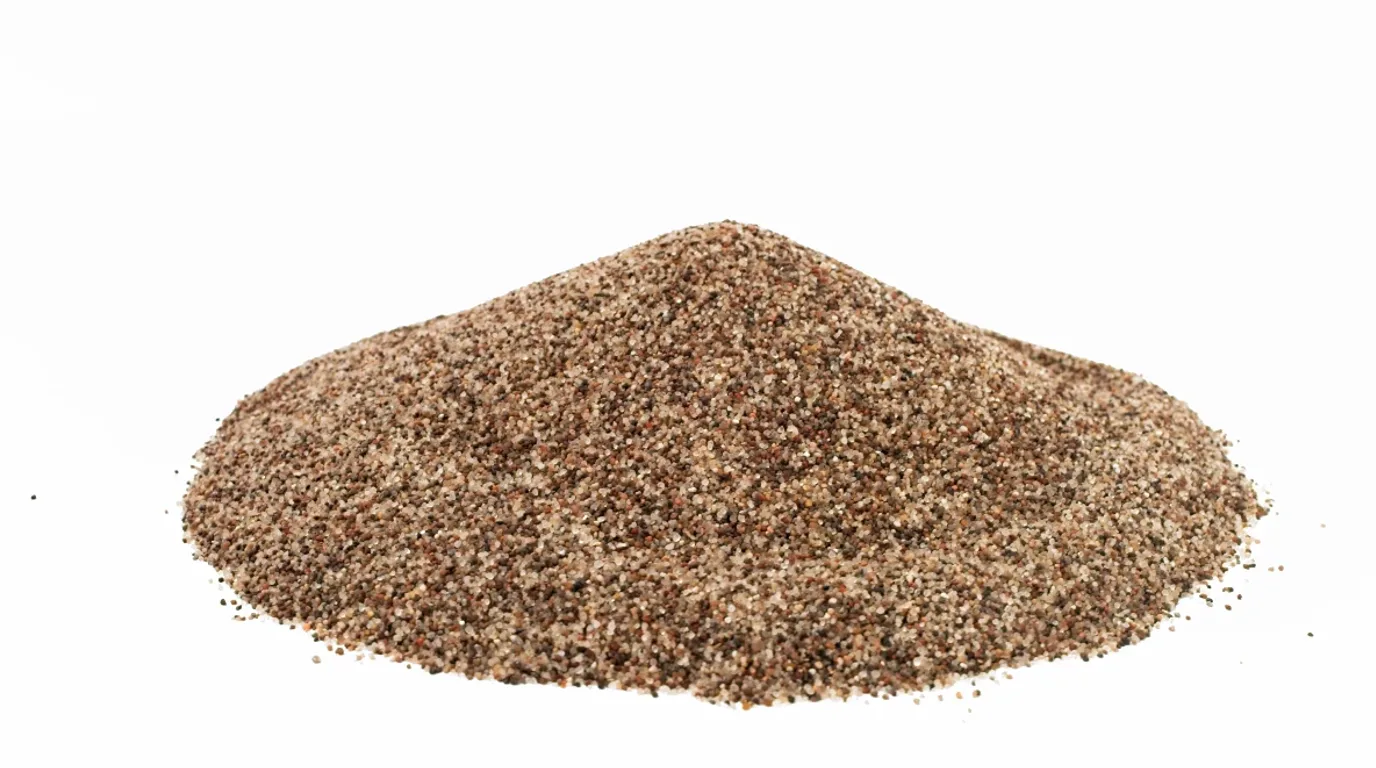
A zeolite infill is the pick for any pet area. Zeolite is a mineral that traps and neutralizes the ammonia behind urine odor, instead of perfuming over it like a surface spray. Ours is PetFill Pro, and it runs $22 for a 50 lb bag in Arizona, a little more in Utah. That’s a cheap upgrade for the one thing that decides whether your dog run stays livable in summer. What infill won’t do is replace drainage or make the yard self-cleaning — think of it as the durable half of odor control, with an occasional rinse as the other half. The CDC’s healthy-pets guidance is worth a read on handling pet waste in general, whatever the surface. For quantities and how much you’ll need, see our turf infill guide.
Fiber Durability: What Pet-Grade Actually Means
Not all turf is built to the same standard, and a Phoenix dog that sprints, digs, and wrestles finds the weak spots in a flimsy product fast — usually faster than the warranty paperwork hits the recycling.
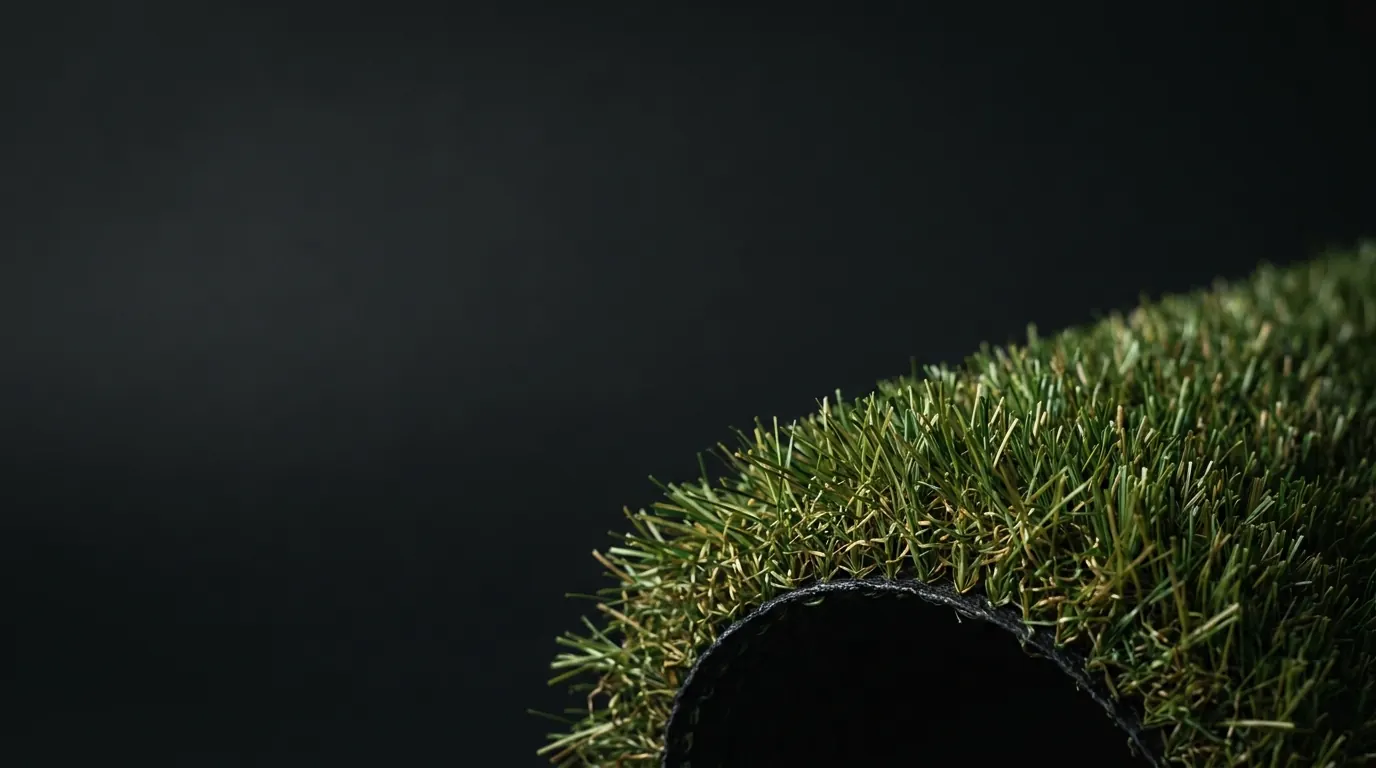
Blade shape matters more than most people expect, and in the desert it does two jobs. All of our turf — Lush 70, Lucky 77, and Lush 80 — uses a W-Blade, which holds its upright position better under traffic and reduces heat buildup compared to a flat blade. That second part earns its keep in Phoenix. The plusher Lush Primo uses a softer C-Blade built for curb appeal, not a busy dog run, so for a yard that takes real abuse I steer pet owners toward the W-Blade lineup.
For a single small dog in a quiet yard, our entry-level Lush 70 holds up fine. For multiple dogs, big breeds, or a dog that treats the yard like a track, I’d move up to the Lush 80 — it’s our most popular middle-ground product for a reason, and the extra density takes a beating better in heat and traffic alike. Every turf we stock carries the same 12-year manufacturer warranty, so you’re not trading durability for coverage when you size up or down. Our pet turf page lays out the blade and backing details if you want to compare side by side — though the best comparison is your hands, so feel a Lush 70 next to a Lush 80 at the Mesa yard.
Heat and Paw Safety in a Phoenix Summer
Any dark, dense surface heats up in direct sun — concrete, pavers, turf, even packed dirt. In a Phoenix summer, turf in full afternoon sun will be warm to the touch, and that’s a real consideration, not a thing to wave away.
The rule the vets give is the same one I give: test it with your hand. If you can’t hold your palm flat on the surface for a few seconds, it’s too hot for paws. The ASPCA’s hot-weather safety tips make the same point about hot pavement, and the AVMA’s warm-weather pet safety guidance covers shade and water for the rest of a hot Phoenix day.
Three things actually help. A 30-second hose rinse drops the surface temperature fast and rinses any waste while it’s at it. Shade over part of the run — a sail, a pergola, a desert tree — makes the biggest difference of all, and I’d plan it into any Phoenix pet install. And our W-Blade shape plus a lighter-colored infill absorb a little less heat than dark, flat options; it’s not dramatic, but over a full Valley summer it adds up. The honest version: heat is managed, not magicked away. Don’t trust anyone selling you a “cool turf” that needs no shade and no water in July.
Dogs That Dig in Dry Desert Dirt
Digging is the number-one way a dog ages turf faster than the calendar should, and dry Phoenix dirt makes it worse — loose, powdery ground under a turf edge is a dog’s idea of a fun afternoon. I’ll be straight with you: there is no dig-proof guarantee. Any salesman who promises one is selling you the same turf with a better story.
What you can do is take away the temptation. A heavier, durable fiber on a tough backing resists clawing far better than a flimsy entry-level roll. Most digging starts at the edges, so nail or staple the full perimeter tight, every 4 to 6 inches, with bender board along exposed sides. And a firm, well-compacted base removes the loose-soil sensation that triggers the instinct — in dry desert dirt, loose base material practically hands a dog an engraved invitation. In real problem spots, a shallow paver or concrete header under the edge gives them nothing to grab. Our installation guide covers base prep and edge securing in detail.
The HOA-Friendly Look
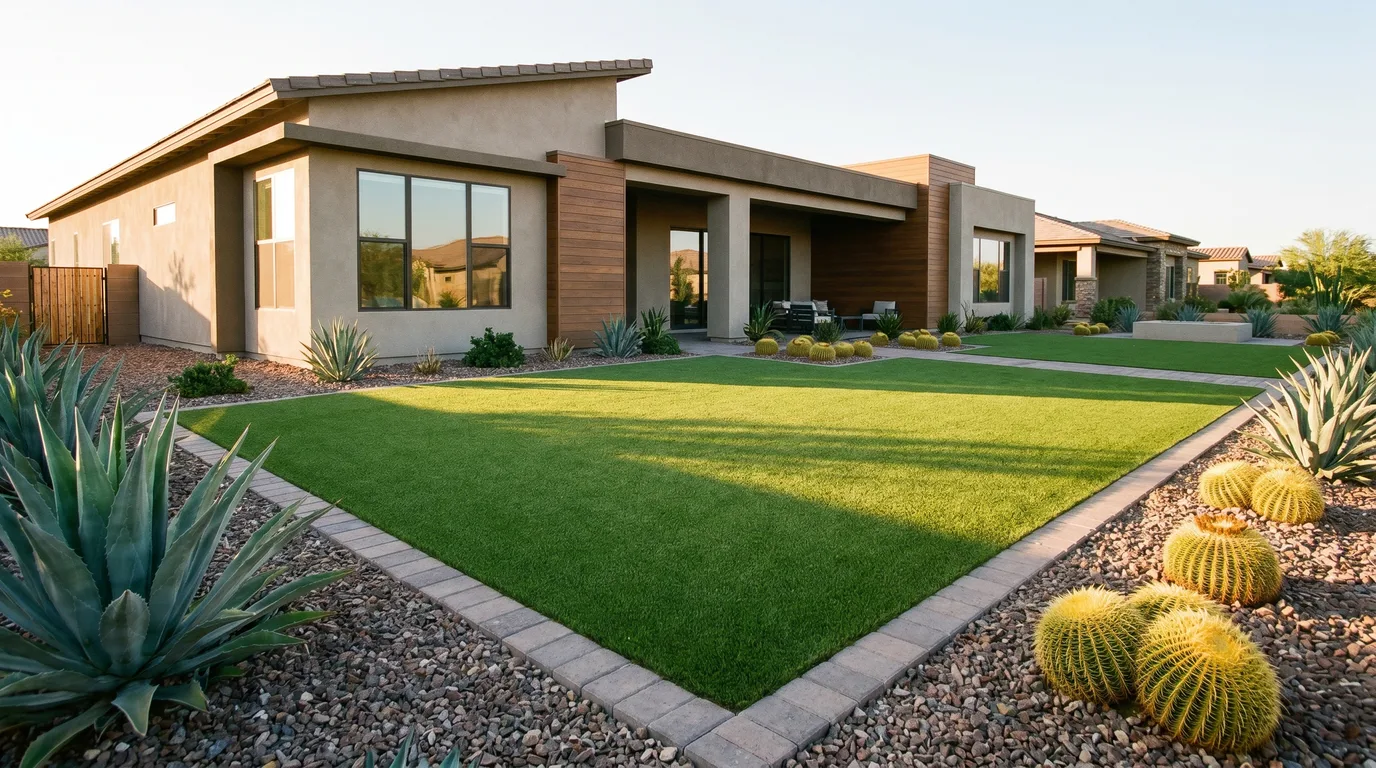
Plenty of Phoenix yards live under an HOA, and that’s the one part of this that worries owners as much as their dog does. Good news: turf usually plays well here. Most HOAs care that the yard reads as a clean, even, natural-looking green space year-round — and a dust lot or a sun-fried lawn fails that test far harder than a tidy turf install ever will.
A quality multi-tone turf with thatch does the job. Ours uses multi-tone blades and thatch so it reads like a lawn that’s actually alive, not a putting-green carpet, and it holds that look through July when real grass has waved the white flag. Keep the edges clean and the seams tight and most boards are happy. One bit of homework before you buy: read your specific CC&Rs for any color or product rules, because a handful of associations get particular. Then swing by and feel a few rolls — Lucky 77 if you want the darkest green, Lush 80 for the popular middle ground. Our residential turf page covers the look across front yards, backyards, and dog runs.
What a Phoenix Dog Yard Costs
Cost is the other big question, so let me be straight about it. Pet turf isn’t priced differently than regular turf — what drives the number is the same for any project: the turf you pick, your square footage, the base prep, and the infill. Dog yards tend to push you toward a durable turf and a zeolite infill, which lands at the upper end of the material range, but the math works the same way.
Rather than throw out a per-foot figure that won’t match your yard, I’d point you to two tools: our artificial turf cost guide for honest ranges and what actually moves the price, and the turf calculator to estimate materials for your exact dimensions. Between the two you’ll have a real budget before anyone hands you a quote. One thing from experience — on a Phoenix dog yard, I’d rather see someone spend a little more on the infill and the base than stretch the square footage. Thin turf, plain sand, and skipped base prep are exactly what causes odor, standing water, and wear a year later.
| Factor | Why It Matters for Phoenix Dogs | What I'd Pick |
|---|---|---|
| Backing | Drains daily urine and a monsoon downpour, or pools and smells | Perforated flow-through — ours uses quadruple drainage holes |
| Fiber & blade | Resists matting and clawing, and reduces heat in full sun | A W-Blade product — Lush 70 for one small dog, Lush 80 for more |
| Infill | This is where odor lives or dies, and heat speeds it up | Zeolite infill (PetFill Pro), never plain silica sand for a bathroom yard |
| Base | Drainage, dig-resistance, and monsoon survival all start here | 3–4 in. compacted crushed rock or decomposed granite, sloped away from the house |
| Look | Whether the HOA signs off and it stays green in July | Multi-tone turf with thatch — Lucky 77 or Lush 80 |
The five things that separate a Phoenix dog yard that lasts from one that smells and floods by July.
Plain Silica Sand for Odor
Sand holds the blades up and does nothing for smell — and Phoenix heat makes that loud fast. A dog yard needs a zeolite infill like PetFill Pro, where the ammonia actually gets trapped.
Skipping the Base Over Caliche
A compacted, free-draining base is what moves urine and monsoon water through, and what takes away the loose desert dirt a dog wants to dig. Skip it and you get standing water and a digging problem.
Ignoring Monsoon Grade
Turf that drains straight down still floods if the yard slopes toward the house or sits flat on caliche. Grade a slight slope away before the first storm tests it for you.
Surface Sprays Instead of a Rinse
Deodorizing sprays perfume over the problem for a day, less in 110-degree heat. The real combo is a zeolite infill plus an occasional hose-down — the spray is the garnish, not the meal.
Got a Phoenix Dog and a Yard You Want Done Right the First Time?
We'll match the turf, the infill, and the base to your dog and the desert — for homeowners and contractors across Phoenix and Arizona, all at contractor pricing.
- 4.9 from 300+ reviews
- 12-year manufacturer warranty
- Free quote & free sample
- Phoenix pickup from Mesa
What Customers Say
5.0 from 480+ verified Google reviews
They were super easy to deal with and have great prices! The turf colors look great and our dog loves it!
I had messaged their sales rep on a Sunday, and they were quick with their response time and actually had my delivery next day! They’re very knowledgeable in what turf worked best for my needs and what aesthetic I wanted. 10/10 communication, 10/10 material, and 10/10 in delivery. I look forward to my next project with them!
Expert Tips
— Bennett Brown, Co-Founder
Drainage First, Monsoon-Ready
Spec the backing and the base before you fall in love with a blade. In Phoenix it has to handle daily urine and a monsoon downpour — a free-draining backing on a compacted, graded base is the foundation everything else sits on.
Fix Odor at the Infill
The smell is ammonia in the infill, not the turf, and heat speeds it up. A zeolite infill like PetFill Pro traps it. Sprays buy you a day, less in July; the infill is the durable fix.
Don't Cheap Out on Sand
Plain silica sand in a Phoenix dog bathroom is the most common regret I see. PetFill Pro is $22 a bag in Arizona — cheap insurance against a yard that announces itself by summer.
Pick the Blade for the Heat and the Job
A W-Blade product like the Lush 80 takes traffic and digging better than the plusher C-Blade Primo, and reduces heat buildup in full sun. For a busy desert dog run, durability beats softness.
Break Through the Caliche
Most digging and most standing water both start with the base. Break through the caliche, compact 3 to 4 inches of crushed rock, and slope it away from the house before the first storm.
Rinse Before Hot-Day Play
If your palm can't take the surface for a few seconds, neither can paws. A 30-second rinse drops the temperature and clears waste at the same time — make it the routine before peak-sun playtime.
— Bennett Brown, Co-Founder
Related Services
A good Phoenix dog yard isn’t complicated — it’s a free-draining backing, a durable W-Blade, a zeolite infill, and a base that’s done right and graded to drain. We supply all of it across Phoenix and the wider Arizona service area from our Mesa yard, with free samples and straight answers on what fits your dog and your HOA. Call Mesa at (480) 910-2440 or swing by and feel the rolls yourself. We’ll help you pick it, price it, and load it — and your dog will handle the field testing, free of charge, monsoon permitting.