Spec sheets make every roll of artificial grass sound like a different species, and most “types of artificial turf” guides online are written to sell you the most expensive one. So here’s the version from behind the counter: there are really only a few types of artificial turf that matter, and they sort three simple ways — by what it’s made of, by what it’s for, and by the shape of the blade. Get those three straight and the right roll picks itself.
The type question I get most across the counter isn’t even about material — someone points at the tallest, plushest sample and assumes taller and softer must be better. For a yard the kids and the dog actually use, it’s usually the other way around: the shorter, denser W-Blade wears better and mats less. Height sells in a showroom; it flattens in the traffic lane.
TL;DR — Quick Answer
Artificial turf sorts three ways. By material: polyethylene for realistic lawns, nylon for putting greens and high-wear, polypropylene for cheap low-traffic mats. By use: landscape, pet, putting green, and sports or playground turf. By blade shape: a W-Blade for durability and heat resistance, a C-Blade for a softer, plusher look. Underneath sits a backing and an infill that matter as much as the blade you see.
Most common material
Polyethylene (PE)
Toughest material
Nylon (putting greens)
Backyard sweet spot
W-Blade, ~1.5" pile
Decides the feel
Blade shape + infill
Not Sure Which Type You Need?
Tell us what the space is for — lawn, dogs, putting, or play. We'll point you to the right type and hand you a free sample to compare.
Table of Contents
Key Takeaways
- Turf is three parts — plastic blades, a backing, and an infill. The blade gets the attention, but the backing and infill decide how long it lasts and how it feels.
- By material, almost every landscape lawn is polyethylene; nylon is for putting greens and high-wear, and polypropylene is for cheap, low-traffic mats.
- By use, turf splits into landscape, pet, putting green, and sports or playground — each tuned for a different job.
- By blade shape, a W-Blade resists heat and traffic and a C-Blade feels softer — pick by how the yard gets used, not by the biggest number on the page.
What Artificial Turf Is Made Of
Before the types, the parts. Every roll of artificial turf is three things stacked together.
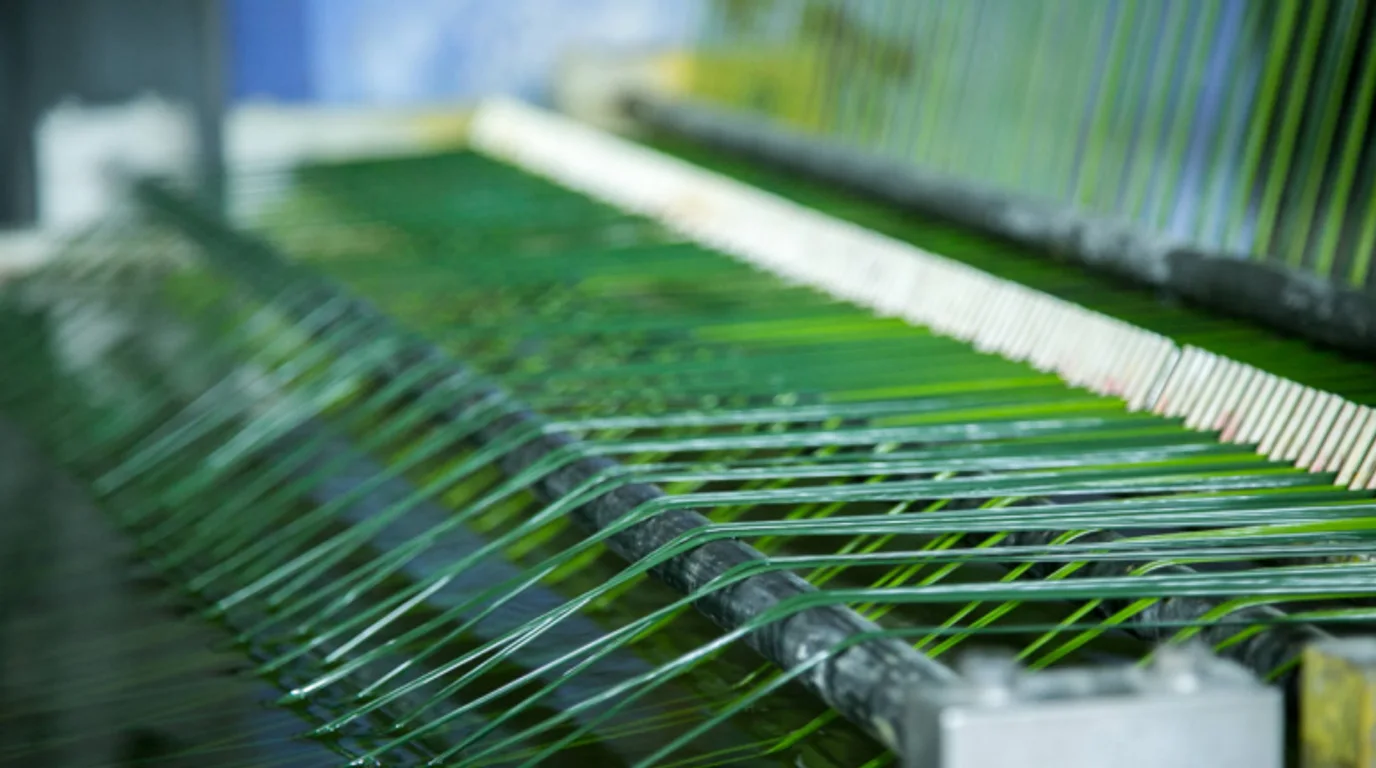
The blades are plastic fiber — the green you see. Most are polyethylene, extruded into a blade shape and tinted in a few tones so it doesn’t read as one flat color. Mixed in is a thatch layer: shorter, curly, often tan-or-brown fibers down at the base that imitate the dead-grass layer of a real lawn and help the blades stand up. The whole encyclopedia-length version of how this is manufactured is on the Wikipedia entry for artificial turf if you want the deep cut.
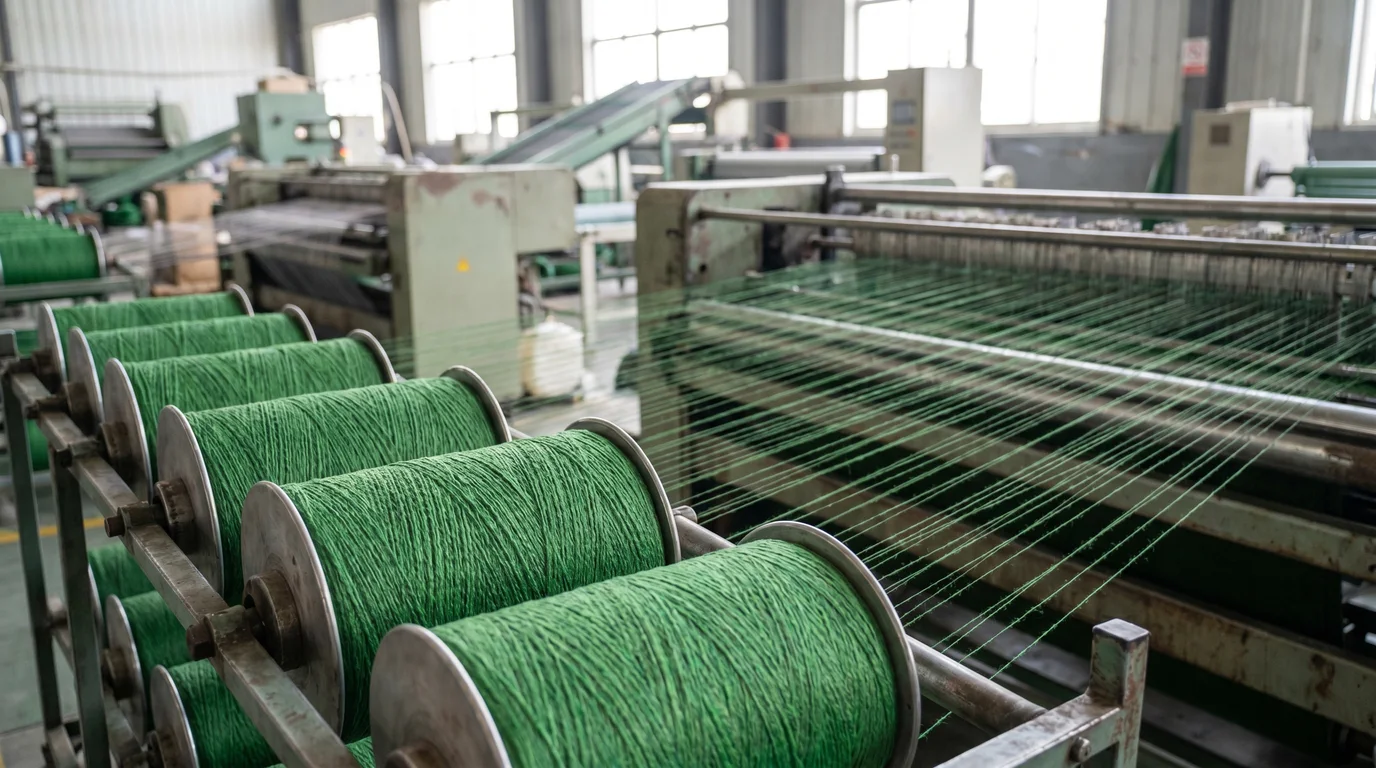
The backing is what those blades are stitched into. Ours is a double polypropylene layer with a polyurethane coating and quadruple drainage holes, which is what lets a monsoon downpour drain straight through instead of pooling. Cheap turf skimps here, and it’s the part you never see until it fails.
The infill is the sand or coated-mineral granules brushed down between the blades after install. It weights the turf, holds the blades upright, and — depending on the type — manages heat and pet odor. People obsess over the blade and ignore the infill, which is backwards; we wrote a whole guide on how much infill you actually need because it matters that much.
Types of Turf by Material
There are three fiber materials, and the differences are real.
| Material | Feel & strength | Best for |
|---|---|---|
| Polyethylene (PE) | Soft, realistic, durable — the all-rounder | Residential lawns, pets, play — the standard |
| Nylon | Stiffest and toughest, handles heat and traffic, costs more | Putting greens and high-wear zones |
| Polypropylene (PP) | Lowest-cost and lightest, wears and mats fastest | Low-traffic mats, decorative or indoor use |
The fiber material sets the ceiling on softness and durability. For a real lawn, polyethylene is almost always the right call.
All four of our landscape rolls — Lush 70, Lucky 77, Lush 80, and Lush Primo — use polyethylene blades, because for a yard you actually live on, PE is the balance of soft and tough you want. We keep nylon to the putting green product, where stiff and fast is the point.
Types of Turf by Use
Same materials, tuned for different jobs. This is the split most people actually shop by.
Landscape turf is the standard lawn product — multi-tone blades, a thatch layer, a pile around 1.4 to 1.8 inches, built to look like a healthy yard. That’s the bulk of what we sell for residential turf.
Pet turf isn’t always a different roll so much as the same durable turf paired with fast drainage and the right infill for odor control. What matters for dogs is permeability and a base that drains, which our pet-friendly turf is set up for.
Putting green turf is its own animal: short, dense, tightly stitched, and directional so a golf ball rolls true. No soft thatch, much shorter pile. It’s the turf behind a backyard putting green, and it doesn’t cross over to lawn duty.
Sports and playground turf leans on the layers under the blade more than the blade itself. For play and sport areas we point people toward a durable, shorter W-Blade over a shock pad, with a lighter infill on top — the pad handles the give underfoot, the turf just takes the wear. Pile height and infill get tuned to the use, and we plan drainage so the surface sheds rain instead of holding it. The university research on how these surfaces behave — heat, wear, and the trade-offs against natural grass — is covered well by the University of Illinois Extension.
Types of Turf by Blade Shape
This is the one buyers rarely ask about and should. The cross-section of each individual fiber changes how the turf wears and feels.
A W-Blade has a ribbed, W-shaped profile. It stands up to foot traffic without matting and its shape helps reflect some heat — which is why our Lush 70, Lucky 77, and Lush 80 all use it. It’s the blade for a yard that gets used by kids and dogs.
A C-Blade curls like the letter C. It’s softer and plusher underfoot and reads as more luxurious, which suits a front yard you want to show off. Our Lush Primo, at a 1.77-inch pile and 100 ounces, is the C-Blade in the lineup — beautiful, but not the pick for a dog run. You can see how all of this lines up against your use in our guide to choosing the right artificial grass.
Which Type Is Right for Your Yard
Short version: match the type to the job, in this order — material, then use, then blade shape and pile.
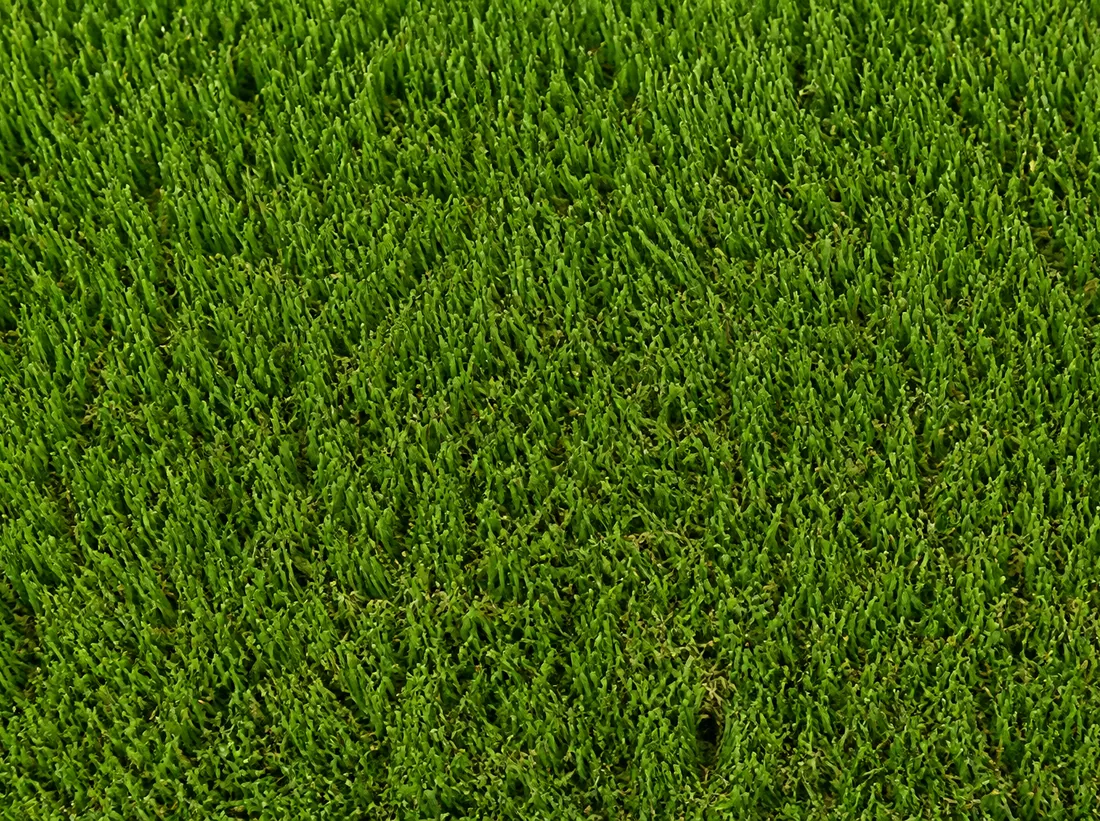
Lush 80 Artificial Turf
A premium, realistic turf with a fuller feel. A balanced fit for lawns, pets, and active yards.
View Lush 80 →Buying polypropylene for a lawn
PP is fine for a doormat and wrong for a yard. It mats and wears fast. For a real lawn, you want polyethylene.
Putting a C-Blade in a dog run
The plush C-Blade is for curb appeal, not traffic. Heavy use flattens it. Use a W-Blade where the action is.
Using lawn turf for a putting green
Landscape turf is too tall and soft to putt on. A green needs the short, dense, directional product.
Ignoring the backing and infill
Two rolls can look identical and drain completely differently. The backing and infill decide longevity, not just the blade.
Compare the Types in Person
Swing by the yard, hold the W-Blade next to the C-Blade in real light, and feel the pile heights before you commit.
- 4.9 from 300+ reviews
- 12-year manufacturer warranty
- Arizona & Utah
What Customers Say
5.0 from 480+ verified Google reviews
The Turf Yard guys were great to deal with. Special thanks to Haley and Clark for being friendly and punctual. Haley was able to answer all of my questions. We purchased a Lush 70 for our super budget front yard landscaping project. We were happy with the quality of the turf and the price. The transformation from dirt to turf makes a big difference. Look forward to working with them again on our next project.
I found the turf yard on Marketplace and emailed them on Sunday. I explained what I was looking for and was given several options to choose from. I only needed two 10X12 ft pieces and I chose which turf worked and had it delivered on Monday. The delivery charge was very reasonable as well as the turf cost. The kindness and service was exceptional! I highly recommend the turf yard! Marybeth Clark
Expert Tips
— Bennett Brown, Co-Founder
Material First, Then Use, Then Blade
Almost every yard wants polyethylene. From there, pick by use, then by blade shape and pile. Working in that order keeps you out of the wrong product.
W-Blade for Traffic, C-Blade for Show
If the yard gets used, the W-Blade in Lush 70, Lucky 77, or Lush 80 is your range. Save the plush C-Blade Lush Primo for the low-traffic front yard.
Around 1.5 Inches Is the Lawn Sweet Spot
Taller pile looks great in a showroom and mats in the traffic lanes. The Lush 80 at 1.58 inches hits the natural look without the upkeep of a deep pile.
Don't Reuse Lawn Turf as a Putting Green
They're different products. A green needs the short, dense, directional turf. Lawn turf is too soft and tall to putt on.
Judge the Backing, Not Just the Green
Flip the sample over. A PU-coated backing with real drainage holes is what makes a type last; a thin backing is where a cheap roll gives itself away.
— Bennett Brown, Co-Founder
Related Services
So that’s every type that matters, sorted the way we actually sort them at the counter. We stock all of it — the four polyethylene landscape rolls and a dedicated putting green turf — across the Arizona service area from our Mesa yard and across Utah from Provo, at contractor pricing for everyone. Swing by, flip a few samples over, and call Mesa at (480) 910-2440 or Provo at (385) 335-9042. We’ll help you land on the right type, which is usually the boring, durable one — and we mean that as a compliment.