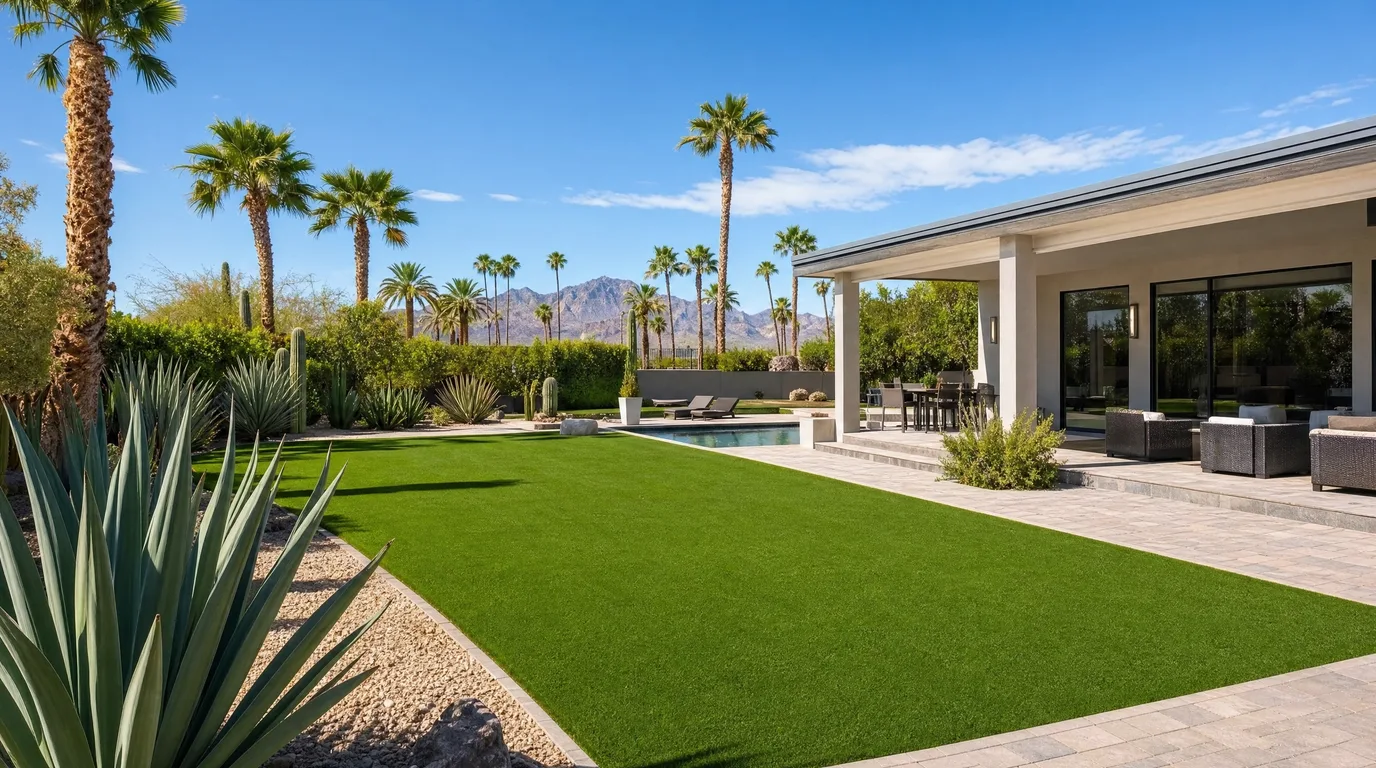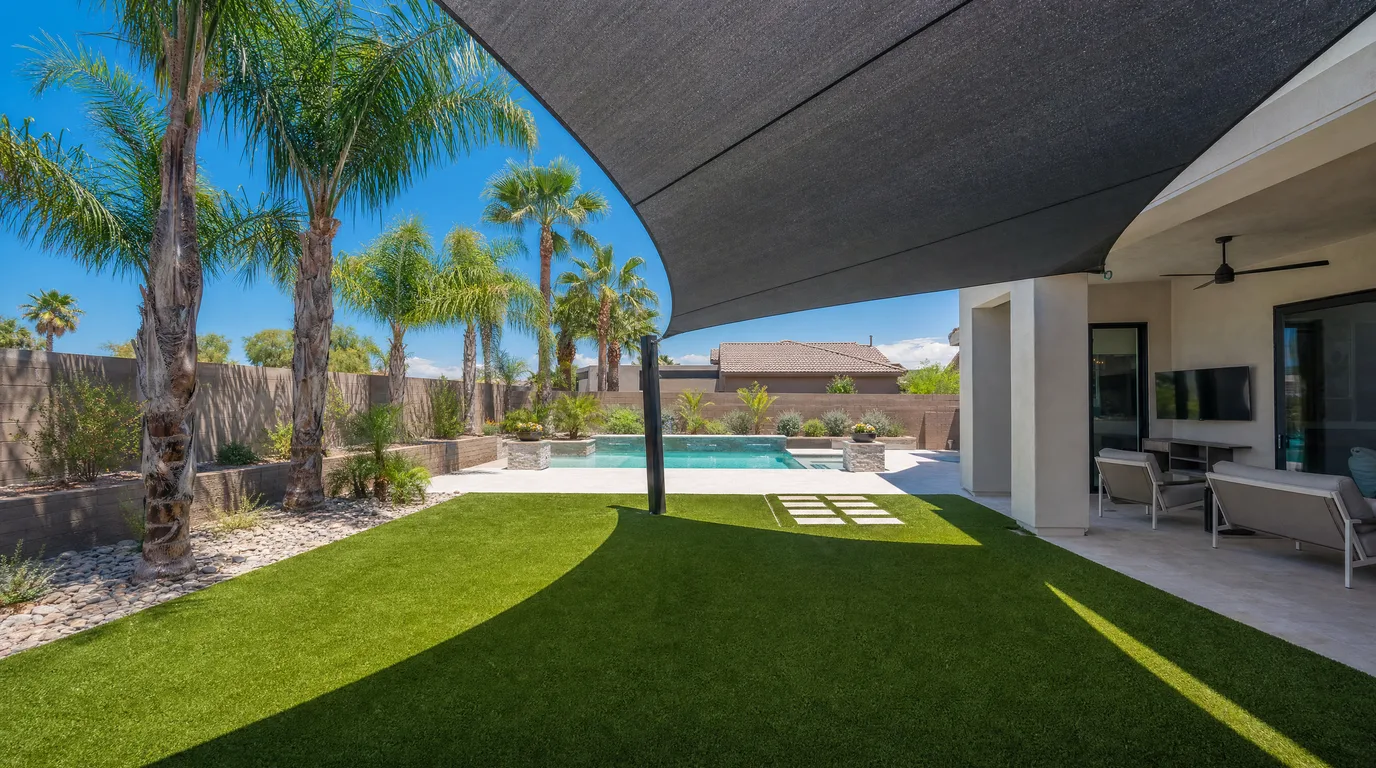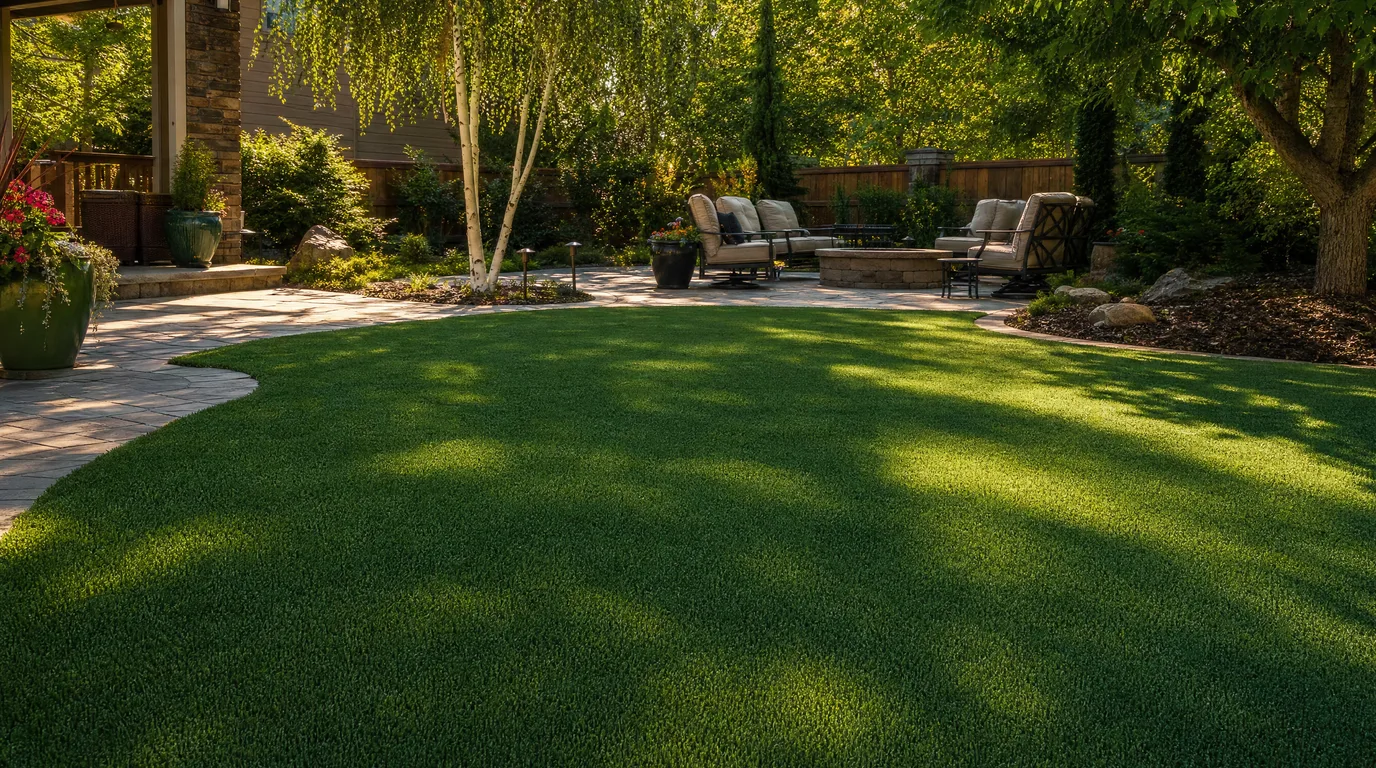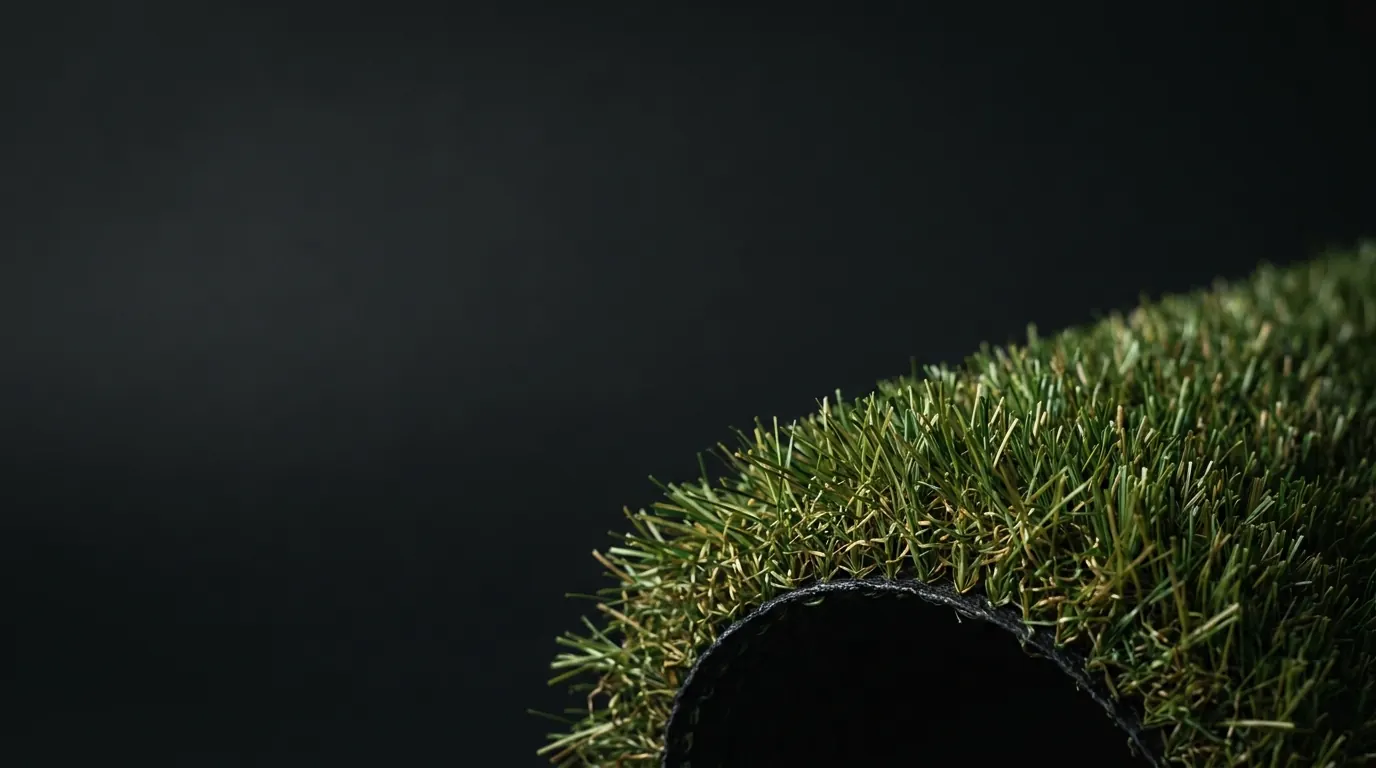
My neighbor spent twenty minutes a week mowing a lawn that died anyway. Now he spends about five minutes a week on turf that doesn’t — and he still finds a way to complain, because complaining is his actual hobby. The good news for the rest of us: cleaning artificial turf is closer to wiping down a counter than caring for a lawn.
How to clean artificial turf comes down to a short routine — clear the debris, rinse it, brush the blades upright, and deal with pet messes at the source. Do that, top off the infill once a year, and your synthetic grass holds its look for a decade or more. Artificial turf maintenance is low-maintenance, not no-maintenance. Anyone who tells you it’s set-it-and-forget-it has never met a dog or a dust storm.
TL;DR — Quick Answer
Cleaning artificial turf is a short routine: clear debris, rinse with a hose, brush the blades upright against the grain, and treat pet messes at the source. Do that, top off the infill once a year, and synthetic grass holds its look for a decade or more — it's low-maintenance, not no-maintenance.
Best for
Pet & high-traffic yards
Time per week
About 5 minutes
Step that matters most
Brushing against the grain
Most common mistake
Skipping the yearly infill top-off
Need Help With Your Turf Project?
Get expert advice and a free quote on turf, infill, and base materials — no pressure, no obligation.
Table of Contents
Key Takeaways
- Artificial turf is low-maintenance, not no-maintenance — you trade mowing and watering for an occasional rinse, a brush, and a yearly infill top-off.
- Brushing the blades against the grain is the step most people skip, and it's the one that keeps a worn path from forming.
- Treat dog odor at the source — a zeolite infill traps ammonia in a way plain silica sand and surface sprays never will.
- Top off the infill about once a year; skimping on infill is the most common DIY regret I see.
- Never use metal rakes, bleach, ammonia, or a close-range pressure washer — they tear fibers, discolor blades, or blast the infill out.
How to Clean Artificial Turf in 5 Steps
Here’s the whole job in order. Most weeks you’ll only touch the first two.
-
 1
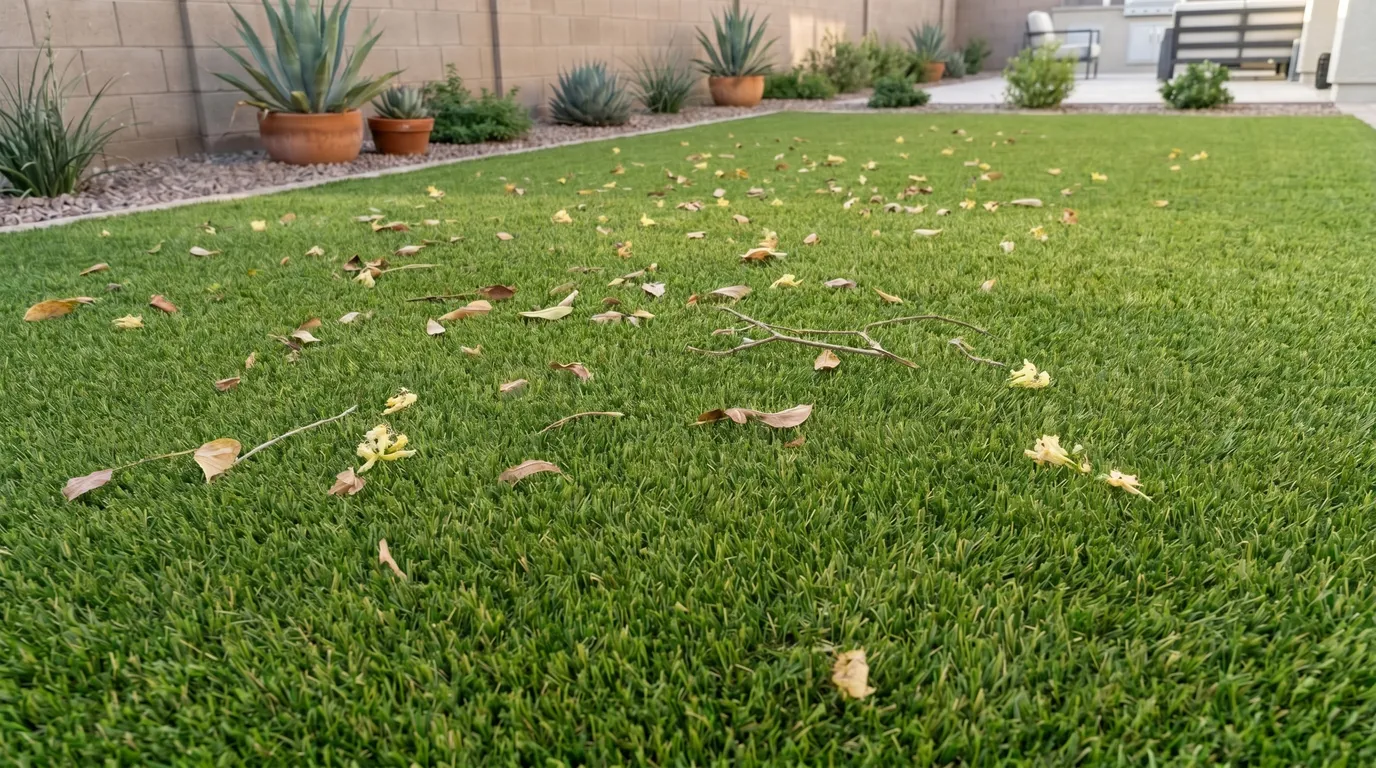
1 Clear the Debris
Pull leaves and debris with a plastic rake or blower — never metal.
-
 2
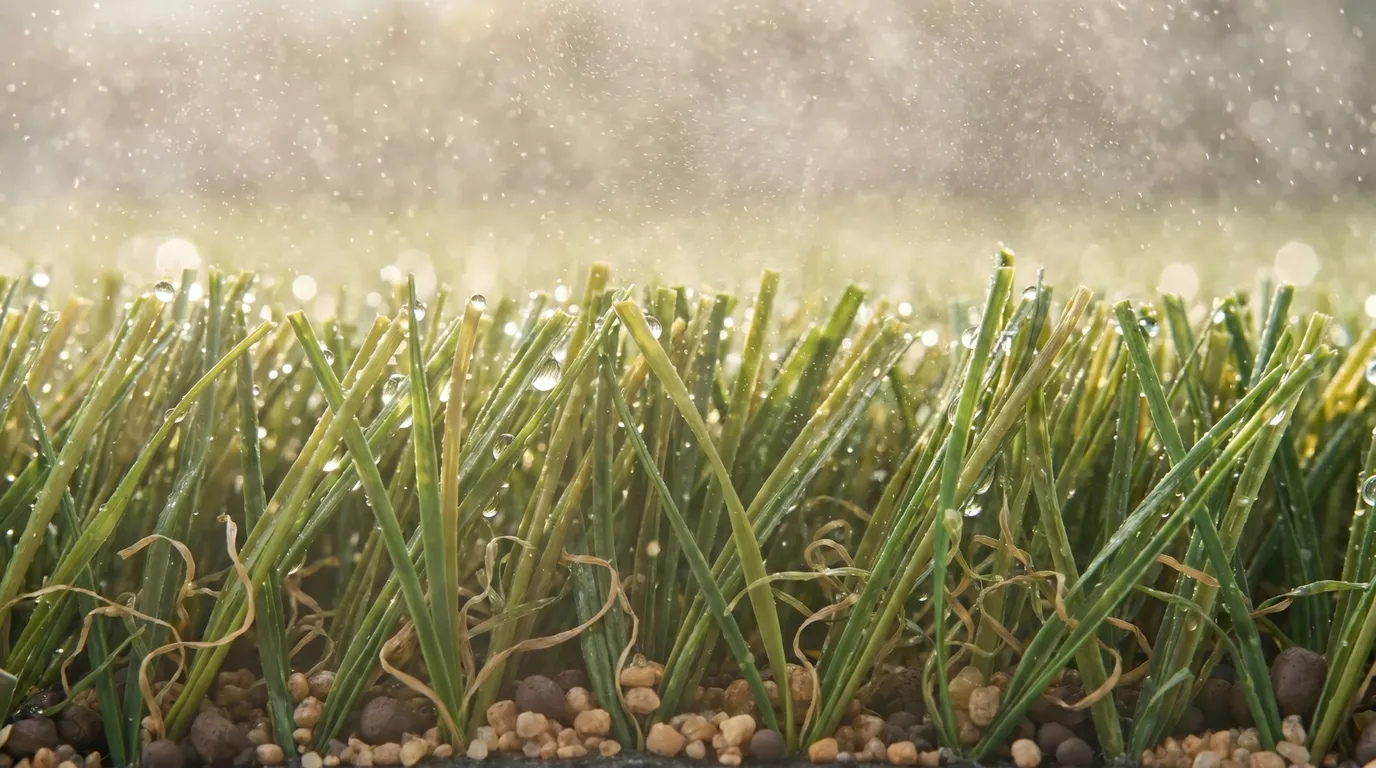
2 Rinse With a Hose
A hose knocks off dust, pollen, and grit. Rinse every week or two.
-
 3
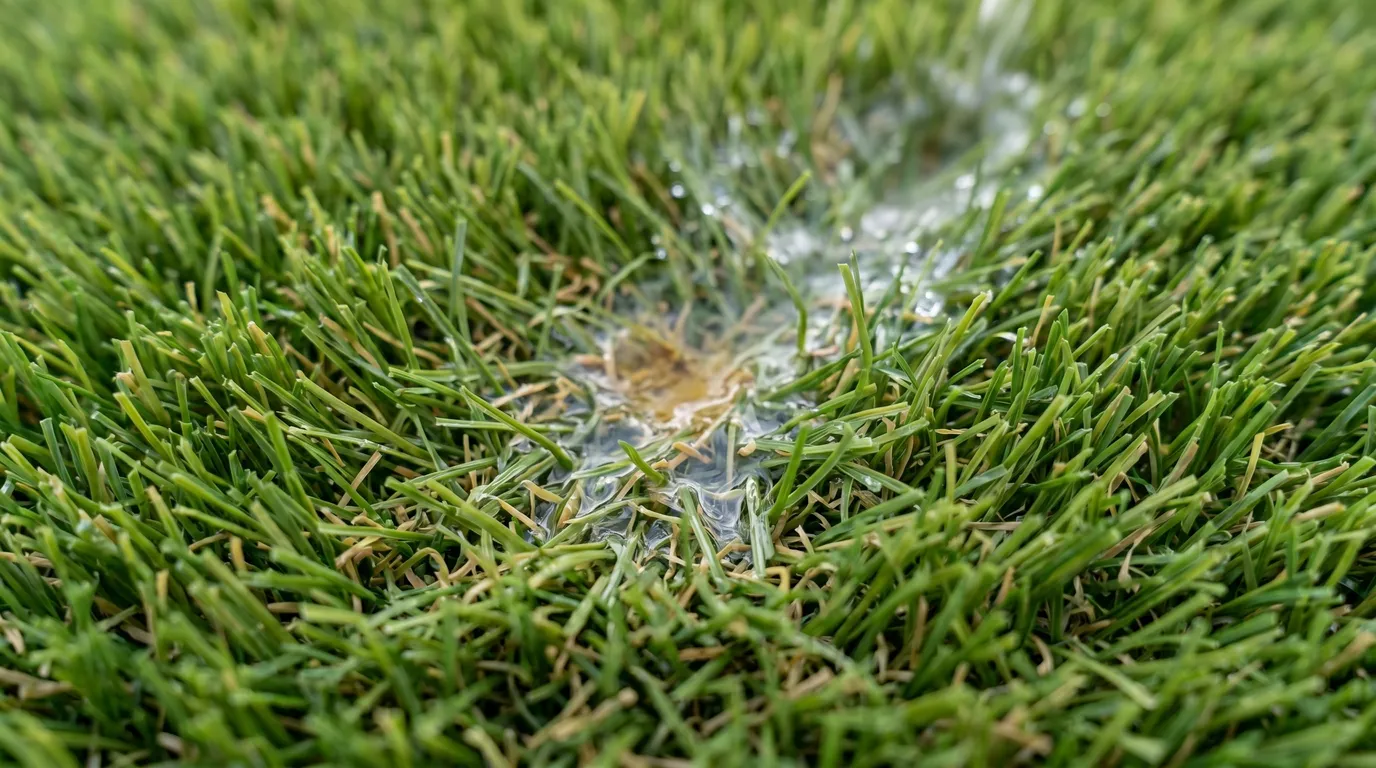
3 Spot-Clean Stains
Warm water and a little mild dish soap lift spills. Rinse it off.
-
 4
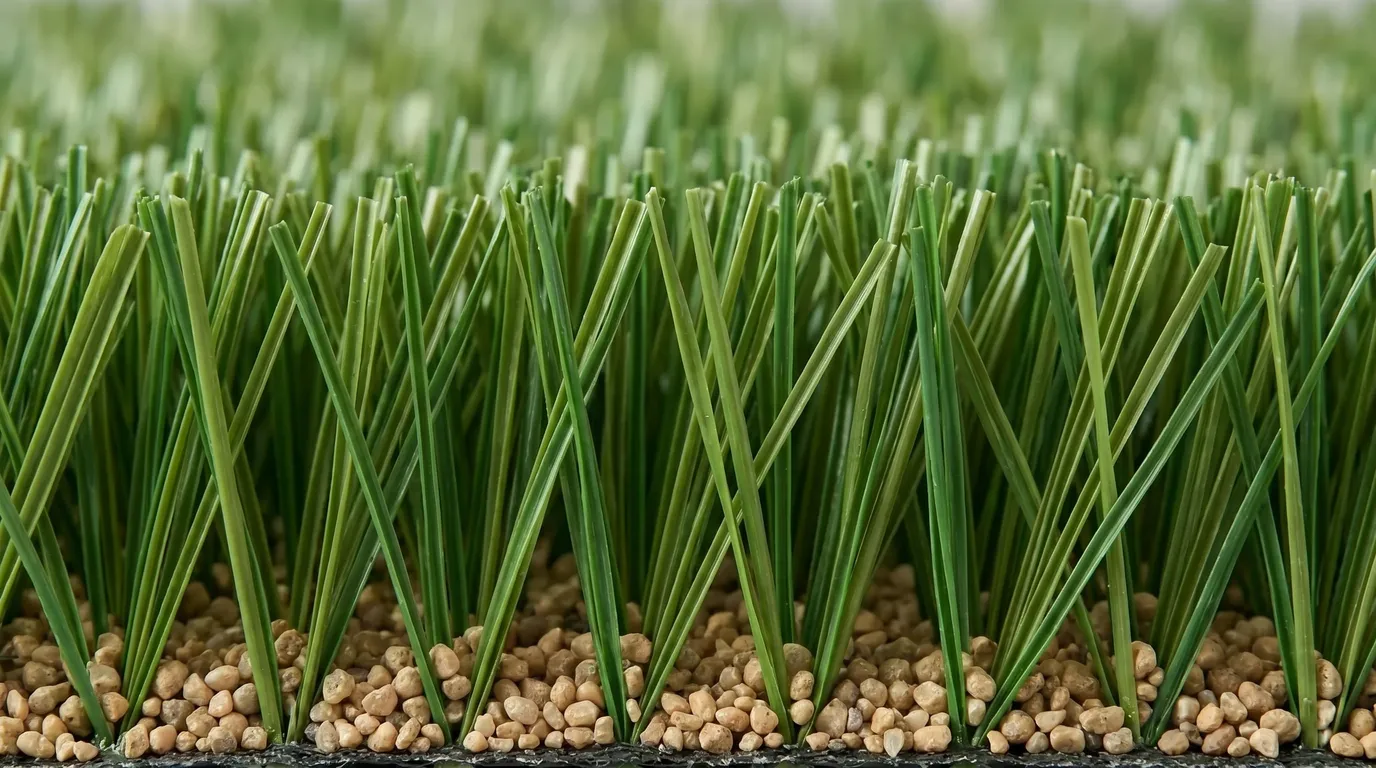
4 Brush the Blades
Brush against the grain to lift the fibers and reset the infill.
-
 5
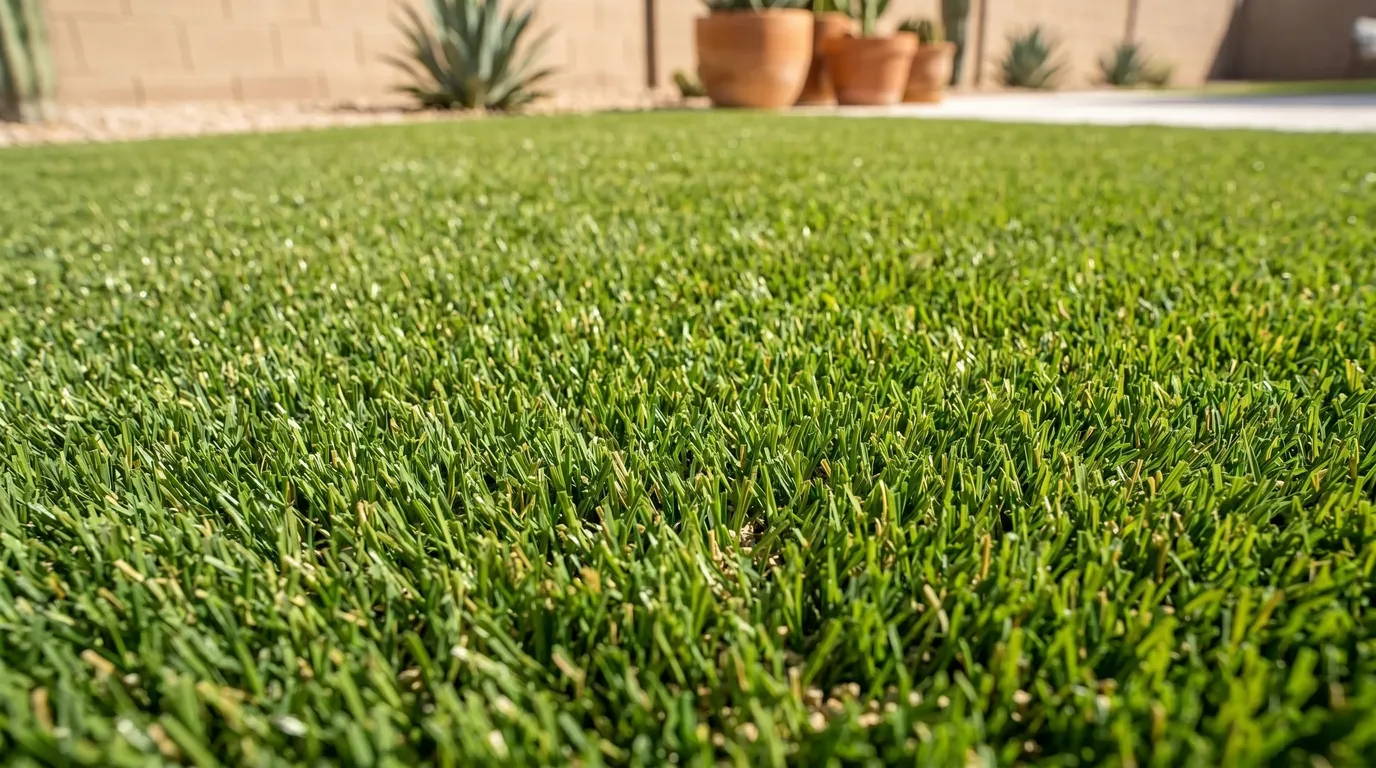
5 Treat Pet Odor
Scoop, rinse, then treat odor at the infill with zeolite or enzyme cleaner.
That’s it. The rest of this guide is the detail behind each step, plus what not to do.
Low-Maintenance, Not No-Maintenance (The Honest Version)
Here’s the trade you actually made when you bought turf. You stopped mowing, watering, fertilizing, and reseeding the dead patches. In exchange, you picked up three small jobs: an occasional rinse, a brush of the high-traffic lines, and a yearly top-off of infill.
That’s it. That’s the whole list. No turf company should pretend it’s zero — the blades collect dust, dogs do dog things, and leaves fall whether the lawn is real or not. But put a stopwatch on it and synthetic grass maintenance loses to a real lawn by a mile. Hank Hill could finally put the mower down and just admire the yard with a cold one. (He wouldn’t. But he could.)
Your Weekly Five Minutes: Rinse, Brush, Clear
The core routine for cleaning artificial turf is three moves, and none of them need a manual.
Rinse it. A garden hose knocks off dust, pollen, and the fine grit that settles into the blades — especially here in the desert. You’re not pressure-washing; you’re giving it a shower. Once a week in a busy yard, less in a quiet one.
Brush it. This is the one most people skip, and it’s the one that matters. Run a stiff-bristled brush over the traffic areas against the grain — against the way the blades lean. Brushing stands the fibers back up and spreads the infill back where it belongs. A worn path that looks flat is almost always a brushing problem, not a turf problem.
Clear it. Pull leaves, blossoms, and seed pods off before they break down and stain or feed weeds. A leaf blower is the easy button. A plastic leaf rake works too — just never a metal rake, which grabs the fibers and pulls them loose.
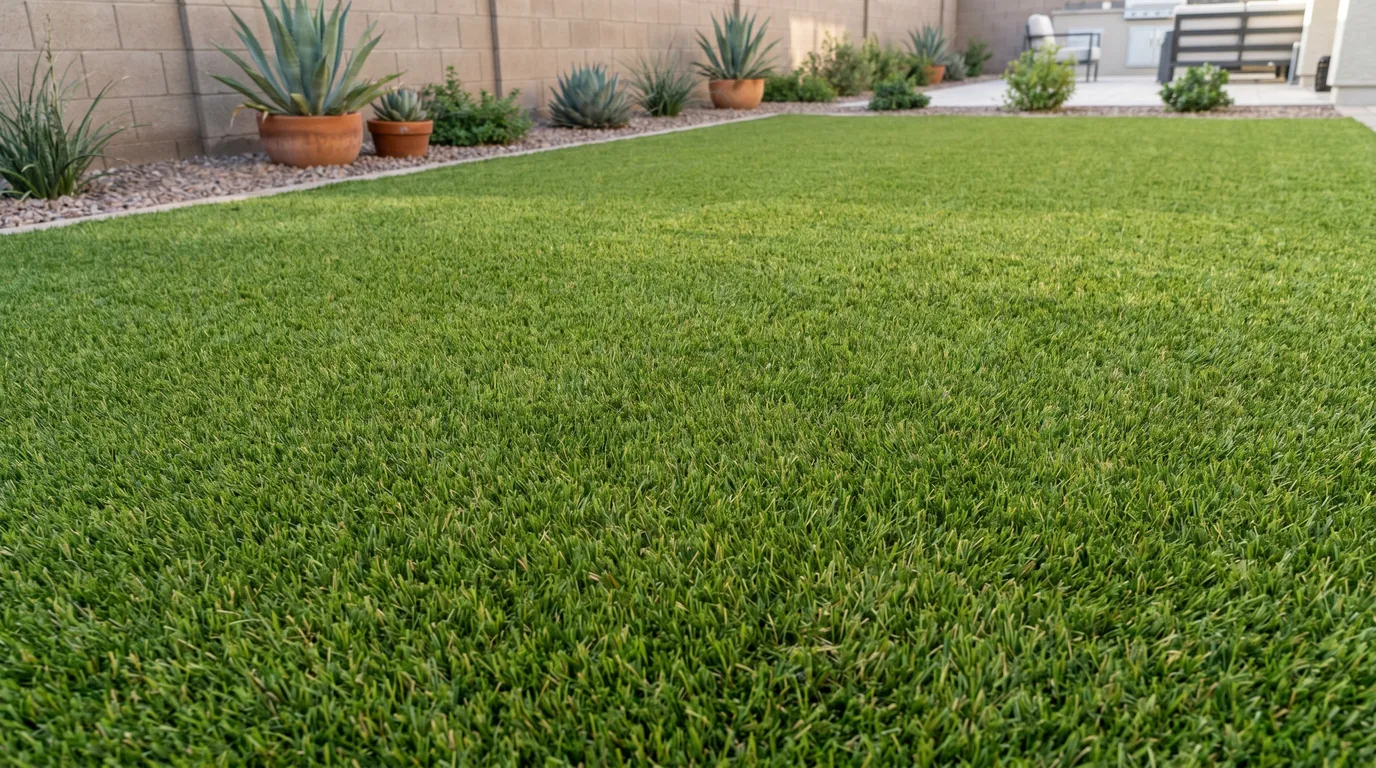
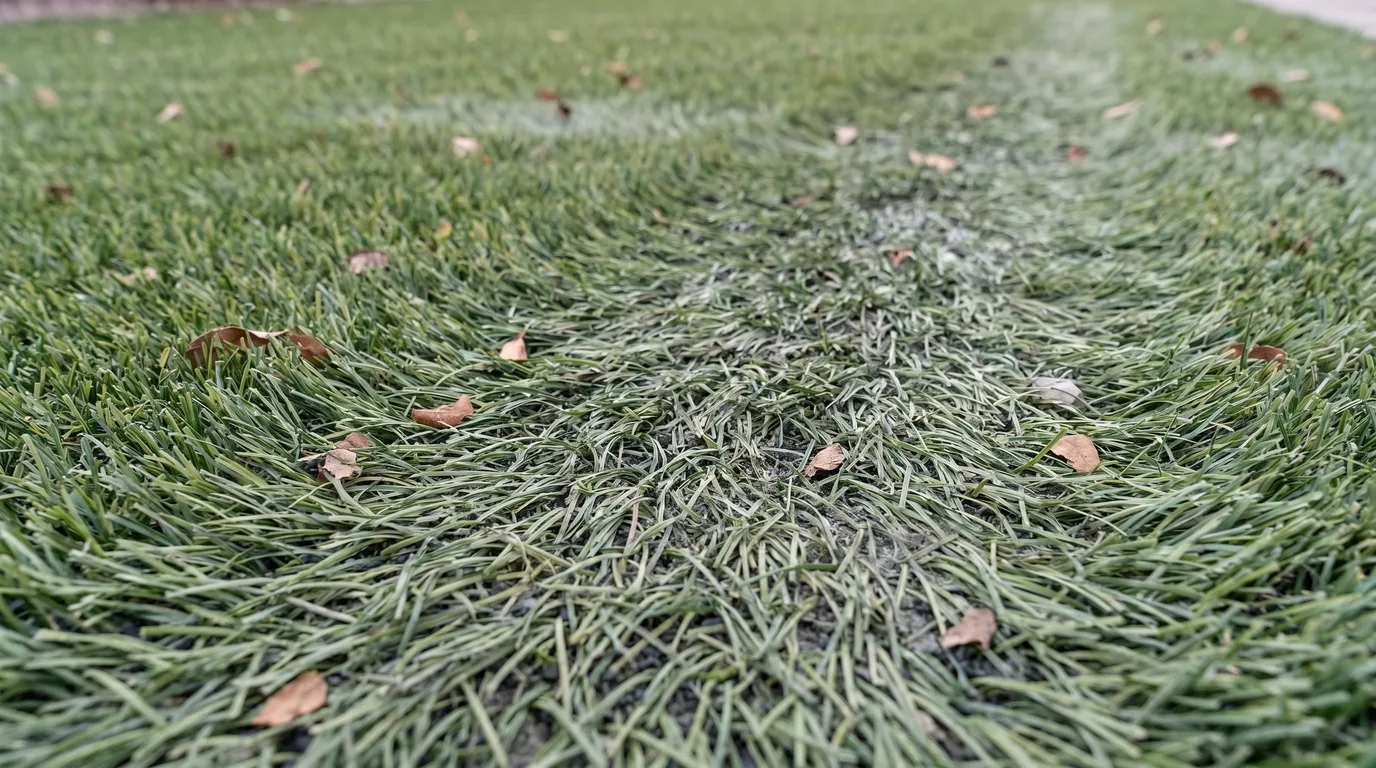 Neglected
 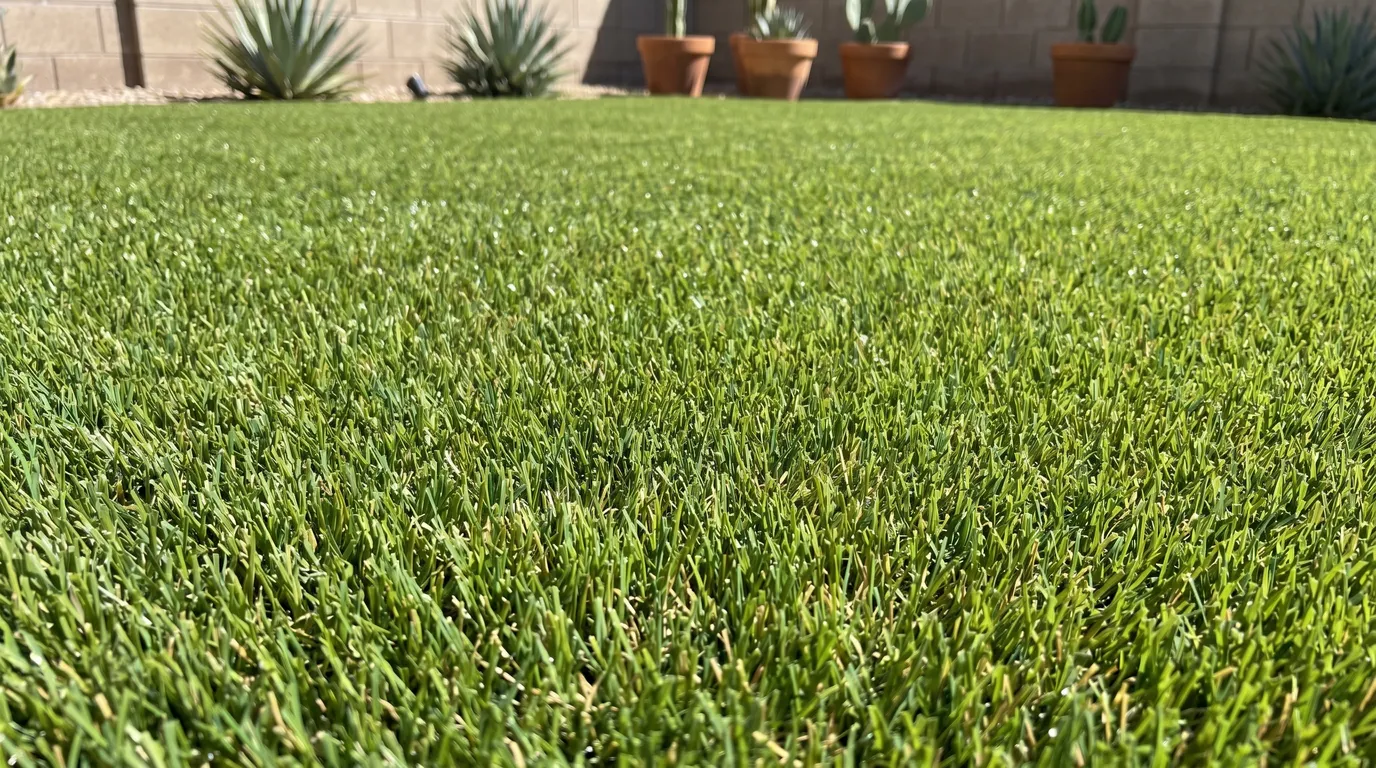 Maintained
 It helps to know what you’re actually maintaining. Good turf is a system: blades on top, infill weighing down the base, a drainage backing, and a compacted base underneath. Cleaning works with that system — rinse water drains straight through, and brushing resets the blades and infill.

How often? A pet or high-traffic yard likes a rinse-and-brush every week or two. A decorative side yard is happy with a monthly once-over. Read the yard, not a schedule.
Your Weekly 5-Minute Turf Checklist
Print it, stick it on the garage wall, and hand it to whoever loses the coin toss. Most weeks you'll only touch the first three.
Cleaning Up After the Dog
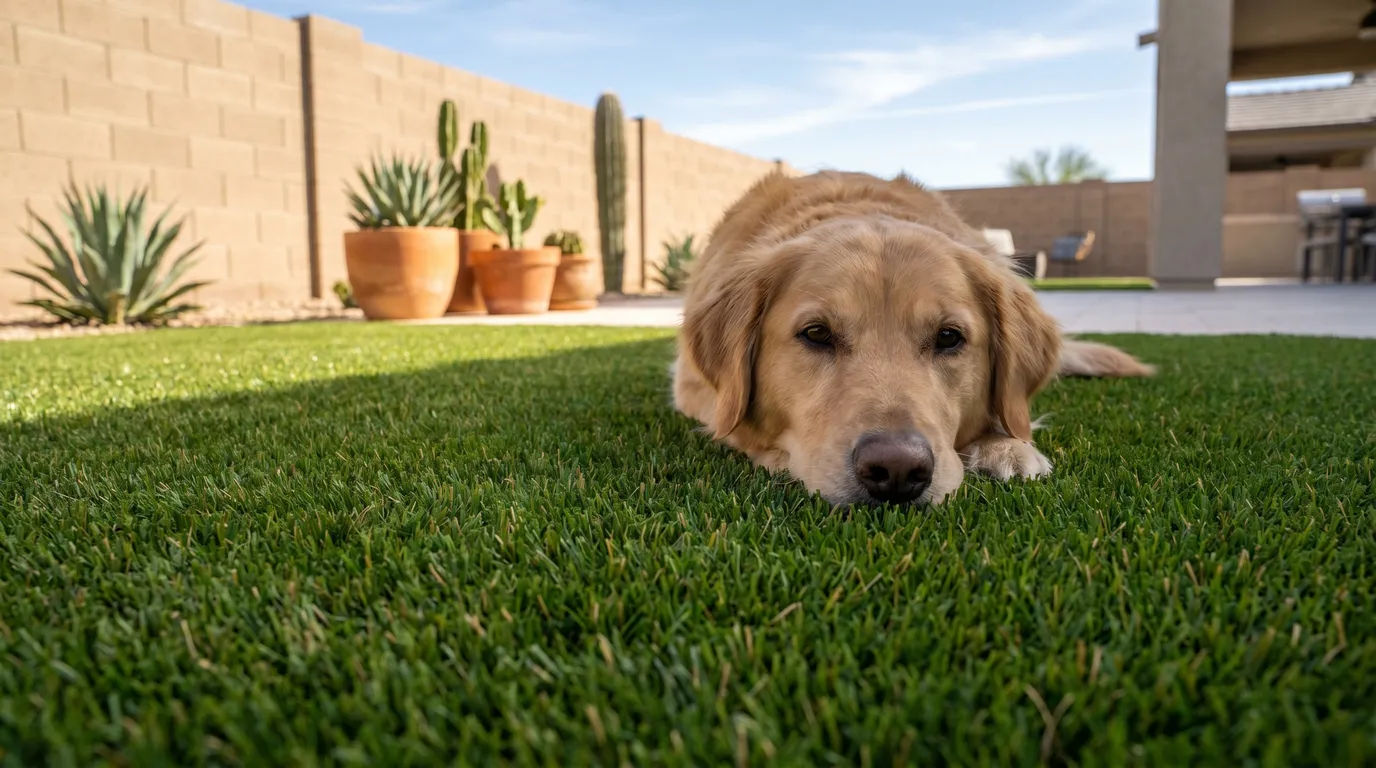
Pets are the number-one reason people search for how to clean artificial turf, so let’s be direct about it. Solids: pick them up like you would on a real lawn — the CDC recommends removing pet waste promptly because it can carry parasites and germs — then rinse the spot. Liquids: rinse them through. Turf drains fast — ours uses a quadruple-drainage-hole backing — so urine passes through rather than pooling.
The smell is the real question, and the smell is ammonia sitting in the infill. A turf deodorizer, an enzyme cleaner, or a 50/50 white-vinegar-and-water mix breaks that ammonia down instead of perfuming over it. Do that for day-to-day upkeep.
But the durable fix is what’s under the blades. Plain silica sand does nothing for odor. A zeolite infill — like our PetFill Pro — is a mineral that actually traps and neutralizes the ammonia. If you’ve got a dog run that’s started to announce itself in July, swapping or topping the infill does more than any spray. More on pet setups lives on our pet-friendly artificial turf page.
Spills, Stains, and the Occasional Disaster
Most spills are nothing. Coffee, juice, the margarita that didn’t make it — rinse with water and they’re gone, because the blades don’t absorb the way soil does. For something greasy or sticky, a few drops of mild dish soap in warm water and a soft brush lifts it. Chewing gum and candle wax come off easier if you firm them up with ice first, then peel.
Diluted white vinegar is a safe option for odor and hard-water marks. Whatever you use, rinse it through afterward so nothing dries tacky and grabs the next round of dust.
Weeds Happen, Even on Fake Grass
Yes, weeds can show up in artificial turf. No, they’re usually not growing through it. They sprout from seeds that blow onto the surface or settle into the seams, then root in the infill or the dust on top. The desert was here first and it has plans.
Two defenses. Under the turf, a weed barrier stops anything trying to come up from the soil. On top, your regular rinse-and-brush keeps seeds from settling in long enough to take. When one does appear, pull it early or spot-treat it — a stray weed in the seam is a two-second job if you don’t let it move in and pay rent.
Topping Off Infill: The Step People Forget
If you remember one thing from this whole post, make it this: infill isn’t a one-time thing. It migrates, compacts, and drifts toward the edges over the years — fastest in the lanes that get the most traffic. Once a year, check your levels and brush fresh infill into anywhere it’s run thin. A power broom sets it evenly; a stiff-bristled brush and some patience does it too.
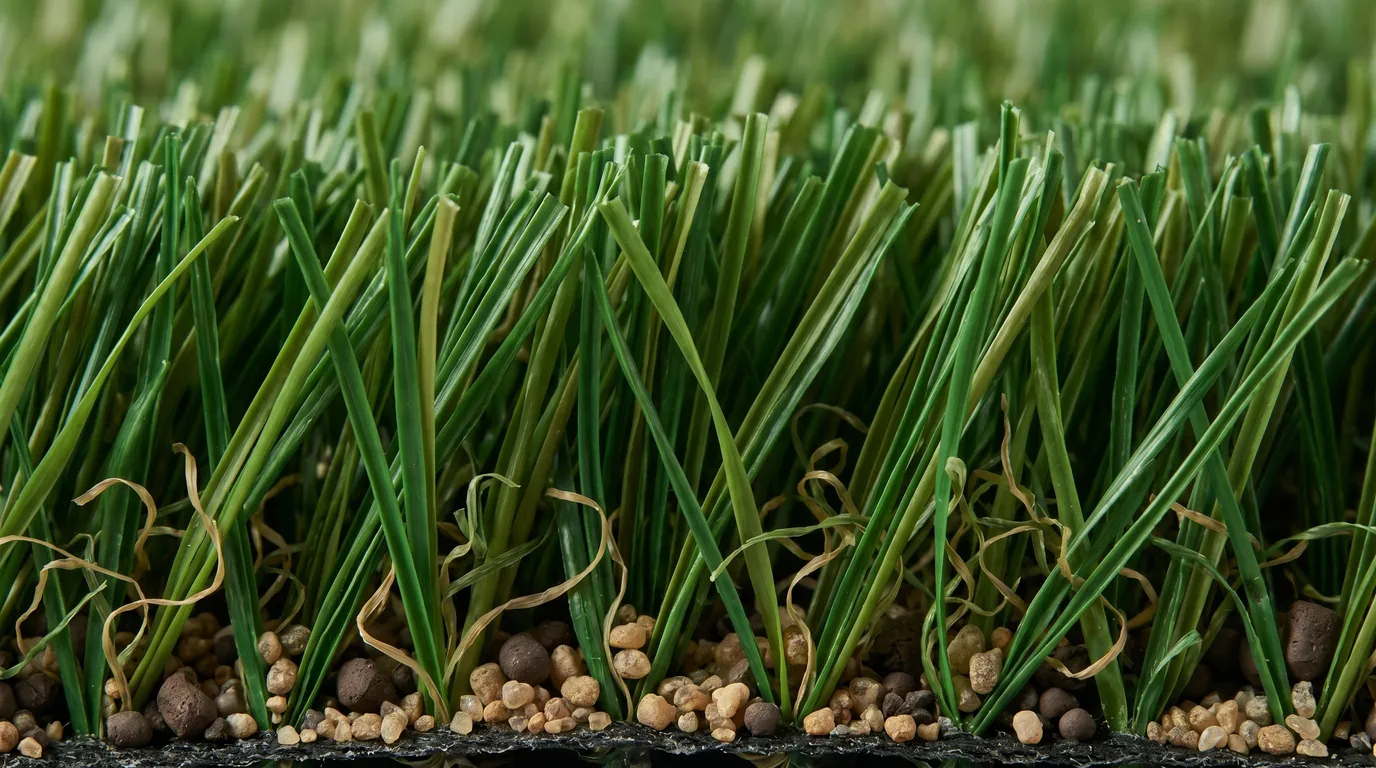
This is the maintenance step people skip, and skimping on infill is the single most common DIY regret I see. Infill holds the blades up, helps the surface drain, and weighs the turf down so it doesn’t wrinkle when it expands in the heat. For pet areas it pulls double duty on odor — and PetFill Pro runs $22 for a 50 lb bag in Arizona, $25 in Utah. That’s a cheap fix for something that looks expensive.
Not sure how much to order? Our calculator does the math on infill, turf, and base in one go.
Estimate Your Infill Top-Off
Enter your square footage and pile height and the calculator outputs how much infill to order — plus turf yardage and base materials.
Arizona and Utah: Two Climates, Two Cleaning Notes
Same turf, slightly different upkeep depending on which yard you’re standing in.
Arizona: dust and monsoon are the variables. Fine grit blows into the blades all summer, and a storm can leave a film of silt behind. A rinse after a haboob does more for the look than anything in a bottle. Full-sun yards also benefit from the occasional rinse just to knock the temperature down for the dog. You bought turf partly to stop pouring water on a lawn — a quick rinse now and then is a rounding error next to that old bill.
Utah: leaves and snowmelt run the calendar. Clear the leaves before they mat down and freeze in place over winter, and keep an eye on drainage and seams through the spring thaw. The quadruple-drainage backing handles real runoff, but a yard full of wet leaves will slow anything down. If you want the longer view on how turf ages in both climates, our guide to how long artificial turf lasts covers it.
DIY Upkeep vs a Professional Deep-Clean
Almost everyone handles turf themselves — it really is that simple. A professional deep-clean is for the edge cases: a rental turnover, a yard that’s been ignored for years, or a dog run that’s lost the battle. Here’s the honest comparison.
| DIY Upkeep | Professional Deep-Clean | |
|---|---|---|
| What it covers | Rinsing, brushing, debris, spot-cleaning, pet odor, and the yearly infill top-off | Heavy sanitizing, a full infill reset or replacement, stubborn stains, and long-neglected or heavy-pet yards |
| Time | About five minutes a week | A scheduled visit, once or a few times a year |
| When to choose it | Almost always — this is about 90% of turf care | A rental turnover, a long-ignored yard, or a dog run that has started to announce itself |
| Cost | Free — a hose, a brush, and your time | Quote-based — depends on yard size, pet load, and infill condition |
Most yards never need a professional clean. When you do want fresh infill or a new install, a quick quote sorts the cost.
What Not to Use on Artificial Turf
The fastest way to wreck a lawn that should last a decade is cleaning it wrong. Keep these four off your turf.
Metal Rakes & Wire Brushes
They tear the fibers and can loosen seams. Use a plastic rake or a stiff-bristled, non-metal brush instead.
Bleach & Ammonia
They discolor the blades and break down the backing over time — and ammonia near a pet-odor cleaner can make fumes.
High-Pressure or Hot Water
A pressure washer held close blasts the infill right out of the pile, and heat can stress the backing. A hose does the job.
Harsh Solvents & Degreasers
Overkill for turf, and they can damage fibers and backing. Mild dish soap covers almost everything you'll meet.
Stick with water, a stiff brush, mild dish soap, and diluted vinegar, and you’ll never have a cleaning-day regret. One safety rule while we’re here: never mix bleach and ammonia, in a bottle or on the ground — together they release a toxic gas the CDC warns about, and neither one belongs on turf anyway.
Got a Dog and a Yard That's Started to Announce Itself?
We'll help you pick the right turf, the right infill, and a setup that stays fresh — for homeowners and contractors across Arizona and Utah.
- 4.9 from 300+ reviews
- 12-year manufacturer warranty
- Free quote & free sample
- Arizona & Utah
What Customers Say
5.0 from 480+ verified Google reviews
They were super easy to deal with and have great prices! The turf colors look great and our dog loves it!
I had messaged their sales rep on a Sunday, and they were quick with their response time and actually had my delivery next day! They’re very knowledgeable in what turf worked best for my needs and what aesthetic I wanted. 10/10 communication, 10/10 material, and 10/10 in delivery. I look forward to my next project with them!
Expert Tips
— Bennett Brown, Co-Founder
Brush Against the Grain
Always brush toward the blades, not with them. It stands the fibers up and resets the infill — the biggest difference between turf that looks new and turf that looks tired.
Rinse After a Haboob
In Arizona, a rinse after a dust storm does more for the look than anything in a bottle. Fine grit is the real enemy out here, not stains.
Fix Dog Odor at the Infill
Sprays buy you a day. A zeolite infill like PetFill Pro is the durable fix — it neutralizes ammonia instead of perfuming over it.
Skip the $400 Turf Vacuum
For a normal backyard it's a fancy answer to a problem a brush already solved. We'd rather you save the money for infill.
Top Off Infill Yearly
Infill migrates and compacts toward the edges. A yearly top-off holds the blades up, helps drainage, and keeps the turf from wrinkling in the heat.
Clear Utah Leaves Before They Freeze
Pull leaves before they mat down and freeze over winter, and watch your drainage and seams through the spring thaw.
— Bennett Brown, Co-Founder
Related Services
Clean turf isn’t a project — it’s a hose, a brush, and five minutes you’d otherwise spend resenting your old lawn. We supply the turf, the infill, and the straight answers across the Arizona service area from our Mesa yard and across Utah from Provo. Swing by, grab a free sample, and ask us anything — call Mesa at (480) 910-2440 or Provo at (385) 335-9042. We’ll help you pick it, price it, and load it. The dry jokes are complimentary, and refunds on those are not available.