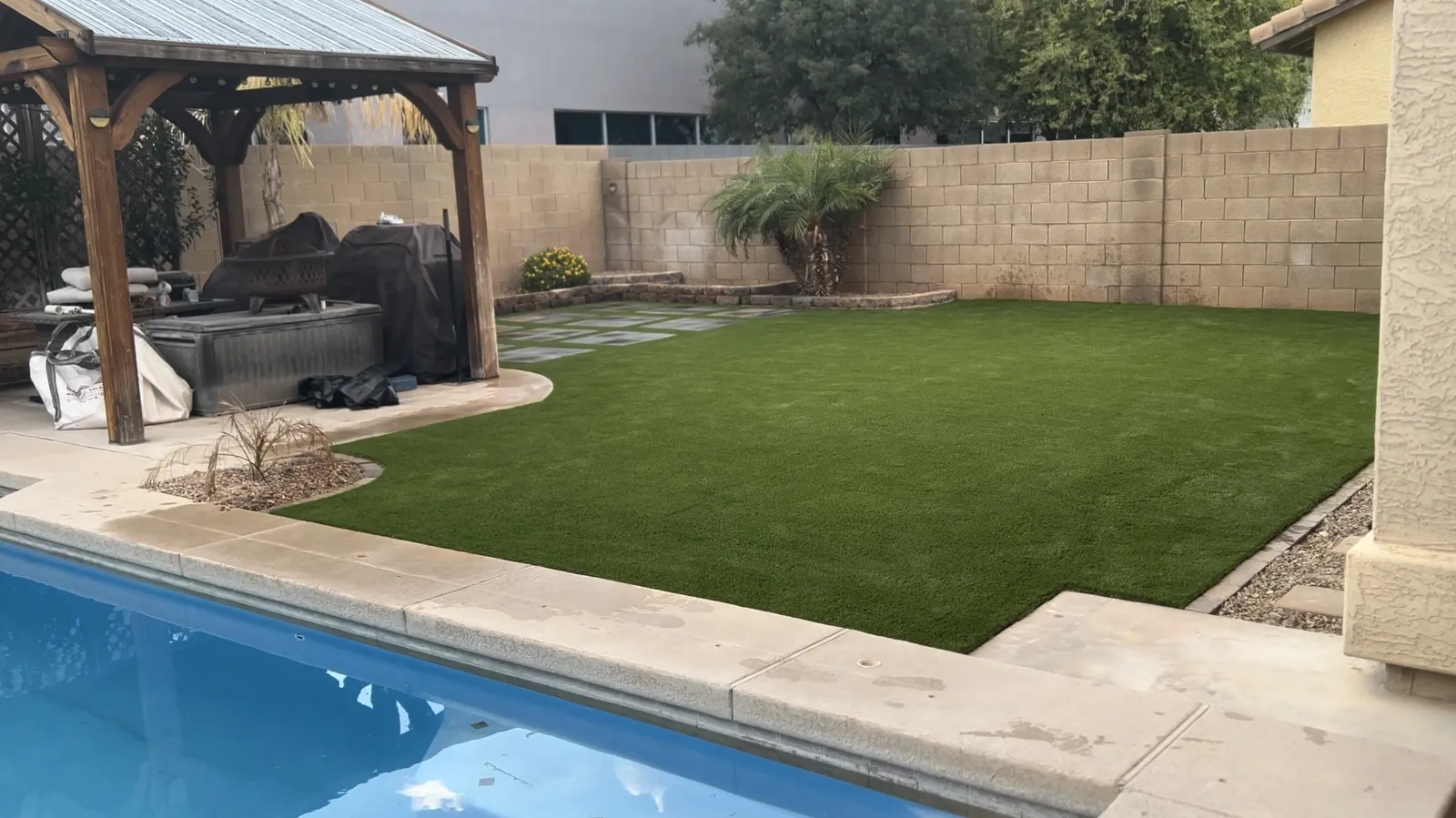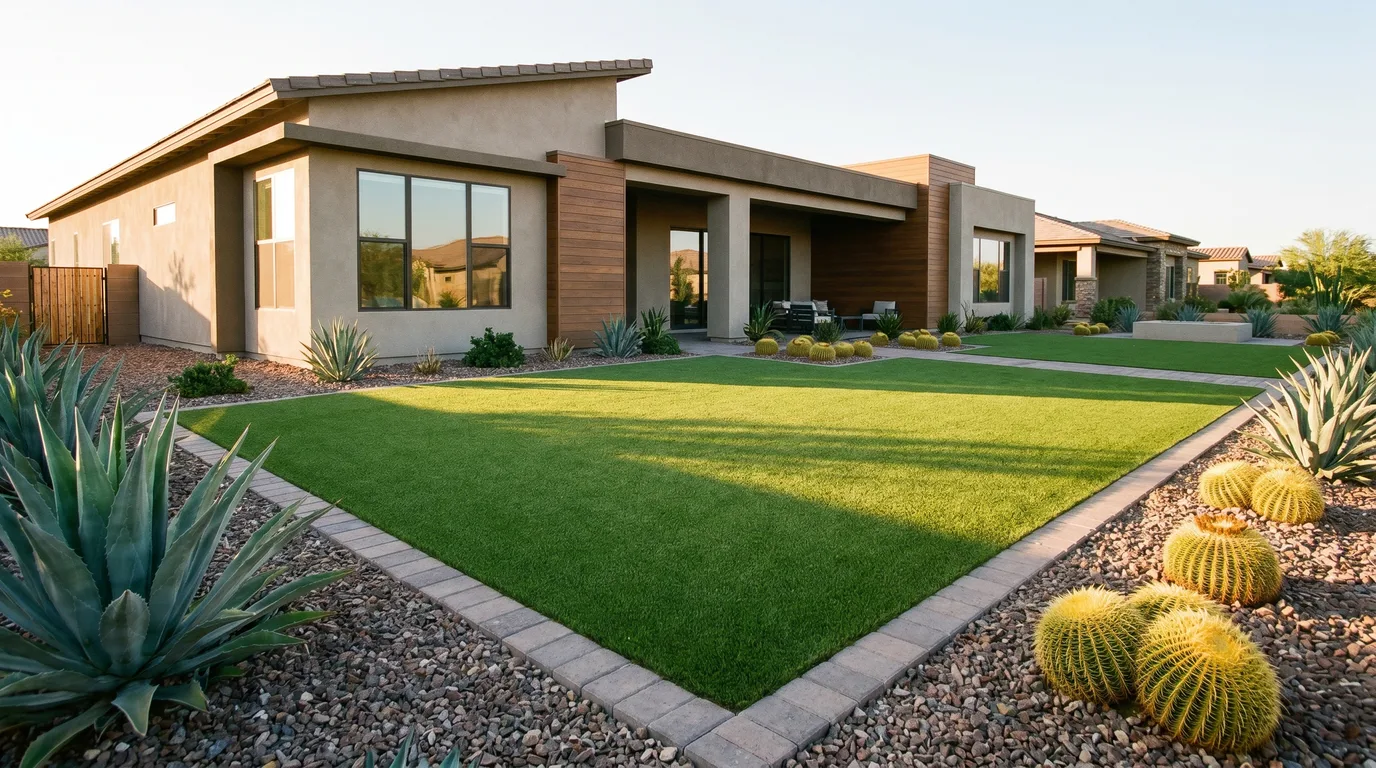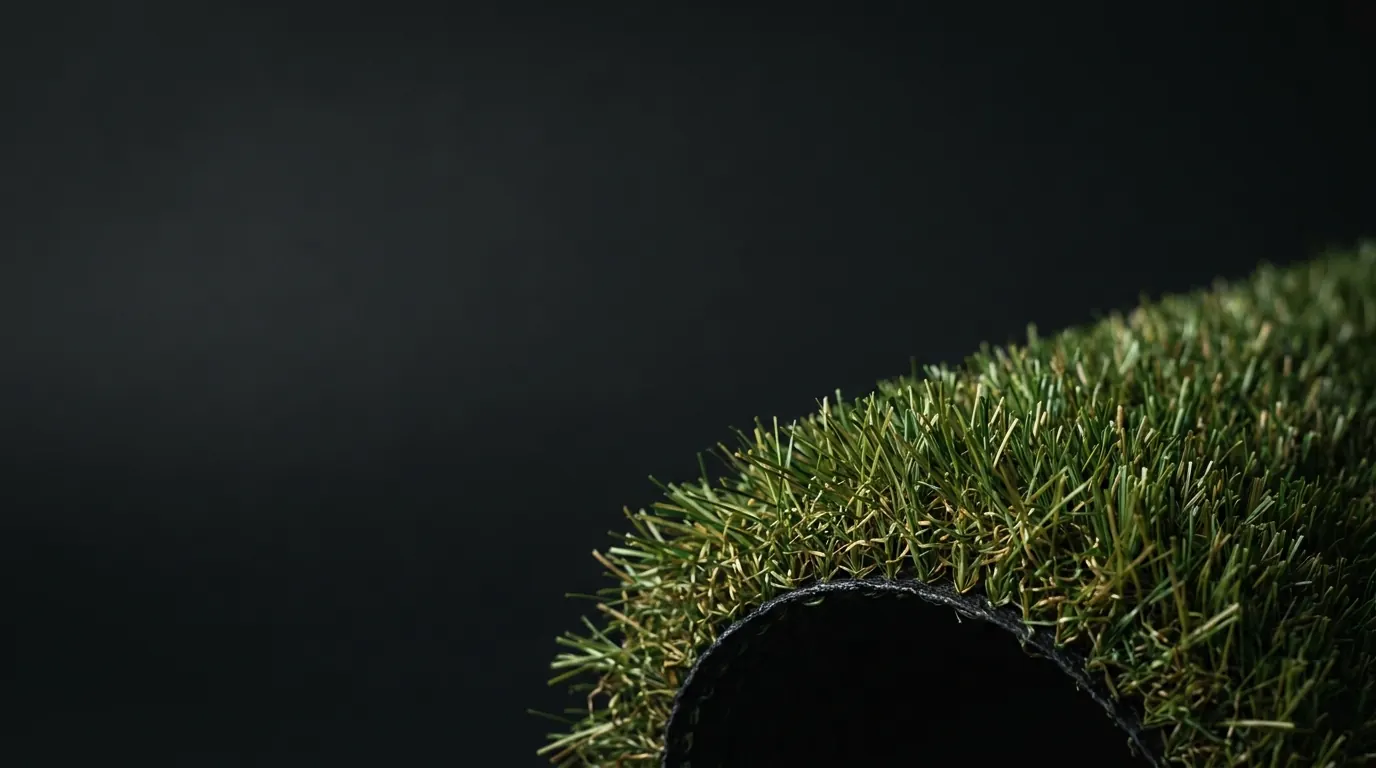
We get asked this more than almost anything else at the yard: is artificial turf actually worth it, or is it just a pricey way to own a green rectangle? Fair question. Here’s the part nobody likes to say out loud — natural grass in Phoenix isn’t dead, it just requires being completely at peace with losing every single summer.
So let’s settle artificial turf vs natural grass the honest way, no sales pitch. The short version: turf costs more upfront, and natural grass wins on day-one price nearly every time. But the math shifts once you add up water bills, mowing, fertilizer, and the recurring cost of keeping a real lawn alive in Arizona or Utah heat. Over a 10-year run, the numbers usually tilt toward turf — by how much depends on your yard, your water rate, and how hard you use the space.
TL;DR — Quick Answer
Natural grass is cheaper to install. Artificial turf is cheaper to own. Sod wins the sticker price, but turf has almost no recurring cost — no water, no mowing, no fertilizer — while a real lawn keeps billing you every month. Over roughly 10 years in Arizona and Utah, the cumulative cost of natural grass usually catches and passes the one-time cost of turf. The break-even depends on your water rate and yard size, so run your own numbers.
Cheaper upfront
Natural grass (sod)
Cheaper over 10 yrs
Artificial turf
Biggest variable
Water cost & yard size
Turf lifespan
15–20 years
See Your 10-Year Cost Comparison
Model upfront vs. lifetime cost for your exact yard size and see where the break-even point falls — no email required.
Table of Contents
Key Takeaways
- Natural grass wins the upfront price; sod gets you green for far less out of pocket on day one.
- Over roughly 10 years, water plus maintenance on a real lawn usually closes the gap and then passes it — especially in Arizona and Utah.
- Water is the dominant variable in the Phoenix metro and Salt Lake Valley; the desert averages about 8 inches of rain a year.
- Turf is low-maintenance, not no-maintenance — it trades mowing and watering for the occasional rinse, brush, and infill top-off.
- There's no single right answer — run your square footage and water rate through the calculator instead of trusting an average.
The Upfront Cost Reality
Straight answer: artificial turf is a bigger check at the start. The installed cost covers the turf itself, a properly compacted aggregate base — usually decomposed granite or crushed rock — plus edging, infill, and labor. That’s a real investment, not a rounding error.
Natural grass is a fraction of that on day one. Whether you seed, hydro-seed, or lay sod, you get a green lawn for a much smaller number out of pocket the first afternoon.
So if anyone tells you turf is cheap, that’s not quite right. What’s right is that it’s a different spending shape. You’re swapping a stack of recurring annual bills for one larger upfront cost. For residential installs, I tell people the same thing every time: model the full 10-year picture before you compare price tags. That’s where the interesting part starts — and where natural grass quietly loses the argument it was winning.
The Life-Cycle Flip: Where Turf Wins
Natural grass isn’t cheap to maintain. It just hides the cost, because the bills arrive monthly (water) and as-needed (lawn service, fertilizer, weed control, repairs). Add a decade of those up and the total is usually higher than people expect. It’s the lawn version of a subscription you forgot you were paying for.
Here’s what stacks up over the life of a real lawn:
- Irrigation. A typical Phoenix lawn can drink tens of thousands of gallons a year to stay green through summer. Salt Lake City lawns face long, dry summers too, especially as drought tightens across the Colorado River basin. Water rates vary by city and keep climbing.
- Mowing. Do it yourself (equipment, fuel, your Saturday) or pay a service — either way it’s a recurring cost across 40–50 mow cycles a year in warmer Arizona zones.
- Fertilizer, weed control, pest treatment. A healthy lawn needs inputs. Bermuda and fescue in Arizona want feeding through the growing season, and weed pressure never clocks out.
- Overseeding. Plenty of Arizona homeowners overseed with ryegrass every fall to stay green through winter. That’s seed, labor, and water to germinate — every single year.
- Irrigation repairs. Heads break. Controllers quit. In Arizona caliche, subsurface lines shift. Over 15 years, that line item is rarely zero.
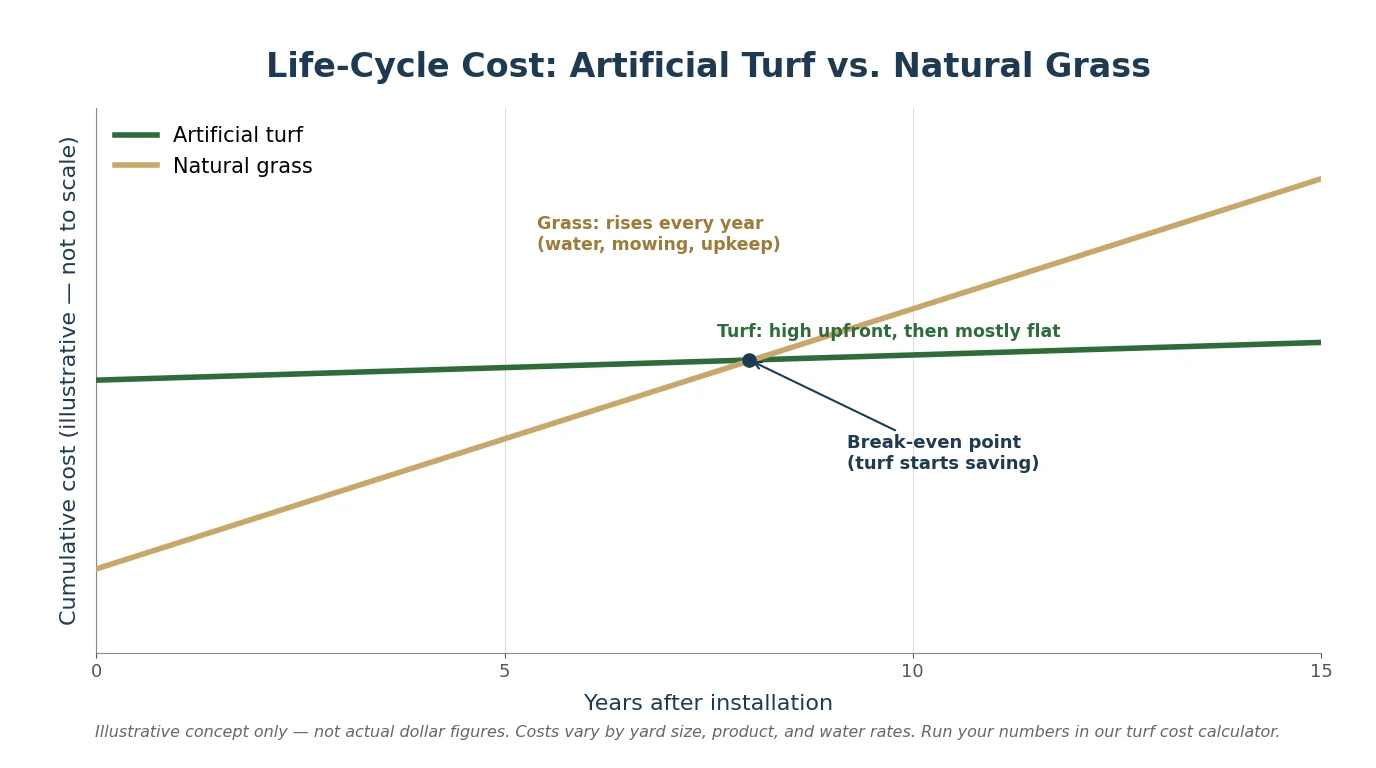
The federal water folks back up the basic shape of this. The USGS tracks how much of America’s water goes to irrigation in its national water-use estimates, and outdoor watering is a big slice of residential use. The chart above tells the same story in one line: natural grass starts lower and climbs steadily; turf starts higher and flattens. The two lines cross somewhere in that 8–12 year window for most homes, depending heavily on water rates and yard size.
I won’t print a specific dollar figure here, because it genuinely varies — square footage, local water pricing, whether you pay a lawn service, and product grade all move the number. Run your project through the calculator and you’ll get a picture that reflects your actual yard, not somebody else’s average.
Water: The Biggest Variable in AZ and UT
If you’re in the Phoenix metro, Mesa, Gilbert, or anywhere in the Salt Lake Valley, water is the factor that decides this whole comparison. Everything else is rounding by comparison.
The Sonoran Desert averages around 8 inches of rain a year. Keeping a real lawn alive here means aggressive supplemental irrigation for most of the calendar. Phoenix, Salt Lake City, and the surrounding cities have all been tightening water guidance as Colorado River allocations stay under pressure. The EPA’s WaterSense program on outdoor water use is a solid place to see just how much of a household’s water disappears into the yard — and their landscaping tips are worth a read if you’re keeping any living plants. Some utilities also run rebate programs for turf conversions — check directly with your local water provider, because the amounts change and not every city offers one.
Artificial turf uses essentially zero irrigation water. You might rinse it in peak summer — less to keep it alive (it’s not alive) and more to cool the surface or clean up after the dog. That’s the whole water contribution from your lawn, dropped to near zero.
We see this firsthand across the yards we supply in the Arizona service area: the water-savings conversation usually lands as the single most convincing part of the financial case, especially for bigger yards or high local water rates.
Utah’s story has a twist. Freeze-thaw winters don’t hurt quality turf — good drainage handles it fine — but they’re rough on real lawns. Spring recovery, reseeding the patches that heaved over winter, and the general wear cycle add upkeep that a lot of Utah homeowners quietly underestimate.
Maintenance: Your Time Has Value Too
This one’s easy to skip right past. Your time is a real cost, even if no invoice ever shows up for it.
A natural lawn in Arizona wants active attention from roughly March through November. Mowing, edging, babysitting the watering schedule, adjusting for heat spikes, pulling weeds, patching bare spots. Add a pool deck or a kids’ play area along the lawn and the maintenance perimeter just grew.
Turf upkeep is short:
- Occasional brushing to stand the blades up, mostly in high-traffic lanes
- A periodic rinse — more often with pets
- An infill refresh every few years in hard-use zones
- Clearing leaves and dust as they land
Most turf owners tell us their yard time drops by the large majority after the swap. That’s not marketing language — it’s just what we hear back from homeowners across the Valley, usually while they’re standing in our yard buying infill for a second project. It’s low-maintenance, not no-maintenance, and I’ll keep saying that until the dust storms stop (they won’t).
Look, Feel, and Heat
Let’s be honest about the trade-offs, because a fair comparison includes the parts turf doesn’t win outright.
On looks, modern turf has come a long way. Multi-tone blades and a thatch layer mean it reads as grass from the sidewalk, not as a putting-green rug from 1998. Underfoot it’s soft — our Lush Primo runs a 1.77-inch pile on a C-blade for the plushest feel, while the W-blade products like Lush 80 stand up better to traffic. What turf can’t do is grow, so it never self-repairs a divot. A real lawn can heal a worn spot on its own; turf you brush, top off, or patch.
Then there’s heat, and I won’t pretend it away. Turf gets warm in direct Arizona sun — it’s plastic in 110-degree heat, not a magic cool surface. The W-blade shape is built to reduce heat buildup, and a quick rinse cools it fast for the dog or the kids. Real grass stays cooler in the sun, full stop. The flip side: that cool grass is only cool because you’re pouring water and time into keeping it alive, and by mid-July half the valley’s “cool grass” is the color of a paper bag anyway.
When Natural Grass Still Wins
I said I’d be honest, and a turf guy talking you out of turf is at least memorable. There are real cases where natural grass is the right call:
Tight upfront budget. If the cost of turf genuinely isn’t there right now, sod or seed gets you green today. You can always convert later. If you’re weighing sod against turf specifically, I broke that whole decision down in sod vs artificial turf: an Arizona homeowner’s honest take.
Large acreage with cheap water. The life-cycle math works very differently on a five-acre rural property in a state with low-cost water. The break-even timeline stretches way out — sometimes past the point where it matters.
Personal preference. Some people just love the feel, the smell, the whole experience of real grass. Nothing wrong with that. If grass brings you joy and you can keep it alive without selling a kidney to the water company, that’s a valid choice.
Certain play surfaces. Some parents and coaches prefer real grass for youth sports where the ground itself absorbs impact. Quality sports turf with proper padding handles most of that, but preference is preference.
If you’ve already landed on turf and want to get into the spec weeds — pile height, blade shape, that sort of thing — the how to choose artificial grass guide goes deeper on product selection.
Turf vs. Grass, Side by Side
Here’s the comparison stripped to its bones. Numbers vary by yard, but the shape holds.
| Artificial Turf | Natural Grass | |
|---|---|---|
| Water use | Essentially zero — an occasional rinse | Tens of thousands of gallons a year in AZ/UT summers |
| Maintenance | Low — brush, rinse, top off infill every few years | High — mow, water, fertilize, weed, overseed, repair |
| Upfront cost | Higher — material, compacted base, infill, labor | Lower — sod or seed gets you green on day one |
| ~10-year cost | Mostly the one-time install; little recurring | Lower start, then steady annual water and upkeep that adds up |
| Lifespan | 15–20 years with proper install and care | Indefinite, but only if you keep paying to keep it alive |
Natural grass wins the sticker price; turf wins the decade. Where the lines cross depends on your water rate and yard size.
The Myths That Cost People Money
Most of the bad turf-vs-grass decisions I see come from one of these. Avoid all three and you’ll buy the right thing for your yard.
"Turf Is Maintenance-Free"
It isn't. It's low-maintenance — the blades collect dust, dogs do dog things, and leaves fall whether the lawn is real or not. You trade mowing and watering for a rinse, a brush, and a yearly infill top-off. Budget for that and you'll never be surprised.
Comparing Only the Upfront Price
Sod wins day one and loses the decade. If you stop the math at the install cost, you've ignored every water bill, mow, and bag of fertilizer that follows. Compare the full 10-year number or you're comparing the wrong thing.
Ignoring the Base
Turf is only as good as what's under it. Skimp on the compacted aggregate base and you get dips, poor drainage, and a lawn that wrinkles in the heat. The base isn't where you save money — it's where the install is won or lost.
Want the Real Number for Your Yard?
Tell us your square footage and current water situation and we'll help you map upfront vs. 10-year cost — for homeowners and contractors across Arizona and Utah.
- 4.9 from 300+ reviews
- 12-year manufacturer warranty
- Free quote & free sample
- Arizona & Utah
What Customers Say
5.0 from 480+ verified Google reviews
I was sceptical at first because of all the online scams.But they came down from Mesa and delivered my turf, nails and backfill. At a price I wouldn’t have been able to get here in Tucson. Family owned and operated. I personally like that.
Have you yearned for the old days when personality and convenience meant the most of which business you frequent ? When reputation began with a handshake and a working relationship went beyond a cold and impersonal website or an AI chat box. The Turf Yard provided a caring, supportive and interactive experience with my turf needs. The best price and making sure at the end of the day, you were beyond satisfied. (And hoping for the opportunity to refer them to other prospective turf buyers) I highly recommend their company for your turf needs - big or small.
Expert Tips
— Bennett Brown, Co-Founder
Run the 10-Year Math, Not the Day-One Math
The upfront price is the least useful number in this whole comparison. Add up a decade of water, mowing, and inputs against the one-time install before you decide anything.
Water Rate Is the Swing Vote
Two identical yards can break even five years apart based purely on local water cost. Look up your actual rate before you trust any average you read online — including mine.
Don't Skimp on the Base
A great roll on a bad base is a bad lawn. The compacted aggregate underneath is what keeps turf flat, draining, and wrinkle-free for fifteen years. Spend there.
Rinse the Turf to Cool It
Turf gets warm in full Arizona sun — it's plastic, not magic. A quick hose-down drops the surface temperature fast for the dog or the kids. The W-blade products help too.
Size the Infill Right
Infill weighs the turf down so it doesn't wrinkle in the heat, and it's the cheapest part of the job to get right. The calculator outputs how much you need with the turf and base.
Turf Isn't Always the Answer
On big rural acreage with cheap water, or a genuinely tight budget, real grass can still win. I sell turf — I'd rather you buy the right thing than the regretful thing.
— Bennett Brown, Co-Founder
Related Services
When you’re ready, we supply turf, base, and infill across the Arizona service area from our Mesa yard and across Utah from Provo — contractor pricing for everyone, free samples, and a straight answer about whether turf even makes sense for your yard. Call Mesa at (480) 910-2440 or Provo at (385) 335-9042 and we’ll help you map the cost out. Natural grass had a good run. It can keep losing summers on someone else’s water bill.