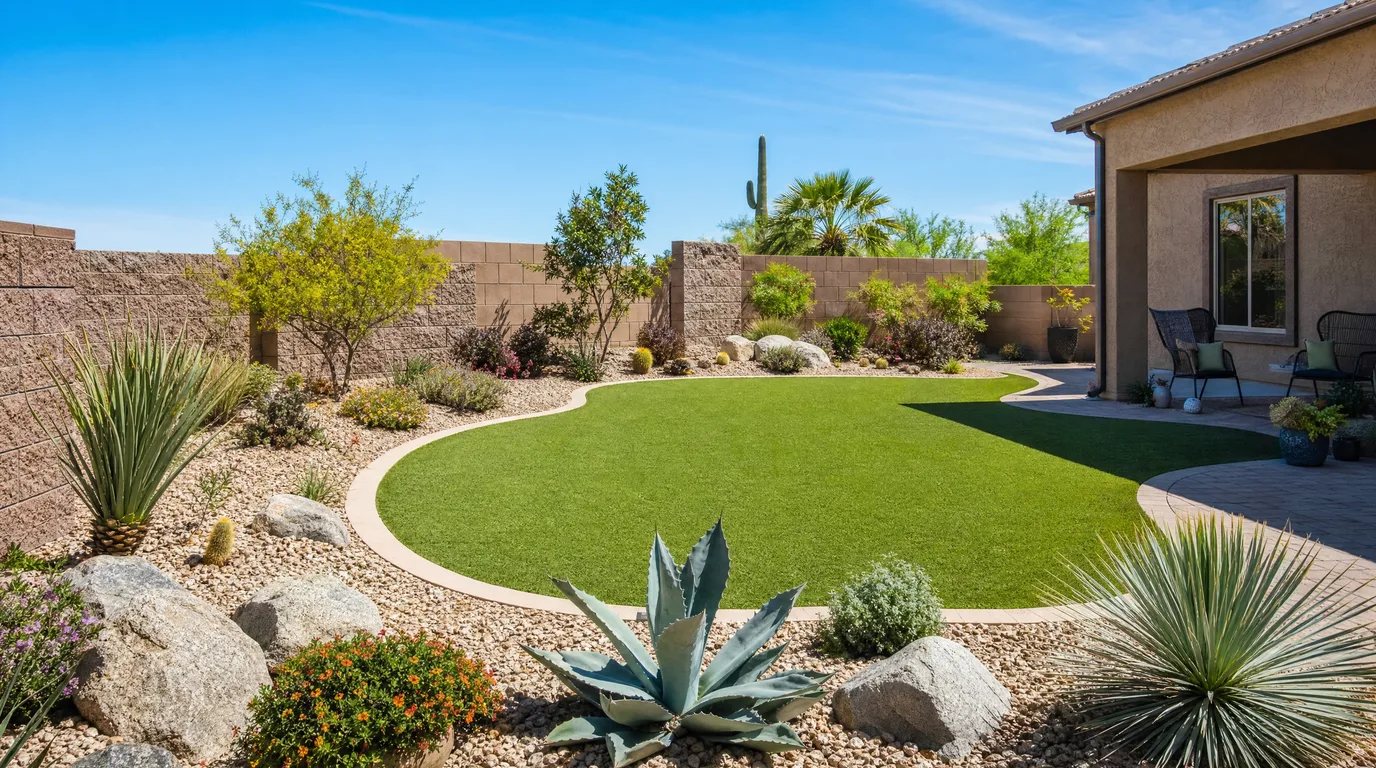
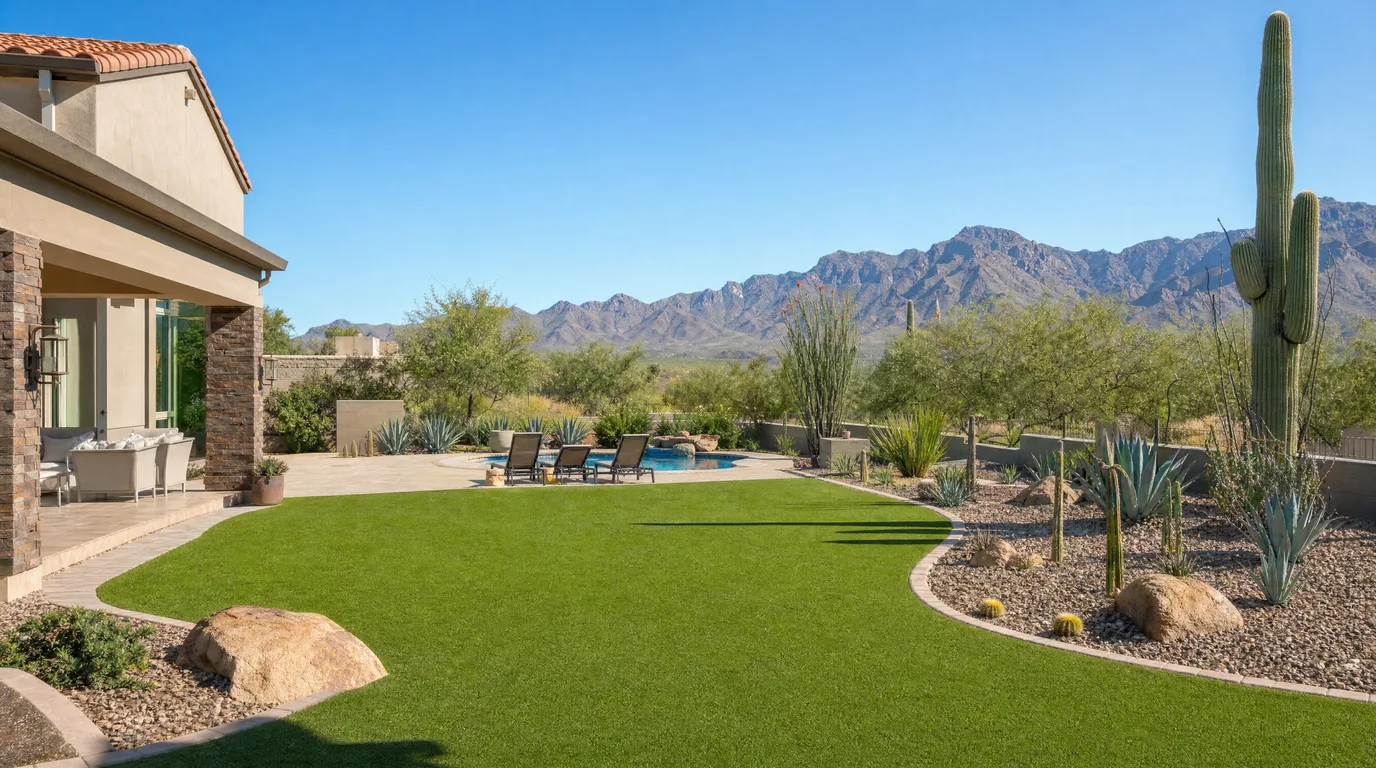
My old lawn drank more water than the rest of the street combined, and by mid-July it still looked like something a javelina had given up on. I watered it. I fertilized it. I had words with it. The grass did not care. That’s the part nobody tells you about a desert lawn — the watering isn’t even the worst part, the losing is.
That’s the honest answer to why Arizona homeowners switch to turf: it’s rarely about the water bill. The bill stings, sure. But the real reason is getting the weekend back. A natural lawn in the Valley is a part-time job you didn’t apply for and can’t quit, and it fires you every summer anyway. Artificial grass stays green at 115°F, needs no irrigation, and asks for about five minutes a week. The water savings are the headline. The free Saturdays are why people actually call us.
TL;DR — Quick Answer
Arizona homeowners switch to turf because a natural desert lawn loses every summer no matter what you do — and the real payoff isn't just the water bill, it's getting your weekends back. Quality turf stays green at 115°F, needs no irrigation, engineers caliche soil out of the equation, and most HOAs now prefer it. It does warm up in direct afternoon sun; a 30-second hose rinse handles that.
Stays green at
Up to 115°F
Irrigation needed
Essentially zero
Real reason people switch
Weekends back
Most common regret
Buying the cheapest turf
Thinking About Making the Switch?
Get straight answers on turf, base, and what your yard will actually cost — no pressure, no obligation.
Table of Contents
Key Takeaways
- The real reason homeowners switch usually isn't the water bill — it's getting the weekends back from a lawn that dies every July no matter what you do.
- Quality turf stays green at 115°F, needs essentially zero irrigation, and holds up to dogs, kids, and a full summer of desert UV.
- Caliche soil that ruins a natural lawn gets engineered out of the equation — cut the hardpan, build a graded base, add a drain-through backing.
- Most Arizona HOAs now prefer a clean turf install over a brown lawn, and Phoenix pays $2 per square foot to remove grass — pull your CC&Rs first.
- Yes, turf warms up in direct afternoon sun, like any surface. A 30-second hose rinse drops the temperature fast. We'll cover that honestly.
The Water Bill Isn’t the Whole Story
Water in Arizona isn’t cheap, and it’s getting more complicated. The Colorado River allocation situation has been front-page news for years, and cities across Maricopa and Pinal counties push conservation harder every summer. Some have moved past polite reminders into actual outdoor-irrigation restrictions.
The math on a natural lawn is grim. Keeping a modest backyard alive through an AZ summer can burn hundreds of gallons a week, and that’s before the water authority starts tightening schedules. According to the EPA’s WaterSense program, outdoor watering already accounts for more than 30 percent of household water use nationally — and as much as 60 percent in arid regions like ours. In the desert, the lawn is the water bill. With artificial turf, outdoor water use drops to near zero.
So why do I say the bill isn’t the whole story? Because every homeowner I talk to does the water math, nods, and then tells me the real reason in the next breath. It’s the watering schedule they manage like a second mortgage. The 6 AM mow before it hits 100. The fact that they did all of it and the lawn still browned out in July. The bill is the excuse. The lost weekends are the reason. If you want the dollars-and-cents breakdown anyway, the Arizona Department of Water Resources conservation program and our own artificial turf water conservation guide both lay it out.
The Heat-and-Dead-Grass Cycle
Here’s the part of the Arizona homeowner experience nobody puts in the brochure. March is great — the grass is green, the weather is perfect, you feel good about life. Then May shows up. Then June. Then a string of 110°F days, and by late July you’re staring at something that looks more like straw than lawn no matter how hard you irrigate.
That’s not a failure on your part. That’s biology in an environment that wasn’t built to support a green lawn without a firehose. Cool-season grasses give up once sustained heat arrives. Bermuda goes semi-dormant when overnight lows barely drop below 90°F and the roots never get a recovery window. Overseeded rye dies off by May. Even the best-kept lawns in the hottest pockets of the Valley go through a rough stretch every single summer.
Quality artificial turf doesn’t run that cycle. The blades don’t bleach, go dormant, or develop that patchy brown-green battle pattern. A good turf lawn looks the same in August as it does in January. The grass genuinely does not know it’s 115°F, which is more than I can say for the rest of us out there.
Caliche: The Problem Under Your Yard
If you’ve ever dug more than a foot into an Arizona backyard and hit a rock-hard white layer, congratulations — you’ve met caliche. This calcium carbonate hardpan is all over the Sonoran Desert, and it’s terrible news for a natural lawn. Roots can’t punch through it. Water pools above it instead of draining. The soil on top stays shallow and nutrient-poor. If your lawn floods in the rain, stays muddy for days, or dries out in odd patches, the stuff under your feet is usually why.
Turf doesn’t fight caliche the way a lawn does — we just remove it from the equation. The crew cuts through the layer, hauls the material out, and builds a graded compacted aggregate base with a drain-through backing on top. The hardpan that wrecked your grass becomes the solid, level foundation under your turf. If Shawshank taught us anything, it’s that a good base layer is everything.
Dust, Mud, and the Year-Round Mess
This one never makes the highlight reel, but Arizona homeowners bring it up constantly: the dust-and-mud cycle. When a natural lawn thins out — which it does all summer — the bare patches kick up dust in haboob season, then turn to brown mud the second a monsoon dumps an inch of rain in twenty minutes. Kids track it in. Dogs roll in it. The patio never looks clean.
Turf with a proper base ends that cycle. The ground stays stable, the surface drains, and after a monsoon you’re back to a clean green yard in minutes instead of waiting days for the mud to dry. The dog still rolls in it. He just comes back clean now, which is its own small miracle.
Your HOA Probably Wants You to Switch
This one has flipped hard. Five years ago some Arizona HOAs were skeptical of artificial turf. As water restrictions tightened and the products got genuinely good, the conversation changed. Plenty of HOAs now actively prefer turf over a brown or patchy lawn, and some water utilities pay you to make the switch — Phoenix runs a residential grass-removal rebate at $2 per square foot for converting to low-water landscaping. Rebate programs vary by city and change over time, so check your own provider.
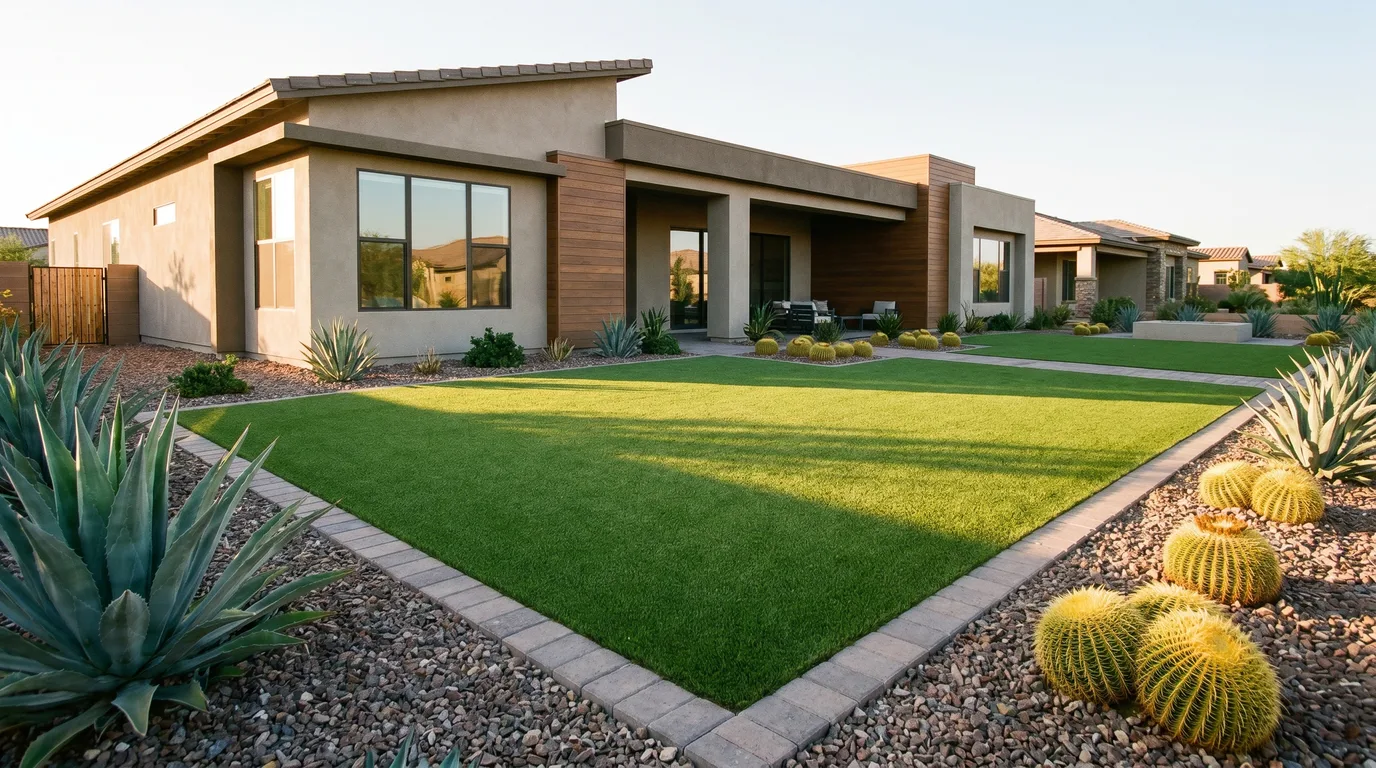
The key is a clean install: tidy edging, the right pile height, a realistic-looking product, and proper infill. A well-installed lawn in the East Valley or North Scottsdale is indistinguishable from a pristine natural one to a neighbor walking by. HOAs rarely push back on turf that’s done right. Still — pull your CC&Rs before you start. Five minutes of reading beats a re-do.
What Turf Actually Gives You Back
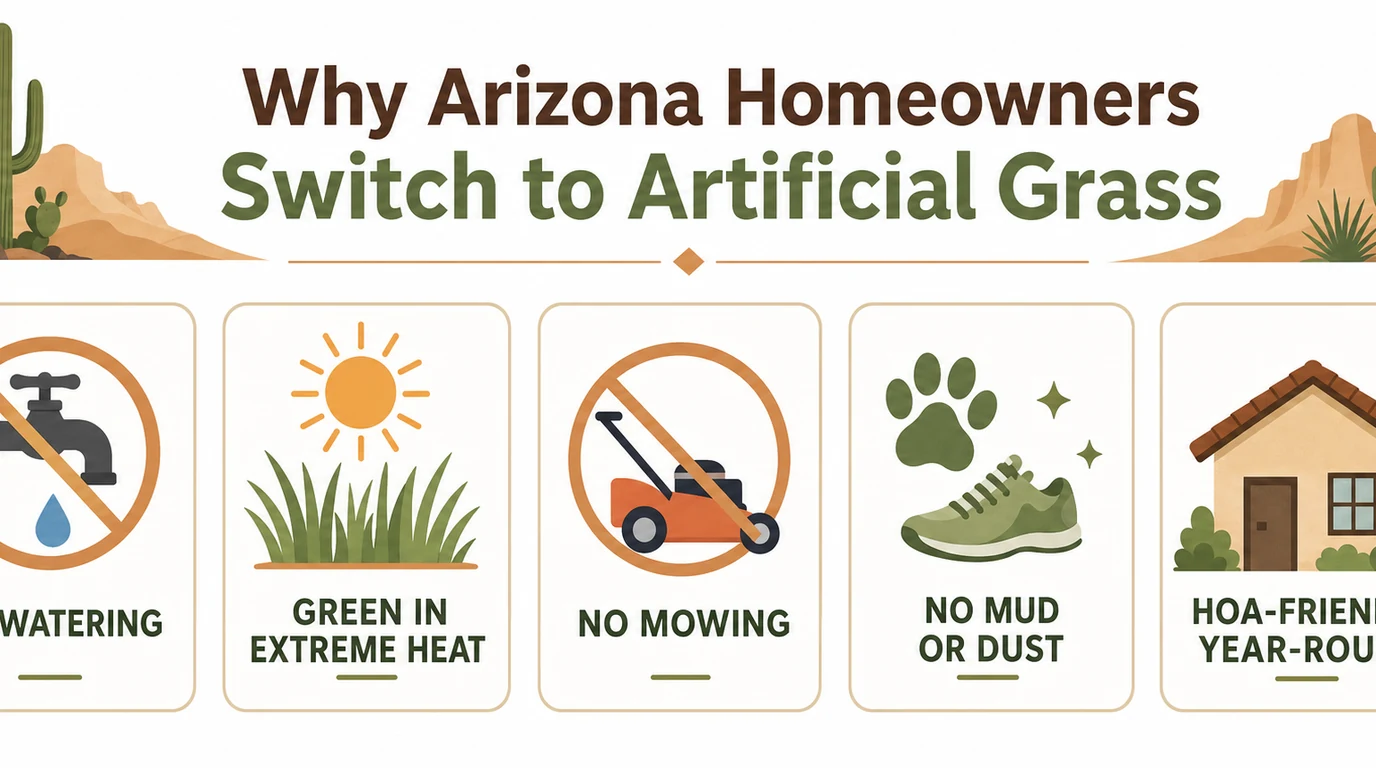
Strip away the water savings for a second. What you’re really buying is a list of jobs you never have to do again. No irrigation schedule. No fertilizer. No mowing at 6 AM to beat the heat. No aeration, no reseeding the dead patches, no standing in the yard at sunset trying to negotiate with Bermuda grass. In a normal Arizona week your lawn care is a five-minute blowdown of debris and a quick rinse if it’s dusty.
For families who use the backyard, for anyone who entertains, for the homeowner who’s poured money into landscaping around the lawn — having a surface that always looks presentable is genuinely useful. Turf is low-maintenance, not no-maintenance: it still needs infill and the occasional rinse. But put a stopwatch on it against a real desert lawn and it’s not close. That’s the weekend coming back, one Saturday at a time.
Pets and Kids: The Setup That Matters
Arizona backyards work hard. Dogs run in them in 100°F weather. Kids play in them year-round because the weather is actually usable ten months out of twelve. Turf holds up to that traffic where a natural lawn surrenders.
For pets specifically, the setup matters. A turf with a free-draining perforated backing handles liquids the right way — they pass through the surface and drain out instead of sitting on top. Pair it with the right infill and odor control becomes a quick-rinse habit rather than a problem. The surface stays clean and mud-free, which means less mess walking back into the house. If you’re shopping turf mainly for the dog, take a look at our artificial pet turf options and the pet turf buyer’s guide.
The Heat Question, Answered Honestly
I’d be doing you a disservice if I dodged this, so here it is straight: artificial turf does get warm in direct Arizona sun. Every surface does — concrete, pavers, wood decking. In full afternoon sun the turf will read meaningfully warmer than the air. That’s a real consideration if you’ve got young kids or a dog with sensitive paws out there at the hottest part of the day.
Here’s what actually helps. Lighter-colored infill. Shade structures — shade sails are everywhere in AZ for exactly this reason. And the humble garden hose: a 30-second spray drops the surface temperature fast, and the grass dries in minutes. Most of our Phoenix and Mesa customers build a quick rinse into the afternoon routine before the kids or the dog head out. It becomes as automatic as topping off the water bowl. For the full breakdown of what drives turf heat — blade shape, infill color, all of it — read our guide on does artificial turf get hot.
What to Expect With the Switch
A typical backyard install starts with pulling the old grass and organic material, excavating for the base, then building that base: a compacted layer of aggregate — class II road base is common — that sets the grade for proper drainage. In a caliche yard, that excavation step includes breaking through the hardpan. Then the turf goes down over a weed barrier, gets seamed and secured at the edges, and gets infilled and brushed to stand the blades up. For a standard Phoenix-metro backyard, a professional install is usually a one- to two-day job.
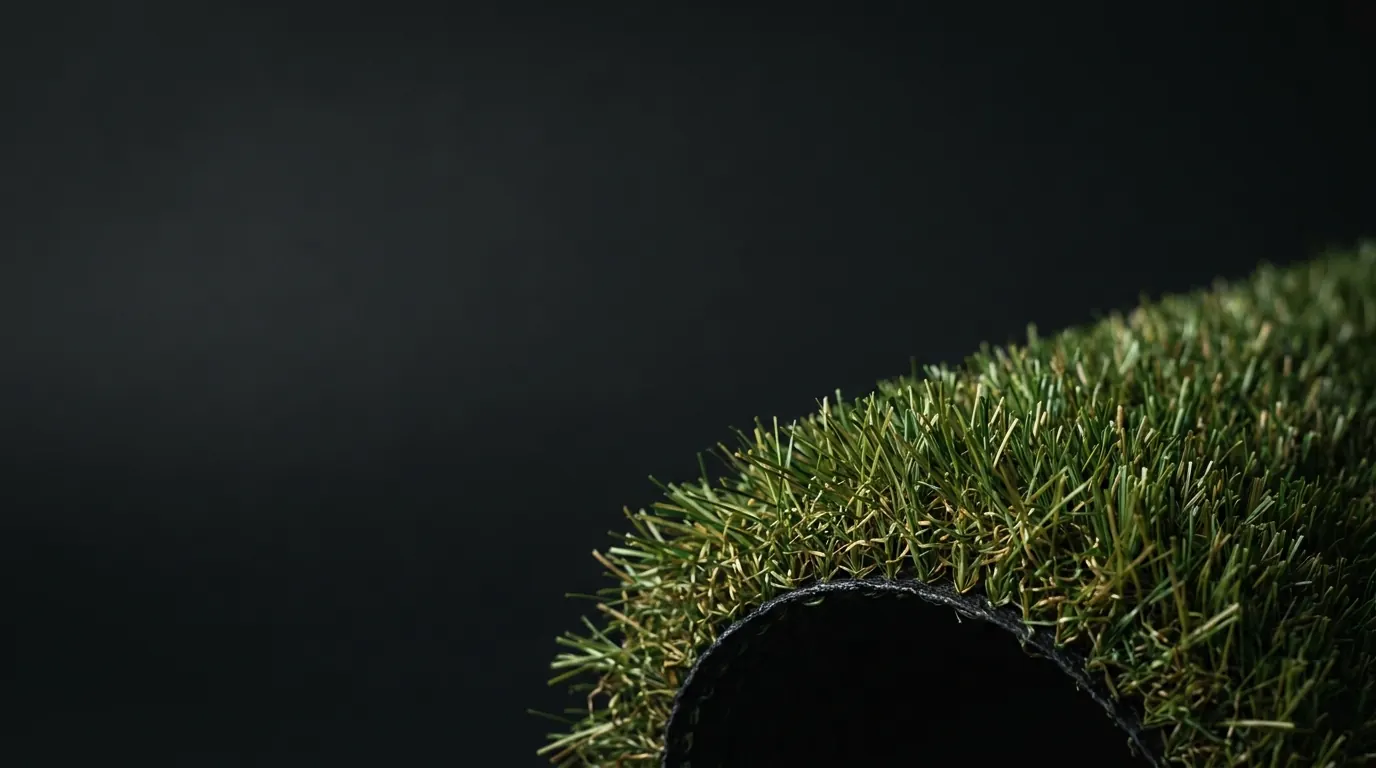
As for which roll: for most Arizona yards I lean toward a higher face-weight product with a heat-reducing W-blade. Our Lush 80 is the popular middle ground for front and back yards where durability and looks both matter — its 1.58-inch pile takes desert UV and heavy family use better than the lighter stuff. We also stock Lush 70 at a 1.38-inch pile for tighter budgets, and Lucky 77 for folks who want the darkest green. Getting the right pile height, color, and face weight for your specific yard is exactly the kind of thing we work through before you buy a single roll.
| The switch driver | What it means for an AZ homeowner |
|---|---|
| Water bill & restrictions | Outdoor watering can be 60% of arid-region home water use; turf drops it to near zero, with rebates in some cities |
| The heat-and-dead-grass cycle | No more browning out in July — turf holds its color from 35°F to 115°F |
| Caliche soil | The hardpan that pools water and starves roots becomes a solid, graded base under your turf |
| HOA rules | Most HOAs now prefer a clean turf install over a patchy lawn — but read your CC&Rs first |
| Time and weekends | Trade mowing, watering, and fertilizing for about five minutes a week |
| Pets and kids | A draining backing and the right infill mean a clean, usable yard ten months a year |
Every reason people switch, and what it actually buys you in an Arizona yard.
Buying the Cheapest Turf You Can Find
The bargain roll fades and mats under desert UV faster than you'd believe. A 12-year warranty and a heat-reducing W-blade are worth the few extra cents a square foot. This is the regret I see most.
Skimping on the Base
Turf is only as good as what's under it. A thin or poorly compacted base — or one that ignored your caliche — leads to dips, pooling, and wrinkles. Build the base right and the turf lasts a decade.
Skipping HOA Approval
Most HOAs say yes, but most isn't all. Read your CC&Rs for pile height, color, and edging rules before the crew shows up. A five-minute read beats tearing out a finished lawn.
Ready to Stop Watering a Lawn That Loses Every Summer?
We'll help you pick the right roll, build the base right, and get it on your truck — contractor pricing for everyone, across Arizona and Utah.
- 4.9 from 300+ reviews
- 12-year manufacturer warranty
- Free quote & free sample
- Arizona & Utah
What Customers Say
5.0 from 480+ verified Google reviews
The Turf Yard guys were great to deal with. Special thanks to Haley and Clark for being friendly and punctual. Haley was able to answer all of my questions. We purchased a Lush 70 for our super budget front yard landscaping project. We were happy with the quality of the turf and the price. The transformation from dirt to turf makes a big difference. Look forward to working with them again on our next project.
I found the turf yard on Marketplace and emailed them on Sunday. I explained what I was looking for and was given several options to choose from. I only needed two 10X12 ft pieces and I chose which turf worked and had it delivered on Monday. The delivery charge was very reasonable as well as the turf cost. The kindness and service was exceptional! I highly recommend the turf yard! Marybeth Clark
Expert Tips
— Bennett Brown, Co-Founder
Buy for the UV, Not the Sticker
Desert sun is brutal on cheap turf. A higher face weight and a heat-reducing W-blade hold up where the bargain roll fades and mats. It's a few cents a square foot now versus a redo in three years.
The Base Is the Whole Game
I'll say it twice because people forget: turf is only as good as what's under it. A compacted, graded aggregate base — built through your caliche, not around it — is what keeps the surface flat and draining for years.
Read the CC&Rs First
Most HOAs love turf now. But check pile height, color, and edging rules before you start. A finished lawn you have to tear out is the most expensive mistake on this list.
Chase the Rebates
Some Valley cities pay to remove grass — Phoenix runs $2 a square foot. Programs change, so check your own water provider before you assume it's not there. Free money is still money.
Keep a Hose Handy in Summer
Turf warms up in afternoon sun. A 30-second rinse before the kids or the dog go out drops the temperature fast. Lighter infill and a shade sail help too.
Get the Product Right for Your Yard
Pile height, color, face weight — they matter more than people think. Tell us how you use the yard and we'll match the roll to it before you spend a dollar on materials.
— Bennett Brown, Co-Founder
Related Services
The homeowners we work with across Phoenix, Mesa, and the broader Valley aren’t switching to turf because it’s a trend. They did the math, weighed the trade-offs honestly — heat included — and decided a yard that works twelve months a year beats a lawn that fights the desert for six and loses. We supply the turf, the base, and the straight answers from our Mesa yard, with free samples so you can feel the product before you commit. Swing by, or call Mesa at (480) 910-2440 or Provo at (385) 335-9042. We’ll help you pick it, price it, and load it — and your lawn can finally stop firing you every July.